What's The Difference Between A Flooring Installer And A Handyman In Middleton?
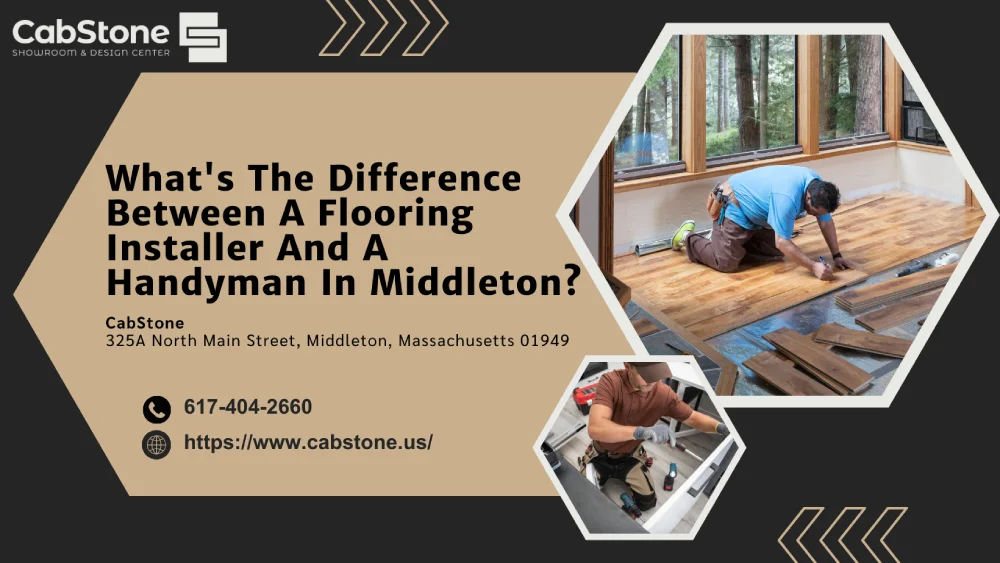
A flooring installer is a specialized tradesperson who works exclusively with flooring materials, possessing deep expertise in subfloor preparation, moisture management, and finishing techniques. A handyman handles general repairs across many trades but lacks the focused training, professional equipment, and material knowledge that quality flooring installation demands.
For Middleton homeowners, this distinction determines whether floors last a century or fail within years. The flooring industry loses approximately $1 billion annually to moisture problems and improper installation, most of which is traced to unqualified installers.
CabStone's flooring specialists work exclusively with hardwood, LVP, and LVT installations across the Boston North region. We understand the science behind floors that perform beautifully for decades.
Key Takeaways
- Flooring installers focus exclusively on floors and develop deep expertise through daily repetition that handymen never acquire
- Professional flooring contractors own specialized equipment, including belt sanders, pneumatic nailers, and moisture meters
- Handymen handle general repairs across many trades, but lack training in moisture management and subfloor preparation
- Improper installation causes cupping, buckling, gaps, and squeaks—problems often requiring complete replacement
- Massachusetts Home Improvement Contractor registration applies to both, but registration alone does not indicate flooring-specific expertise
What Makes a Flooring Contractor Different from a Handyman?
Professional specialty contractor for floors and cabinets dedicate their careers to one trade. They develop expertise that generalists never achieve. The differences show in training, equipment, and results.
Why Does Specialized Training Matter?
Flooring installers understand wood science at a fundamental level. They know how moisture content affects dimensional stability, why acclimation periods matter, and how different wood species behave under varying conditions. This knowledge comes from focused training and daily application.
The National Wood Flooring Association offers certification programs establishing industry standards. Professional installers pursue continuing education to stay current with new materials, adhesives, and finishing techniques. Handymen rarely invest in flooring-specific training because their business model requires breadth over depth.
What Professional Equipment Do Flooring Specialists Own?
Flooring installation requires specialized tools that produce results rental equipment cannot match:
- Professional belt sanders run on 220-volt power and weigh significantly more than rental machines, removing material efficiently without chatter marks
- Pneumatic flooring nailers drive fasteners at precise angles with consistent force
- Edgers reach areas where big machines cannot access
- Moisture meters with insulated probes provide accurate readings throughout material thickness
- Subfloor leveling equipment ensures proper flatness tolerances
Professional installers own this equipment because flooring is their entire business. Handymen cannot justify purchasing tools they might use a few times yearly.
| Aspect | Flooring Installer | Handyman |
| Training | Flooring-specific certification and continuing education | General repair skills across multiple trades |
| Equipment | Professional-grade sanders, nailers, moisture meters | Basic tools, rental equipment when needed |
| Focus | Flooring installation exclusively | Wide range of home repairs |
| Material Knowledge | Deep understanding of wood behavior and moisture dynamics | General familiarity with common materials |
| Warranty Support | Manufacturer relationships and documented processes | Limited ability to support warranty claims |
What Can a Handyman Actually Do Well?
Handymen provide valuable services for many home repairs. However, flooring installation falls outside their practical expertise.
Which Tasks Suit Handyman Skills?
Handymen excel at general repairs requiring broad skills rather than deep specialization. Fixing leaky faucets, patching drywall, assembling furniture, and minor carpentry fit their skill set well.
Massachusetts allows handymen to perform home improvement work with proper registration. However, registration confirms basic legitimacy rather than trade-specific competency. A registered handyman may legally install flooring—but legal permission differs from practical qualification.
Where Do Handymen Fall Short on Flooring Projects?
Flooring installation demands knowledge handymen rarely possess. Calculating equilibrium moisture content requires understanding psychrometrics. Determining proper acclimation duration means testing materials and environments over time. Assessing subfloor suitability involves checking thickness, fastener patterns, and flatness tolerances.
Rental sanding equipment creates additional problems. Lightweight rental sanders vibrate excessively and leave chatter marks that show through finishes. These marks become permanent reminders of poor tool selection.
Why Should You Consider Hiring Flooring Installers Instead of Handymen?
The difference between professional installation and handyman work shows up in floor performance over time. Your investment deserves protection that only specialists provide.
How Does Installation Quality Affect Floor Longevity?
Properly installed wood floors can last a century with routine maintenance. Floors installed without proper moisture management or subfloor preparation fail within years. The flooring industry tracks these failures—improper installation causes the vast majority.
Common failures from unqualified installers include:
- Cupping occurs when board bottoms absorb more moisture than tops
- Buckling happens when expanding flooring lifts completely off subfloors
- Gaps develop when flooring shrinks after installation at incorrect moisture content
- Squeaks indicate movement between flooring and subfloor from inadequate fastening
All these problems trace back to installation shortcuts that specialists avoid.
Why Does Warranty Protection Require Professional Documentation?
Many flooring manufacturers require professional installation for warranty coverage. They specify moisture testing protocols, acclimation requirements, and installation methods. Documentation proving compliance protects your warranty rights.
Professional flooring installers maintain records that support warranty claims. They photograph moisture readings, document acclimation periods, and follow manufacturer specifications precisely. Handymen rarely provide this documentation level—leaving homeowners vulnerable when problems arise.
How Does a Professional Flooring Company Like CabStone Approach Projects?
Choosing CabStone means choosing flooring specialists who stake their reputation on floor quality. Our approach differs fundamentally from generalist contractors.
What Does Focused Expertise Mean in Practice?
Our teams install flooring exclusively. We do not handle plumbing, electrical, painting, or general carpentry. This focus means every installation benefits from techniques refined across countless projects.
We encounter moisture challenges, subfloor problems, and material variations daily. We know exactly how to address them because we solve these problems constantly—not occasionally.
What Process Does CabStone Follow?
We never skip steps to meet arbitrary deadlines. Our floor installation service includes:
- Complete moisture testing of subfloors and materials before work begins
- Proper acclimation periods based on actual readings rather than guesswork
- Thorough subfloor evaluation and correction where needed
- Documentation at every stage protecting both floors and warranty coverage
Why Does Accountability Matter?
When flooring is all you do, your reputation depends entirely on flooring quality. CabStone stands behind every installation because our business depends on satisfied customers.
A handyman can absorb occasional flooring complaints among their broader service offerings. One bad floor review disappears among dozens of faucet repairs and drywall patches. We cannot absorb flooring complaints—and we would never want to.
Frequently Asked Questions
What qualifications should a flooring installer have?
Professional flooring installers should have industry certification, documented training in moisture management and installation techniques, and experience with the specific flooring type you are installing. Ask about NWFA certification for hardwood projects.
Can a handyman install laminate or vinyl flooring?
While handymen can technically install click-lock flooring, they often lack knowledge of proper subfloor preparation, moisture barriers, and expansion tolerances that affect long-term performance. Problems may not appear for months or years.
Why does professional flooring equipment matter?
Professional sanders, nailers, and moisture meters produce results rental equipment cannot match. Professional machines work faster with better precision and leave surfaces properly prepared for finishing without chatter marks.
How do I verify a flooring installer's qualifications?
Ask about industry certifications, request references from recent flooring projects, and verify Massachusetts Home Improvement Contractor registration through the state's online portal. Request photos of completed work similar to your project.
What flooring problems result from improper installation?
Common problems include cupping, buckling, gaps between boards, squeaking, and premature finish failure. Most trace back to moisture issues or inadequate subfloor preparation that qualified installers would have addressed.
Does CabStone provide warranties on flooring installation?
CabStone stands behind every installation and maintains documentation that supports manufacturer warranty requirements. We follow specifications precisely to protect your coverage throughout the warranty period.
How long should flooring acclimate before installation?
Acclimation duration depends on material type, delivery conditions, and installation environment. Professional installers determine proper timing through moisture testing rather than arbitrary timelines—sometimes days, sometimes weeks.
What is the difference between HIC registration and flooring certification?
Massachusetts HIC registration confirms basic contractor legitimacy and allows legal operation. Industry certification indicates specialized flooring training and demonstrated competency in installation techniques that registration does not verify.
Conclusion
The difference between a flooring installer and a handyman comes down to specialization, equipment, and accountability. Flooring installers dedicate their careers to one trade and develop expertise that generalists never acquire. They own professional equipment producing results rental tools cannot match.
Your Middleton flooring project deserves specialists who understand wood science, possess professional-grade equipment, and stake their reputation on floor quality. Ready to work with flooring installers who do floors right—because floors are all they do?