What Does a Cabinet Maker Do? A Homeowner's Complete Guide
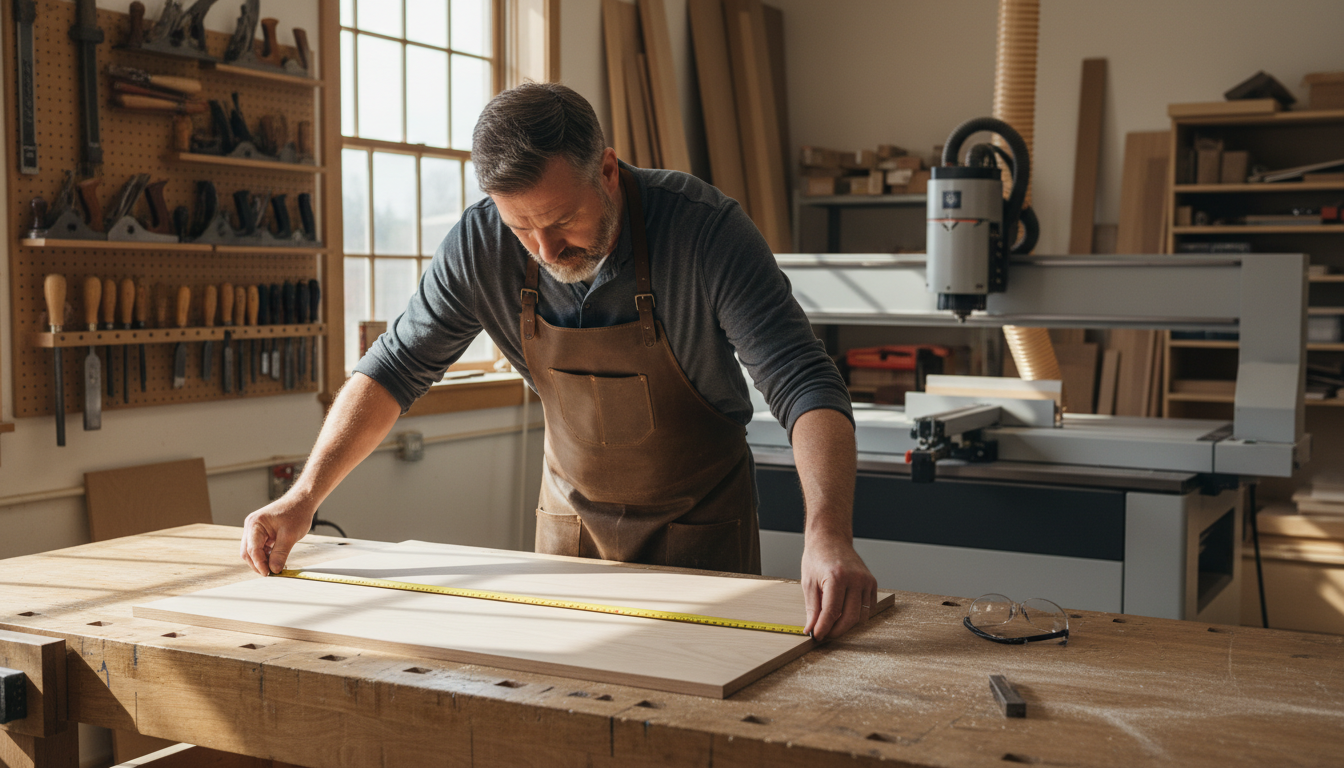
A cabinet maker designs, builds, and finishes custom cabinetry — from kitchen cabinets and bathroom vanities to built-in bookshelves and mudroom storage. Unlike general carpenters who frame walls and install trim, cabinet makers specialize in precision joinery, material selection, and finished woodwork that becomes a permanent part of your home.
Whether you're planning a kitchen renovation in Middleton or adding built-in storage to a colonial on the North Shore, understanding what a custom cabinet maker actually does helps you hire the right person — and avoid paying for skills you don't need.
This guide breaks down the cabinet maker's role, how it differs from other trades, and what to look for when hiring a cabinet maker in Massachusetts.
What a Cabinet Maker Actually Does (Day to Day)
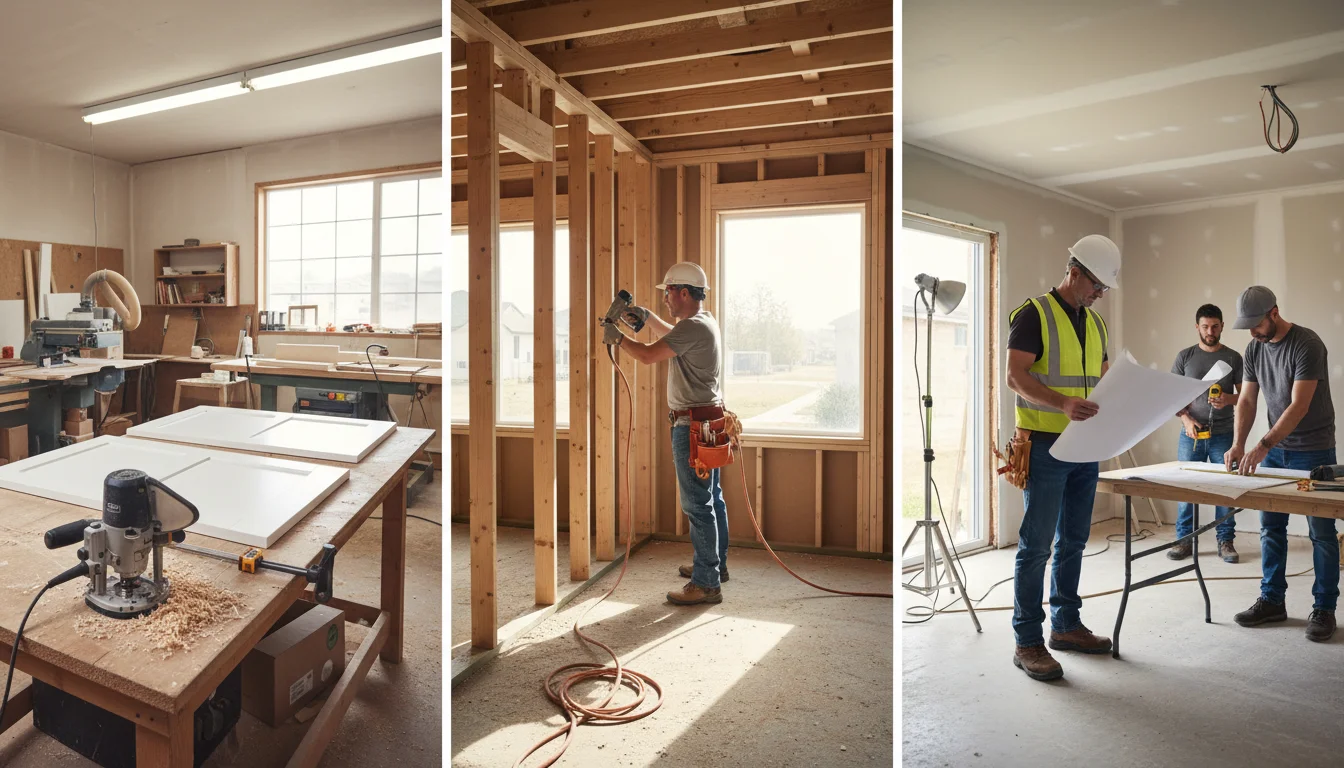
A cabinet maker transforms raw materials — hardwood lumber, plywood, MDF, and hardware — into finished cabinetry through a process that combines design, precision cutting, assembly, finishing, and installation.
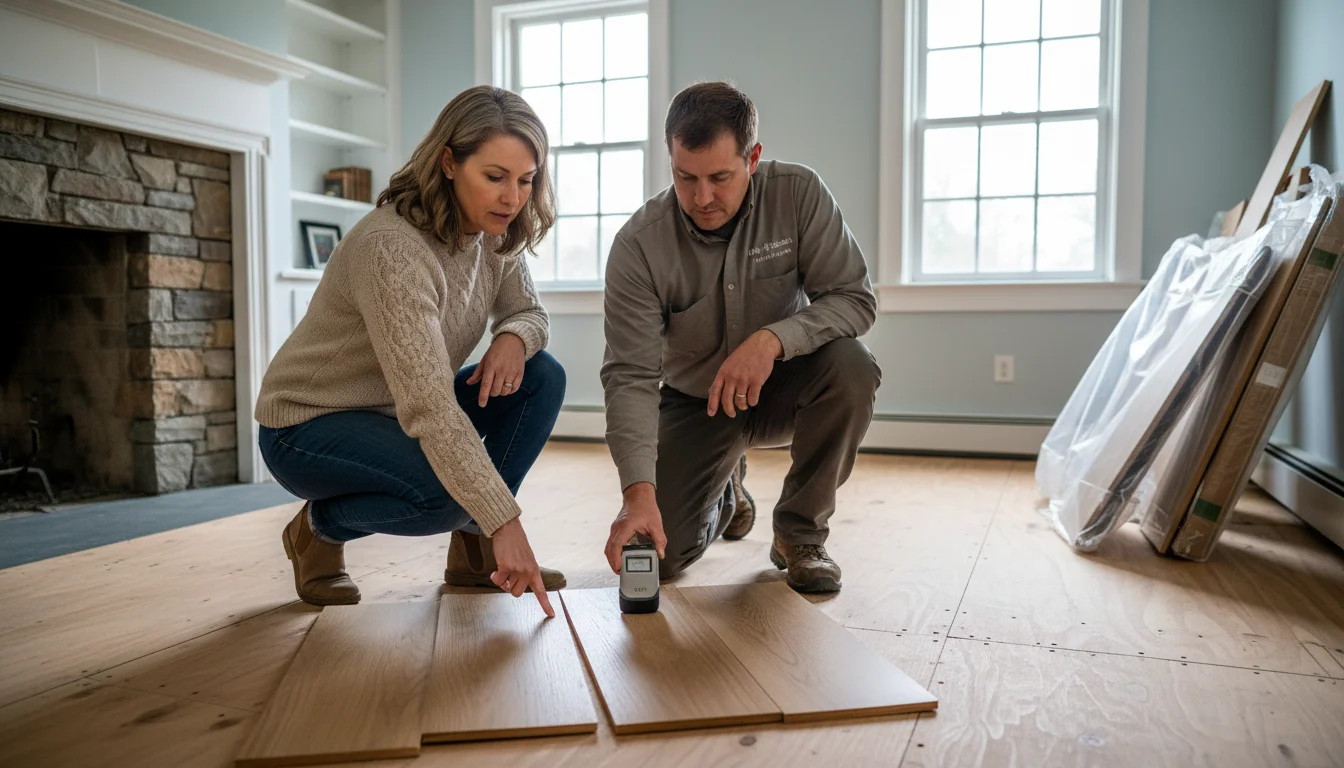
The work starts well before anyone picks up a saw. A qualified cabinet maker begins by taking field measurements of the space, reviewing the homeowner's layout preferences, and selecting materials. From there, the process moves into the shop.
According to the Bureau of Labor Statistics, cabinetmakers and bench carpenters cut, shape, and assemble parts for wood products — often overseeing a project from design through installation. That's a key distinction from other woodworking trades. Cabinet makers own the process end-to-end.
Here's what a typical custom cabinetry project looks like from the shop floor:
- Design and measurement — field dimensions of the space, discussion of storage needs, material and finish preferences, layout planning based on the room's function
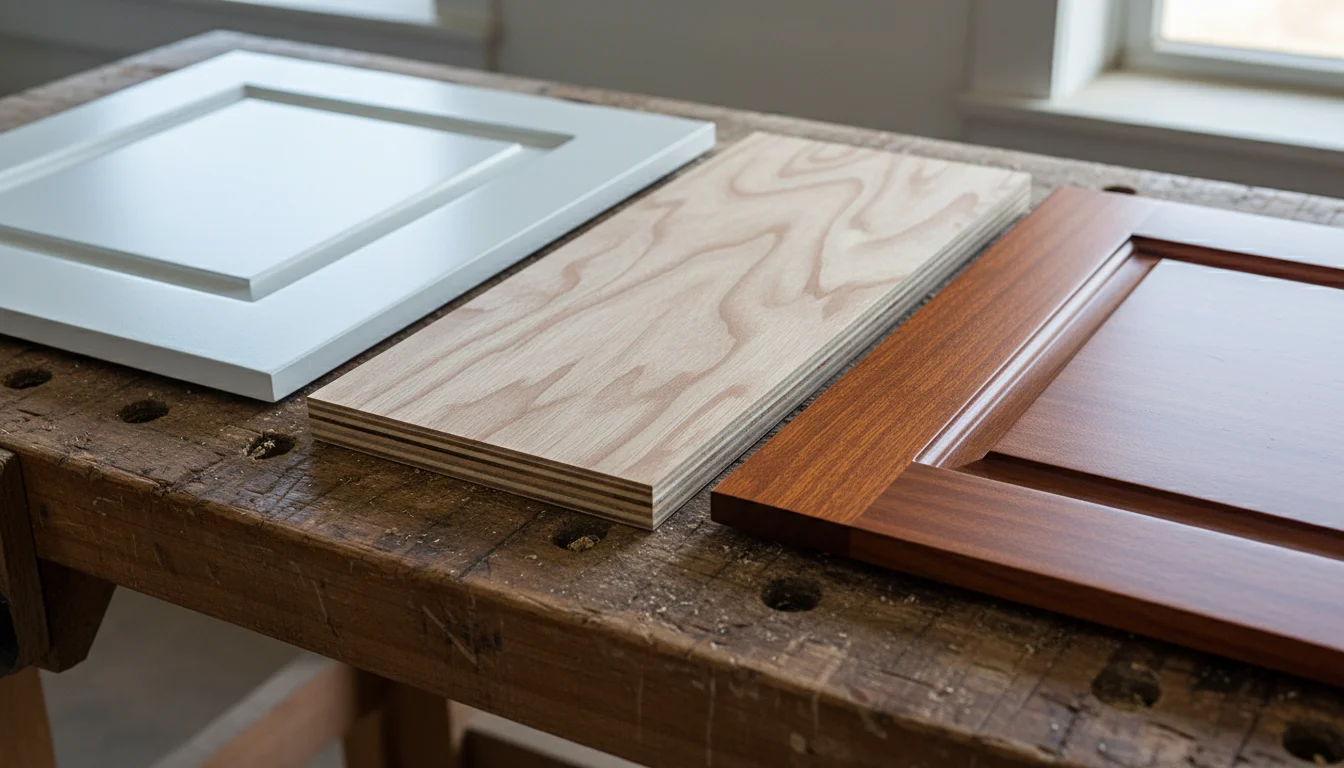
- Material selection and ordering — choosing between plywood, MDF, and hardwood for different cabinet components, sourcing hardware like soft-close hinges and drawer slides
- Cutting and machining — using table saws, routers, CNC machines, and jointers to cut panels, rails, stiles, and shelving to precise tolerances
- Joinery and assembly — building the cabinet boxes, attaching face frames, fitting doors and drawer fronts, installing hardware
- Finishing — sanding, priming, painting or staining, applying protective topcoats
- Installation — delivering and mounting the finished cabinets on-site, scribing to walls, adjusting doors and drawers for perfect alignment
Some cabinet makers handle every step in-house. Others focus on fabrication and partner with a separate installer. The strongest approach — and the one that causes the fewest problems — is to have the same team that builds your cabinets also install them.
| Phase | What Happens | Typical Duration |
| Consultation & Measurement | Site visit, layout discussion, material review | 1–2 visits |
| Design & Planning | Shop drawings, material ordering, timeline | 1–3 weeks |
| Fabrication | Cutting, assembly, finishing in the shop | 3–6 weeks |
| Installation | On-site mounting, scribing, hardware adjustment | 3–7 days |
| Punch List | Final walkthrough, door/drawer alignment, touch-ups | 1 day |
How Cabinets Are Actually Built: Construction Methods That Matter
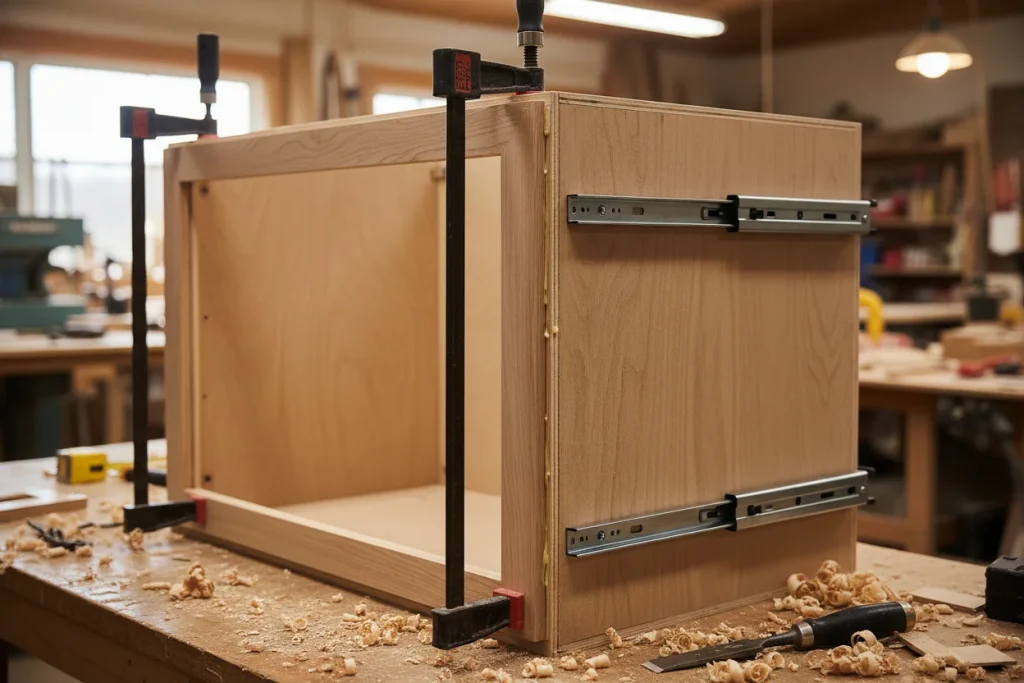
The two fundamental cabinet construction methods — face frame and frameless (European-style) — determine how your cabinets look, function, and hold up over decades of daily use.
This is the kind of detail most homeowners never think about, but it affects everything from how smoothly your drawers open to how your cabinets handle the humidity swings we get here in Massachusetts.
Face Frame Construction
Face frame cabinets have a solid hardwood frame — typically maple or birch — attached to the front of the cabinet box. The doors and drawers mount to this frame. It's the traditional American construction method and the most common style you'll find in New England homes.
The frame adds structural rigidity. It also gives the installer something solid to scribe against when walls aren't perfectly plumb — which, in homes built before 1970, is basically every wall. Face-frame cabinets are more forgiving during cabinet installation and tend to hold up better in homes with seasonal movement.
Frameless (European-Style) Construction
Frameless cabinets skip the front frame entirely. Doors and drawers mount directly to the cabinet box using concealed hinges. The result is a cleaner, more contemporary look with slightly wider interior openings — you get about an inch and a half more access width per cabinet.
The trade-off? Frameless construction demands thicker cabinet panels (typically 3/4-inch minimum) and tighter tolerances during installation. There's no face frame to hide gaps if the wall is out of plumb.
Which Method Should You Choose?
For most North Shore homes — especially colonials, capes, and older construction — face-frame cabinets are the practical choice. They're structurally stronger, more forgiving during installation, and visually consistent with the architecture. Frameless works well in modern additions, contemporary renovations, and commercial-grade kitchens where a sleek, minimal look is the priority.
A good custom cabinet maker in Massachusetts operation can build both. The choice should come from the design conversation, not from a shop's limitations.
| Feature | Face Frame | Frameless (European) |
| Construction | Hardwood frame on cabinet front | No front frame — box only |
| Door Mounting | Hinges attach to frame | Concealed hinges on box sidewall |
| Interior Access | Slightly narrower opening | Full-width opening |
| Wall Tolerance | Forgiving — frame hides gaps | Demands plumb, flat walls |
| Aesthetic | Traditional, New England-appropriate | Modern, minimalist |
| Best For | Older homes, colonial renovations | Contemporary builds, modern kitchens |
Cabinet Maker vs Carpenter vs General Contractor: Who Do You Actually Need?
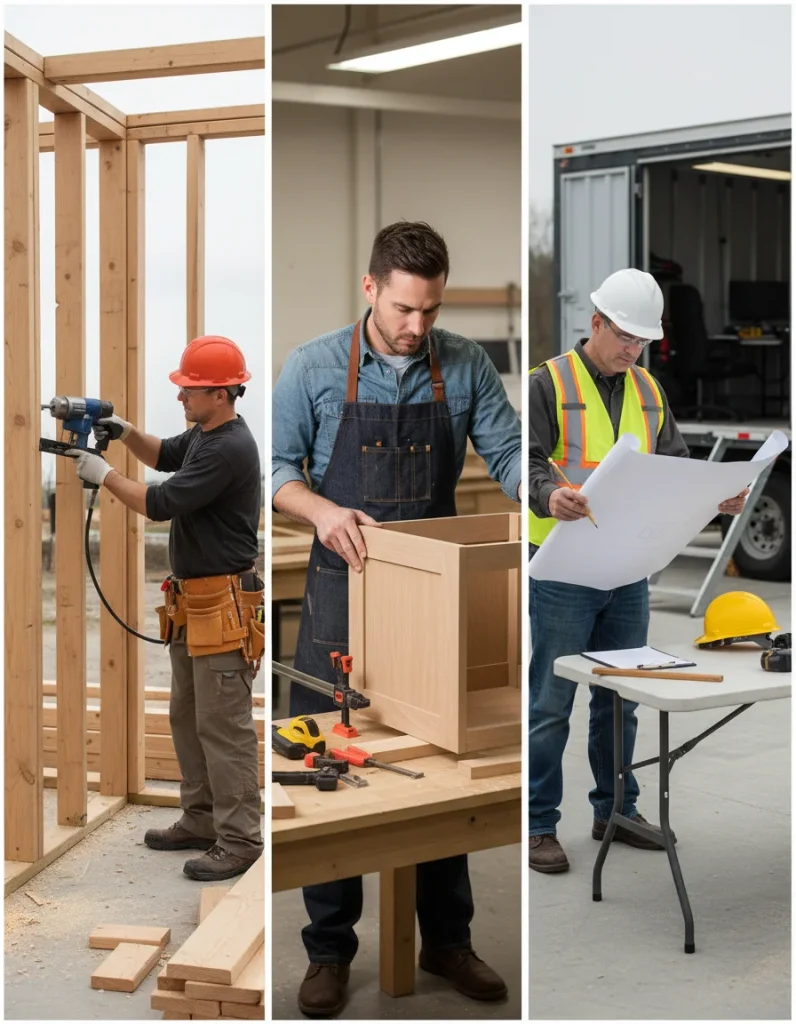
The biggest mistake homeowners make is hiring the wrong trade for the job. A framing carpenter, a finish carpenter, a cabinet maker, and a general contractor are four distinct roles — and only one of them specializes in building the cabinetry itself.
Here's the breakdown, because this confusion costs homeowners thousands of dollars every year.
Carpenter (Framing)
A framing carpenter builds the structural skeleton of your home — wall studs, floor joists, roof rafters. They work with dimensional lumber, not finished materials. A framing carpenter has no business building your kitchen cabinets.
Carpenter (Finish/Trim)
A finish carpenter installs pre-built elements — crown molding, baseboards, door casings, and sometimes pre-manufactured cabinets. They're skilled at on-site fitting and scribing, but they typically don't fabricate cabinetry from scratch.
Cabinet Maker
A cabinet maker designs and builds custom cabinetry in a shop environment, then installs it on-site. They work with precision joinery, understand wood movement, operate CNC equipment, and control the finish process. This is the trade you need for custom kitchen cabinets, bathroom vanities, built-in entertainment centers, and specialty storage.
General Contractor
A general contractor manages the overall renovation project — scheduling trades, pulling permits, coordinating timelines. Most GCs subcontract cabinet work to a dedicated cabinet maker or install stock/semi-custom cabinets sourced from a distributor. A GC who claims to build custom cabinets in-house is rare, and you should verify their shop capabilities before signing.
When to Hire Which
If you're doing a full kitchen remodel that involves plumbing, electrical, drywall, and cabinetry, a general contractor coordinates the project. But the cabinetry itself should come from a dedicated cabinet maker — either as a subcontractor or as the lead on the cabinetry scope. If your project is cabinetry-only (replacing kitchen cabinets, adding a bathroom vanity, building a mudroom), you may not need a GC at all.
| Role | What They Build | Tools/Environment | Hire For |
| Framing Carpenter | Wall studs, floor joists, roof structure | Jobsite, dimensional lumber | New construction, additions |
| Finish Carpenter | Trim, molding, pre-built cabinet installation | Jobsite, nail guns, miter saws | Trim work, cabinet hanging |
| Cabinet Maker | Custom cabinets, vanities, built-ins, millwork | Shop, CNC, table saws, finishing booth | Custom cabinetry projects |
| General Contractor | Manages full renovation scope | Coordinates all trades | Full kitchen/bath renovations |
When Should You Hire a Cabinet Maker? (And When You Don't Need One)
You need a dedicated cabinet maker when your project requires cabinetry built to non-standard dimensions, specific materials, or a design that stock and semi-custom options can't deliver. You don't need one for simple cabinet refacing, hardware swaps, or installing pre-manufactured cabinets from big-box stores.
Here's a practical decision framework:
Hire a Cabinet Maker When:
Your kitchen has non-standard wall angles, ceiling heights, or window placements that stock cabinets can't accommodate. You want specific wood species, construction methods, or finish combinations. You're adding built-in storage — window seats with drawers, mudroom cubbies, home office cabinetry, and library shelving. You need your cabinetry to match existing millwork in a historic or older home. You're building a bathroom vanity that needs to fit around existing plumbing in an unusual configuration.
Skip the Cabinet Maker When:
You're replacing cabinet doors only (a refacing company handles this). You're swapping hardware — new pulls, hinges, or soft-close upgrades. You're installing IKEA or big-box semi-custom cabinets (a finish carpenter or dedicated installer handles this). Your project is purely cosmetic — painting existing cabinets, replacing countertops without changing the cabinet layout.
The key question isn't whether custom cabinets are "better" — it's whether your project actually requires them. A qualified professional cabinet maker will tell you honestly if stock options would serve you just as well. If they push custom on a project that doesn't need it, that's a red flag.
Key Takeaways
- Cabinet makers design, build, and finish custom cabinetry — they're not carpenters, and they're not general contractors. The distinction matters for your project's quality.
- Face frame construction is the standard for New England homes — it's structurally stronger and more forgiving on older walls than frameless European-style cabinets.
- The best cabinet shops handle design through installation under one roof, reducing miscommunication and ensuring the team that built your cabinets also fits them perfectly.
- Massachusetts requires HIC registration for any contractor performing residential renovation work — verify it before signing a contract.
- A cabinet maker's typical project runs 8–14 weeks from initial measurement through installation, with fabrication consuming the largest block of time.
- Your overall home improvement contractor selection and flooring installation timing should coordinate directly with your cabinetry schedule to avoid costly delays.
Frequently Asked Questions
What does a cabinet maker do differently than a carpenter?
A cabinet maker specializes in designing and building custom cabinetry in a shop environment using precision joinery and finishing techniques. Carpenters focus on structural framing or trim installation on jobsites — they typically don't fabricate cabinetry from raw materials.
How long does it take to become a skilled cabinet maker?
Most cabinetmakers need 2 to 4 years of hands-on training to become proficient. This can come through formal apprenticeship programs, vocational schools, or on-the-job learning in an established cabinet shop.
Do cabinet makers also install the cabinets they build?
Some do, some don't. The best approach for homeowners is to hire a cabinet maker who handles both fabrication and installation, ensuring the team that built the cabinets understands exactly how they should fit in your space.
What materials do cabinet makers work with most often?
The primary materials are plywood for cabinet boxes, MDF for paint-grade doors, and solid hardwood like maple, cherry, or oak for face frames and stain-grade doors. Hardware includes soft-close hinges, drawer slides, and specialty organizers.
Is a cabinet maker the same as a cabinet installer?
No. A cabinet installer hangs pre-built cabinets on-site but doesn't fabricate them. A cabinet maker builds the cabinetry from scratch. Some professionals do both, but the skills and tools involved are quite different.
How much does a custom cabinet maker charge in Massachusetts?
Pricing varies based on materials, complexity, and scope. Contact local cabinet makers for project-specific quotes. Avoid any shop that gives you a price without measuring your space first — that's a sign they're guessing.
What should I look for when hiring a cabinet maker?
Verify their Massachusetts HIC registration, ask for references from completed kitchen or bathroom projects, visit their shop if possible, and confirm whether they handle installation in-house or subcontract it.
Can a cabinet maker build things other than kitchen cabinets?
Yes. Cabinet makers also build bathroom vanities, mudroom storage, home office built-ins, entertainment centers, library shelving, window seats, and other custom millwork.
Do I need a cabinet maker for a small project like a single bathroom vanity?
It depends on the vanity. If you need non-standard dimensions, specific materials, or a design that matches existing millwork, a cabinet maker is the right call. For a standard-size vanity, a pre-built option may be more practical.
What's the difference between custom cabinets and semi-custom cabinets?
Custom cabinets are built from scratch to your exact specifications. Semi-custom cabinets start as a manufacturer's standard product with limited modification options like depth adjustments or finish changes. A cabinet maker builds custom; a dealer sells semi-custom.
Conclusion
A cabinet maker is a specialized trade professional who designs, fabricates, and installs custom cabinetry — and understanding that distinction is the first step to hiring the right person for your project. Whether you're planning a full kitchen renovation on the North Shore or adding built-in storage to a single room, knowing what this trade does (and doesn't do) saves you time, money, and frustration.
CabStone handles the full cabinetry process from design through installation — one team, no handoffs. If you're ready to talk about your project, we're in Middleton and we work across the North Shore.