Fire Pits, Pool Houses, and Custom Structures: The Features That Transform Backyards
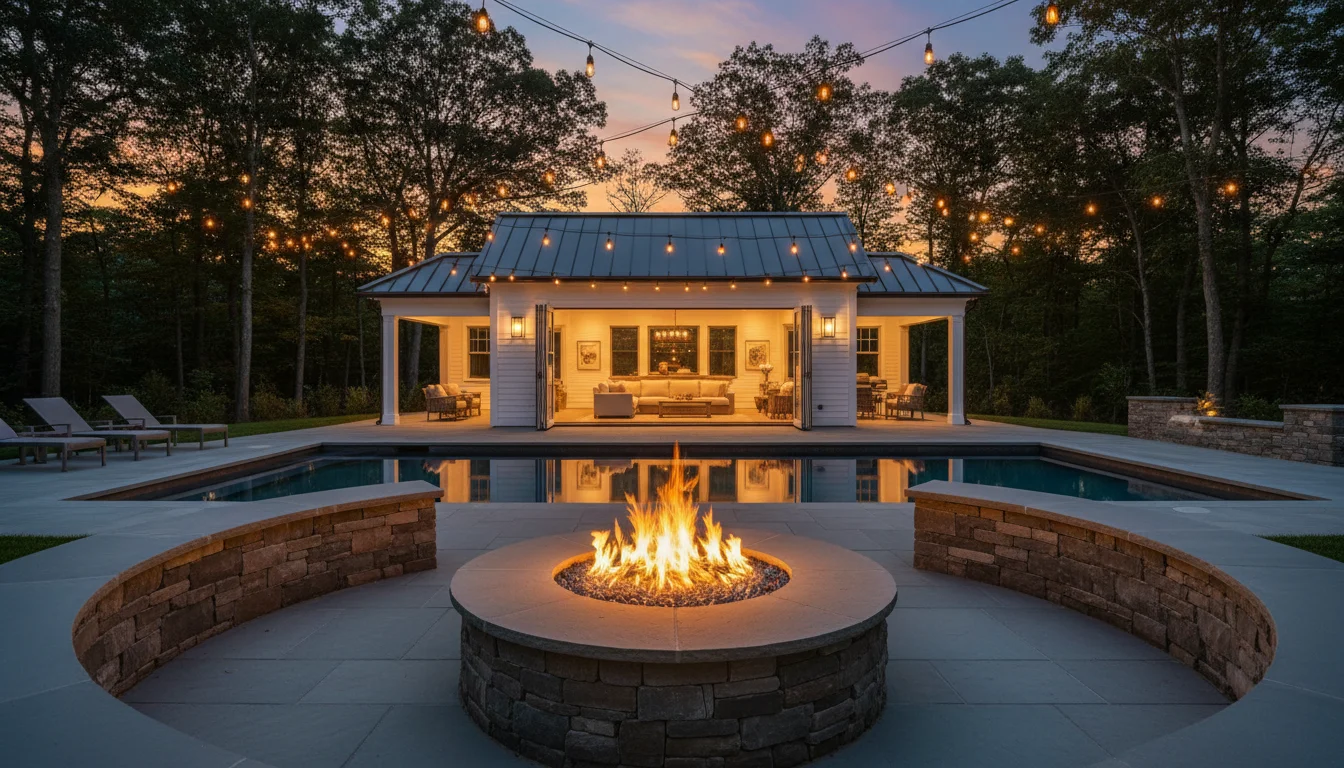
The difference between a nice backyard and one that genuinely changes how your family lives comes down to purpose-built structures. Fire pits create gathering spaces. Pool houses add functional square footage. Custom structures tie everything together into an outdoor room that works from spring through fall - and looks good under snow the rest of the year.
Most North Shore homeowners start with one feature in mind. Maybe it's a fire pit for fall evenings. Maybe it's a pool house, so the kids stop tracking pool water through the kitchen. Maybe it's something they can't quite name yet - a covered bar, a garden structure, a space that fills a gap they feel every time they look out the back window. Whatever the starting point, the end result is almost always bigger than the original idea.
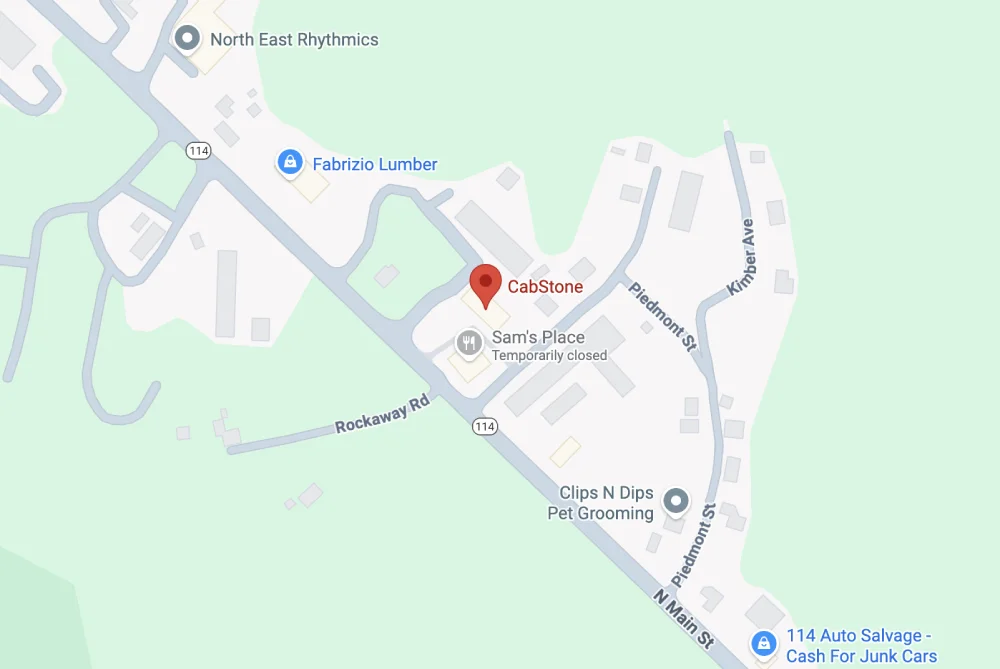
We're CabStone, and we build outdoor structures from our shop in Middleton, MA. What we've learned after years of building these features across the Boston North Shore is that the best backyard projects aren't the ones with the biggest budgets. They're the ones where every structure has a clear purpose, connects logically to the rest of the yard, and is built to survive the weather we actually get here in Massachusetts.
Fire Pits and Fire Features: The Backyard's Social Center
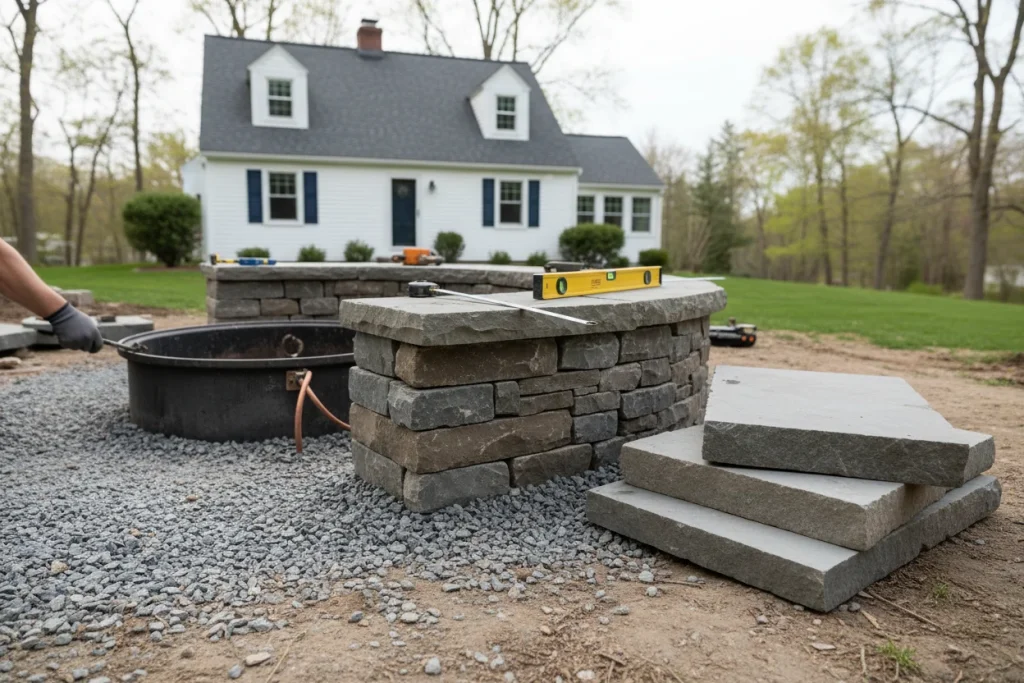
A fire pit is the single most effective feature for extending your outdoor season in New England. Gas or wood-burning, built-in or freestanding, a well-placed fire pit turns your backyard into a three-season gathering space and gives your family a reason to be outside on every cool evening from September through May.
There's a reason every backyard renovation conversation eventually comes back to fire. A fire pit creates a natural gathering point - something about an open flame makes people sit down, relax, and actually talk to each other. It's probably the oldest social technology humans have, and it still works.
But not all fire features are created equal, and the choices you make about fuel type, construction materials, and placement have real consequences for how much you'll actually use yours.
Gas vs. Wood-Burning: The Honest Comparison
Wood-burning fire pits are romantic. The crackling, the smoke smell on your jacket, the ritual of building the fire - there's nothing quite like it. But wood-burning pits also throw sparks, generate smoke that drifts into your neighbor's yard (or your own face), and are increasingly restricted by local burn regulations in Massachusetts towns.
Gas fire pits run on natural gas or propane, ignite with a switch or remote, and produce no sparks or smoke. They're cleaner, more convenient, and you can shut them off when the conversation ends without waiting for embers to die. The trade-off? They don't have the same campfire feel and require a gas line or a propane tank connection.
We install both. Our recommendation depends on your yard layout, your town's regulations, and honestly, what you value more: atmosphere or convenience.
- Built-in stone fire pits with natural stone veneer and bluestone or granite caps create a permanent focal point and can incorporate built-in seating walls
- Fire tables combine a gas burner with a functional tabletop surface - great for smaller patios where a full fire pit would overwhelm the space
- Outdoor fireplaces direct heat forward and manage smoke through a chimney, making them ideal for covered patios or spaces close to the house
- Portable fire bowls offer flexibility for homeowners who want to reposition the fire feature seasonally or move it to different zones of the yard
| Fire Feature Type | Fuel Options | Best For | Permanent? | Smoke Management |
| Built-in fire pit | Gas or wood | Open yards, dedicated seating areas | Yes | Gas: none; Wood: open dispersal |
| Fire table | Gas only | Small patios, dining areas | Semi-permanent | None |
| Outdoor fireplace | Gas or wood | Covered patios, close to the house | Yes | The chimney directs smoke up |
| Portable fire bowl | Gas or wood | Flexible layouts, seasonal use | No | Varies |
Pool Houses: More Than a Changing Room
A pool house anchors your outdoor living area by providing covered entertaining space, a bathroom, equipment storage, and a transition zone between the pool and the house. Built correctly, it's an outdoor room that extends your home's functional square footage without the complexity of a full addition.
If you have a pool or you're planning one, a pool house is the feature that makes the pool experience actually work. Without one, you're drying off on the deck and walking wet footprints through the kitchen to use the bathroom. Towels live in a pile on a chair. Pool chemicals are in the garage. Everything about the pool experience involves going back inside, which defeats the purpose of being outside.
A well-designed pool house solves all of that. At minimum, it gives you a changing area and a place to store towels and supplies. At its best, it becomes a fully finished outdoor room with a bathroom, wet bar, seating area, and folding glass doors that open the interior to the pool deck.
What Determines Pool House Scope
The scope of your pool house depends on three things: how you plan to use it, what your lot allows, and what your town's zoning permits.
Here's the zoning reality for Massachusetts homeowners: pool houses are typically classified as accessory structures, and most towns have specific rules about maximum square footage, setback distances from property lines, height limits, and whether plumbing is permitted. Some towns classify structures over a certain size as accessory dwelling units, which triggers an entirely different permitting process. We sort all of this out during the design phase, but it's important to know upfront that your dream pool house might need to be adjusted to fit local regulations.
The CPSC provides safety barrier guidelines for residential pools that also affect the design of pool houses and surrounding structures. Barriers, gates, and fencing requirements all influence the layout and access points of your pool house relative to the pool itself.
- Basic pool house (under 200 sq ft) - Changing area, storage, outdoor shower, no plumbing required in many towns
- Mid-range pool house (200-400 sq ft) - Bathroom with plumbing, storage, small covered seating area, electrical for lighting and fans
- Full pool house (400+ sq ft) - Bathroom, wet bar or kitchenette, lounge area, folding glass doors, climate control options, may trigger ADU zoning review
| Pool House Tier | Typical Size | Key Features | Plumbing? | Permit Complexity |
| Basic | Under 200 sq ft | Changing room, storage, hooks | No | Standard building permit |
| Mid-range | 200-400 sq ft | Bathroom, covered porch, electrical | Yes | Building + plumbing permits |
| Full | 400+ sq ft | Bathroom, wet bar, lounge, HVAC | Yes | May require zoning review |
Custom Structures: When Your Backyard Needs Something That Doesn't Have a Name
Custom outdoor structures fill the gaps that standard features can't. A covered bar, a garden shed that doubles as a potting station, a screened dining pavilion, a yoga platform with a privacy wall - these are the builds that make a backyard feel like it was designed for your specific family rather than pulled from a catalog.
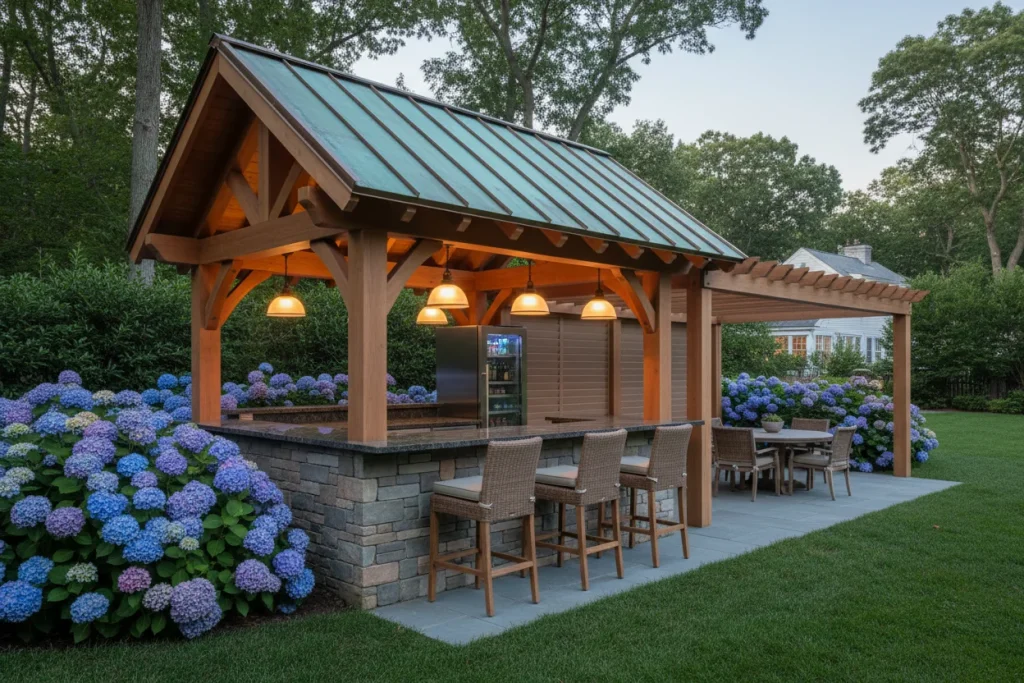
Not every outdoor project fits into a neat category. We've built structures that started as "I want something like a pool house but without a pool" and ended up as fully finished outdoor rooms with cedar post-and-beam framing, standing seam roofs, and custom stone bars. We've built garden structures with built-in potting benches and tool storage for homeowners who take their landscaping seriously. We've built covered outdoor offices for people who want a quiet workspace outside their house.
The common thread across every custom outdoor building is that the design starts with a conversation about how you actually live in your yard - not with a prefab catalog. What do you do outside? Where do you spend time? What's missing? Where does the traffic flow break down? Those answers drive the design.
Combining Structures Into a Cohesive Outdoor Plan
The most successful backyard structures don't exist in isolation. A fire pit connects to a patio, which connects to an outdoor kitchen, which connects to a motorized pergola, which connects to a pool house. Each structure serves its own purpose, but together they create an outdoor living area that flows the way a well-designed home interior does - from gathering spaces to dining spaces to quiet spaces.
We plan these connections from day one, even if you're building in phases. A fire pit built this year should be positioned with sight lines to the pool house you're planning for next year. The electrical conduit for landscape lighting should be run during the patio installation so you don't have to tear up hardscaping later. The grading should anticipate drainage from future structures. Thinking ahead saves money, preserves landscaping, and results in a backyard that looks intentional rather than assembled.
- Covered bars and entertaining stations - Cedar or stone construction with built-in refrigeration, granite or bluestone countertops, pendant lighting, and seating
- Garden structures - Combination potting stations and tool storage with running water, workbench surfaces, and natural ventilation
- Screened pavilions - Fully enclosed outdoor dining rooms with retractable screens for bug-free meals from May through October
- Hybrid structures - Buildings that combine multiple functions, like a pool house with an attached outdoor kitchen, or a garden shed with an integrated covered seating area
Planning, Permitting, and the Build Process for Outdoor Structures
Every outdoor structure in Massachusetts requires some level of planning and most require permits. The process follows a predictable path: site assessment, design, permit submission, construction, inspection, and final walkthrough. Skipping steps - especially permitting - creates problems that are expensive to fix after the fact.
We're not going to pretend permitting is exciting. But ignoring it is the fastest way to turn a backyard project into a legal headache. We've seen homeowners build fire pits that violated setback requirements, pool houses that exceeded lot coverage limits, and structures that were ordered torn down because no permit was pulled. Don't be that person.
Here's what the process actually looks like when you do it right:
Site Assessment and Design
We walk your property and evaluate grading, drainage patterns, existing utilities, sun and shade exposure, wind patterns, and sight lines from inside the house. We note setback requirements for your specific town and identify any easements or conservation restrictions that might limit where structures can go. Then we design around those realities, not in spite of them.
Permitting
Most outdoor structures in Massachusetts need a building permit at minimum. Structures with gas lines need a plumbing/gas permit. Structures with electrical need an electrical permit. Pool-adjacent structures need to comply with barrier requirements. We handle all permit applications and coordinate with local building departments as part of our design-build process.
Construction and Inspection
We build in a logical sequence - foundation and utilities first, then structure, then finishes. Each phase has corresponding inspections that the building department needs to sign off on before we proceed. Trying to skip or rush inspections is a recipe for having to tear out finished work to expose what an inspector needs to see.
Final Walkthrough
We walk the completed project with you, test every system, review maintenance requirements, and provide warranty documentation. If something isn't right, we fix it before we call the project done.
| Phase | What Happens | Typical Duration |
| Site assessment and design | Property walk, measurements, design concepts, revisions | 2-4 weeks |
| Permitting | Application submission, plan review, approval | 2-6 weeks (town-dependent) |
| Construction | Foundation, framing, utilities, finishes | 4-14 weeks (scope-dependent) |
| Inspections | Foundation, framing, electrical, plumbing, final | Throughout construction |
| Final walkthrough | Client review, punch list, warranty handoff | 1 day |
Key Takeaways
- Fire pits are the highest-impact, lowest-barrier entry point for transforming a backyard into a three-season living space on the North Shore
- Gas and wood-burning fire features serve different purposes - choose based on your town's regulations, your yard layout, and whether you value convenience or atmosphere
- Pool houses range from basic changing rooms to fully finished outdoor rooms - scope depends on your budget, lot size, and local zoning
- Zoning and permitting affect every outdoor structure - pool houses, fire features, and custom buildings all have setback, size, and code requirements specific to your Massachusetts town
- Custom structures fill gaps that standard features can't - the best backyard designs start with how you live, not with a product catalog
- Plan connections between structures from day one - even if you build in phases, positioning, utilities, and grading should anticipate future additions
Frequently Asked Questions
Do I need a permit for a fire pit in Massachusetts?
It depends on your town and the fuel type. Many Massachusetts towns require an open burning permit for wood-burning fire pits, and gas fire pits require a gas permit for the fuel line connection. Check with your local fire department and building department before construction.
How far does a fire pit need to be from my house?
Most building codes and fire safety guidelines require wood-burning fire pits to be at least ten feet from any structure, property line, or combustible material. Gas fire pits may have slightly different setback requirements depending on local codes.
What's the difference between a pool house and a cabana?
A pool house is a permanent enclosed structure with walls, a roof, and typically plumbing and electrical. A cabana is usually a lighter, partially open structure - sometimes with one side fully open to the pool. Pool houses are more expensive but far more functional.
Can I build a pool house with a bathroom in Massachusetts?
In most towns, yes, but it requires building and plumbing permits. Some towns restrict plumbing in accessory structures below a certain square footage, and structures with bathrooms may be classified differently for zoning purposes.
How long does it take to build a pool house?
A basic pool house without plumbing takes four to six weeks. A full pool house with bathroom, wet bar, and finished interior typically takes eight to fourteen weeks from groundbreaking to completion, not including the permitting phase.
What materials hold up best for outdoor structures in New England?
Cedar, pressure-treated lumber, composite materials, natural stone, and aluminum all perform well in our climate. Standing seam metal roofs handle snow loads better than shingle roofs on small structures. We avoid untreated pine and mild steel for anything exposed to weather.
Can I build outdoor structures in phases over multiple years?
Absolutely, and we recommend it for many homeowners. The key is planning the full vision upfront so each phase connects logically to the next - running conduit during Phase 1 for Phase 3 lighting saves you from digging up finished work later.
What's the best fuel type for a fire pit on the North Shore?
Gas fire pits offer the most convenience and fewest restrictions. Natural gas is the most economical if you already have a gas line. Propane works well for locations far from the house. Wood-burning is the most atmospheric but faces increasing regulation in many Massachusetts communities.
Do outdoor structures increase home value?
Research consistently suggests that well-designed outdoor living features - particularly covered structures, outdoor kitchens, and fire features - add value at resale. The key is quality construction and a design that complements the home's architecture.
How do I choose between a fire pit and an outdoor fireplace?
Fire pits create 360-degree social gathering with seating all around. Outdoor fireplaces direct heat outward and channel smoke through a chimney, making them better suited for covered patios or close-to-house installations. If your space is open and social, a fire pit usually works better. If you want a focal point against a wall or under a roof, a fireplace is the better choice.
Conclusion
Fire pits, pool houses, and custom structures aren't just additions to your backyard - they're the features that define how you actually use your outdoor space. A fire pit gives you a reason to be outside on a cool October evening. A pool house keeps your home clean and your pool experience self-contained. A custom structure solves the specific problem that no off-the-shelf product addresses. Together, they transform a yard into an outdoor living space that works for your family through every season the North Shore throws at you.CabStone designs and builds outdoor structures across the North Shore and greater Boston area. If you're ready to start planning, call us at 617-699-3945 or visit 325A North Main Street, Middleton, MA 01949.