MDF vs Plywood vs Hardwood Cabinets: Which Is Right for You
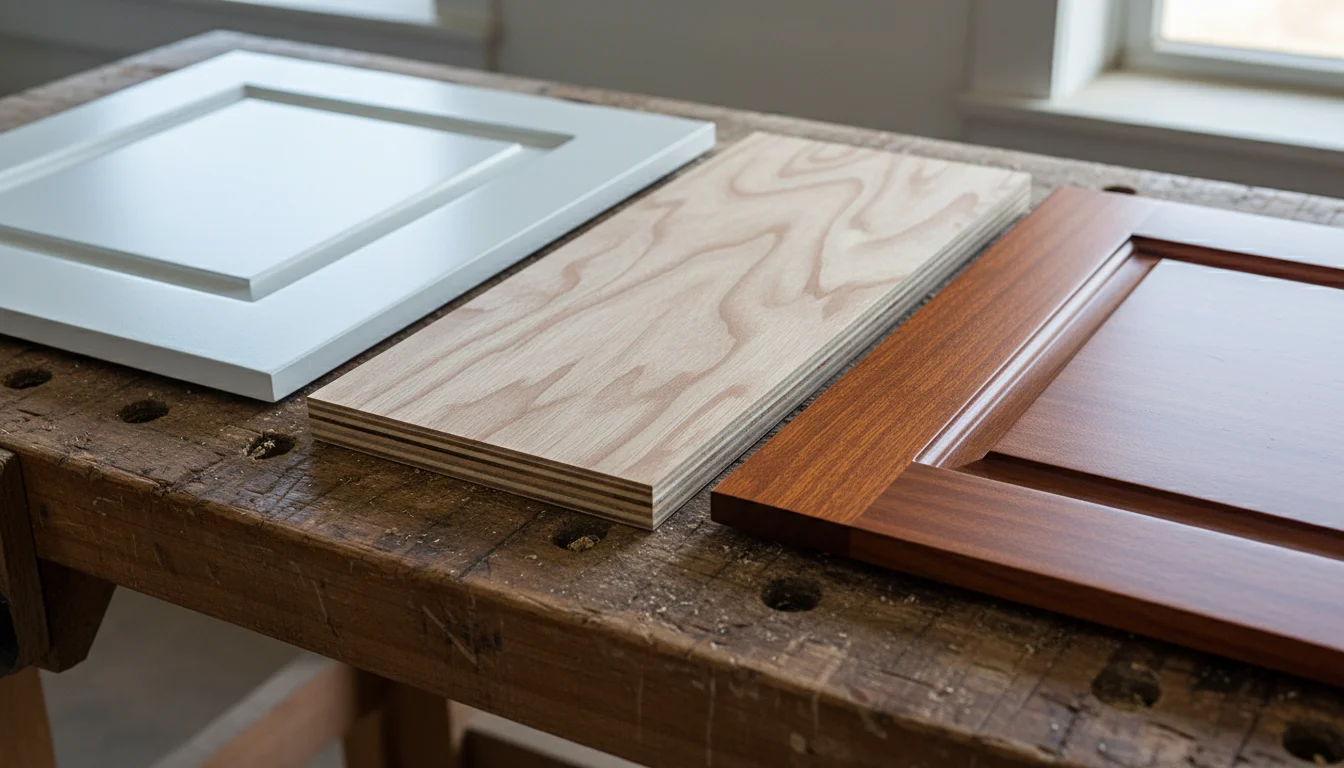
MDF is best for painted cabinet doors because it stays perfectly smooth with no grain showing through. Plywood is the strongest choice for cabinet boxes because it holds screws well and resists moisture. Solid hardwood is ideal for face frames and stained doors where you want the natural wood grain to show. Most quality cabinets use all three materials in different parts of the cabinet.
This is probably the most common question we get at CabStone: "What should my cabinets be made of?" And the honest answer is that it's not a one-material decision. The best custom cabinets use the right material in the right place. That means you need to understand what each material does well and where it falls short.
We build custom kitchen cabinets in Middleton, MA using all three materials - MDF, plywood, and solid hardwood - and we pick which one goes where based on your design, your finish, and how the cabinet will be used. Here's the breakdown we give every client who asks.
What Each Material Actually Is (And Isn't)
MDF is compressed wood fiber, plywood is layered wood veneers, and hardwood is solid lumber from a single tree species. They're all wood-based, but they behave completely differently when you cut them, fasten them, finish them, and expose them to moisture.
Let's clear up some confusion first.
Medium-density fiberboard (MDF) is made from wood fibers broken down into a fine pulp, mixed with resin, and compressed under extreme pressure and heat into flat, dense panels. The result is a board with no grain direction, no knots, and a surface so smooth it feels almost like hardboard. That smoothness is MDF's superpower for cabinet work.
Plywood is sheets of wood veneer layered at alternating 90-degree angles and bonded with adhesive. This cross-grain construction gives plywood excellent dimensional stability and strength. It holds screws better than MDF, resists moisture better than MDF, and won't swell irreversibly like MDF when it gets wet. For cabinet box construction, plywood is the industry standard in quality work.
Solid hardwood - cherry, maple, oak, walnut, birch - is milled directly from lumber. It's the strongest material of the three, shows beautiful natural grain patterns, and can be sanded and refinished. But solid wood expands and contracts with changes in humidity, which is why we don't build entire cabinets from it. Wide solid panels can warp, cup, or crack if they're not properly dried and stabilized.
| Property | MDF | Plywood | Solid Hardwood |
| Surface smoothness | Excellent | Good (varies by veneer) | Varies by species and cut |
| Screw holding | Fair | Good | Excellent |
| Moisture resistance | Poor - swells permanently | Good | Moderate - moves with humidity |
| Weight (3/4" 4x8 sheet) | ~100 lbs | ~68-80 lbs | N/A (sold as lumber) |
| Paintability | Excellent - no grain telegraphing | Good with proper prep | Good but grain shows through |
| Stainability | Poor - absorbs unevenly | Fair (edge grain visible) | Excellent - natural beauty |
| Flatness | Excellent | Fair to Good | Varies - can warp |
Where We Use Each Material in a CabStone Cabinet
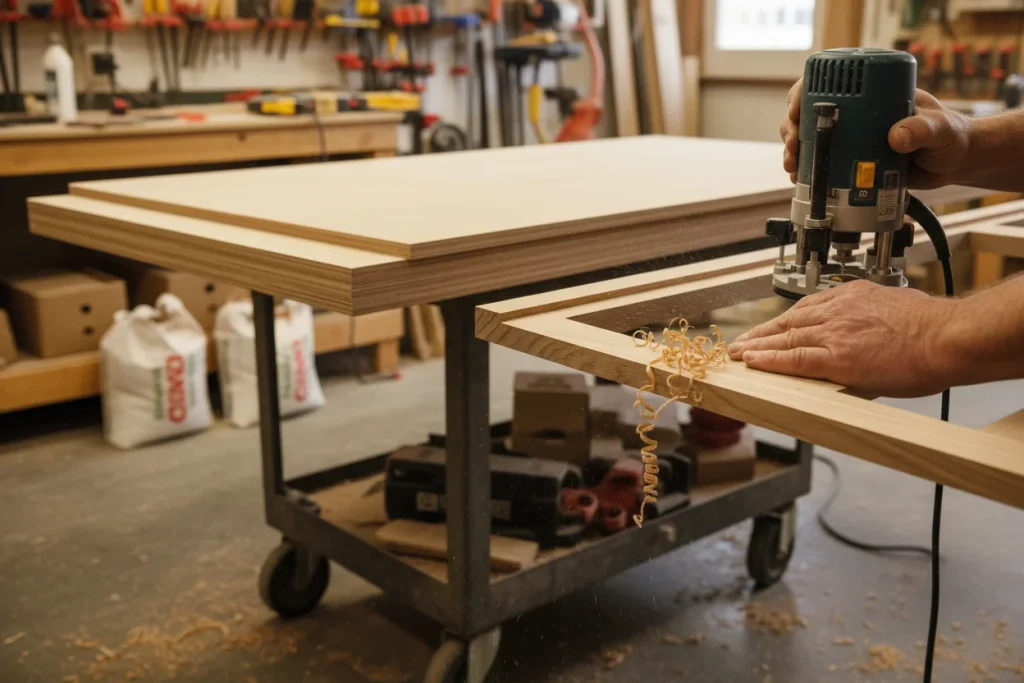
We use plywood for cabinet boxes, MDF for painted doors and panels, and solid hardwood for stained doors, face frames, and drawer fronts. This combination gives you the best structural performance, the best finish quality, and the best long-term durability for each component.
Here's the thing most homeowners don't realize: a single kitchen cabinet is made up of multiple components, and each component has different performance demands. The box needs structural strength and moisture resistance. The doors need a flawless finish surface. The face frame needs to hold hardware and withstand years of daily contact.
Cabinet Boxes: Plywood Wins
The cabinet box is the structural backbone. It hangs on the wall, holds the shelves, and supports the weight of everything you store inside. We build every box from plywood - specifically, 3/4-inch hardwood plywood for the sides, top, and bottom, with 1/4-inch plywood for the back panel.
Why not MDF boxes? Weight and moisture. An MDF box is significantly heavier, making wall cabinets harder to install and putting more stress on mounting hardware. And if moisture gets to MDF - from a leaking sink, a dishwasher malfunction, or even just high kitchen humidity over the years - it swells and doesn't recover. Plywood handles moisture exposure without permanent damage.
Why not particleboard? Because it's the worst of both worlds: heavier than plywood, weaker than plywood, and even less moisture-resistant than MDF. If a contractor quotes you particleboard cabinet boxes, that's a red flag. The Composite Panel Association sets standards for panel products, and even within those standards, particleboard is the bottom tier for cabinet construction.
Doors and Panels: Depends on the Finish
This is where the MDF vs hardwood decision gets real. If you're painting your cabinets white, grey, navy, or any solid color, MDF is the better material for doors. MDF's perfectly smooth surface means no wood grain telegraphing through the paint over time. Solid wood doors, no matter how well you prep and prime them, will eventually show grain lines through paint as the wood moves seasonally. MDF paint-grade cabinets stay smooth indefinitely.
If you're staining your cabinets to show natural wood, solid hardwood is the only option that makes sense. Cherry, maple, white oak, walnut - each species has distinct grain patterns and color characteristics that stain brings to life. MDF can't replicate that. It absorbs stain unevenly and looks flat and artificial.
Face Frames: Hardwood Standard
Face frames - the front-facing framework that surrounds the cabinet openings - are almost always solid hardwood in quality cabinet work. They need to hold hinge screws, withstand daily contact, and provide a crisp, durable edge. Maple and poplar are the most common face frame species: maple for stained cabinets, poplar for painted ones (poplar is less expensive and takes paint beautifully).
- Plywood boxes give you strength, screw-holding, and moisture resistance where it matters most
- MDF doors deliver a glass-smooth paint finish that won't show grain over time
- Hardwood doors showcase natural grain patterns when staining is the goal
- Hardwood face frames provide the screw-holding and impact resistance the cabinet front demands
- MDF panels work well for cabinet sides that will be painted and aren't exposed to moisture
How to Make the Right Material Decision for Your Kitchen
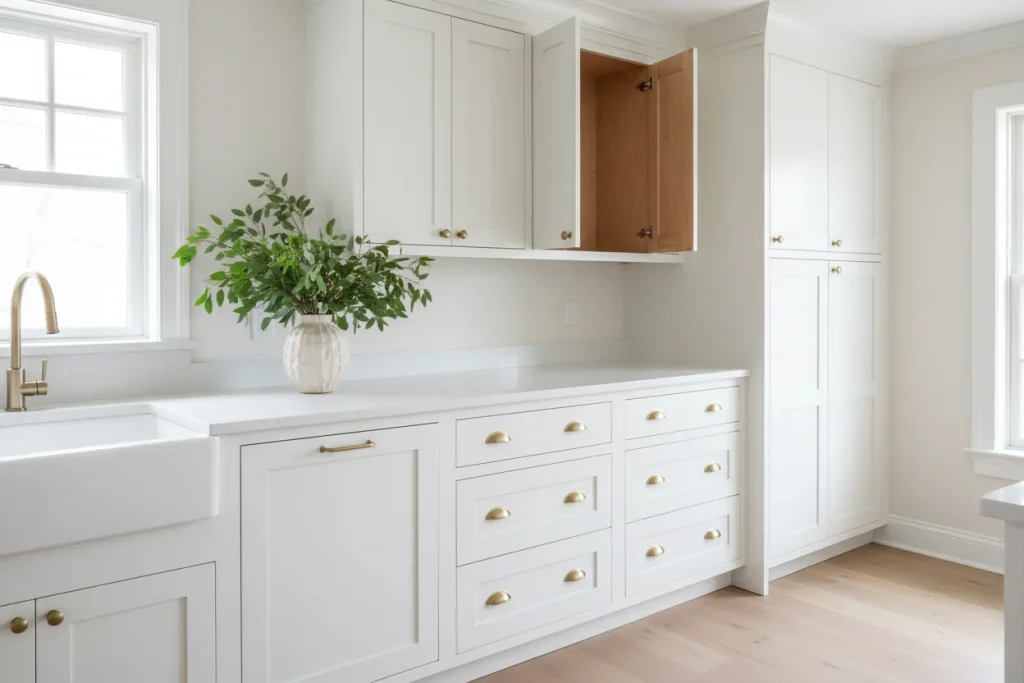
Start with your finish. If you're painting, specify MDF doors on plywood boxes with hardwood face frames. If you're staining, specify solid hardwood doors and face frames on plywood boxes. Then verify that your contractor isn't substituting particleboard for plywood in the boxes - that's the most common quality shortcut in the industry.
The material conversation should happen early in your cabinet design process because it affects everything downstream - finish options, hardware choices, weight considerations for wall mounting, and long-term performance in your kitchen's environment.
Kitchen humidity is the variable most homeowners underestimate. Cooking generates steam. Dishwashers vent moisture. Sinks splash. Over years, this constant moisture exposure tests every material in your kitchen. Plywood boxes handle it. MDF doors handle it if they're properly sealed on all six sides (including edges). Particleboard fails.
Here's the question to ask any cabinet contractor: "What material are you using for the cabinet boxes?" If the answer is particleboard or "furniture board," you're getting the budget tier regardless of how nice the doors look. Plywood cabinet boxes are the baseline for quality residential cabinetry, and they should be non-negotiable in any custom cabinet project on the North Shore.
Key Takeaways
- No single material is best for an entire cabinet - quality construction uses MDF, plywood, and hardwood together, each where it performs best
- Plywood is the standard for cabinet boxes - it's lighter than MDF, holds screws better, and handles moisture without permanent swelling
- MDF is the go-to for painted doors - its smooth surface prevents grain telegraphing that plagues painted solid wood doors over time
- Solid hardwood is essential for stained cabinets - MDF and plywood can't replicate natural wood grain and color depth
- Avoid particleboard anywhere in a kitchen cabinet - it's the weakest, heaviest, and least moisture-resistant option
- Ask your contractor what's in the box - the material behind the doors matters more than the door material for long-term cabinet performance
Frequently Asked Questions
Is MDF cheaper than plywood for cabinets?
MDF panels cost less per sheet than hardwood plywood, but the difference in a full kitchen is modest. The bigger consideration is performance: MDF is better for painted doors while plywood is better for cabinet boxes. Choosing based on application rather than cost leads to a better-performing kitchen.
Will MDF cabinets last as long as solid wood?
MDF doors and panels last for decades when properly sealed and maintained. The key is sealing all six sides - including edges - to prevent moisture absorption. In a well-ventilated kitchen, painted MDF doors can outlast solid-wood doors, which crack or warp from changes in humidity.
Can you tell the difference between MDF and solid wood once cabinets are painted?
Visually, painted MDF looks smoother and more consistent than painted solid wood. Over time, solid wood may show grain lines through paint as the wood expands and contracts seasonally. MDF won't develop those lines, which is why professional cabinet shops prefer it for painted finishes.
Why does CabStone use plywood instead of particleboard for boxes?
Plywood holds screws better, weighs less, and handles moisture without permanent swelling. Particleboard is cheaper, but it's the first component to fail in a kitchen environment. We consider plywood boxes the minimum standard for cabinets that need to last.
What wood species work best for stained kitchen cabinets?
Cherry, white oak, maple, and walnut are the most popular species for stained cabinetry on the North Shore. Cherry darkens naturally over time, oak shows pronounced grain, maple offers a clean, uniform look, and walnut brings deep rich brown tones.
Is plywood or MDF better for bathroom cabinets?
Plywood is the better choice for bathroom cabinet boxes due to higher moisture exposure. For bathroom vanity doors, MDF works well if sealed properly, but in bathrooms with poor ventilation, solid hardwood or marine-grade plywood may be worth considering.
What does "grain telegraphing" mean in painted cabinets?
Grain telegraphing is when the natural wood grain pattern becomes visible through paint as the wood expands and contracts seasonally. It appears as subtly raised lines on the painted surface. MDF eliminates this problem because it has no directional grain.
Should I avoid MDF entirely in my kitchen?
No. MDF is excellent for painted doors, end panels, and decorative elements. The key is using it where its strengths matter (smooth painted surfaces) and avoiding it where its weaknesses are exposed (structural boxes, areas near water sources).
How do I know if a contractor is using particleboard instead of plywood?
Ask directly and request it in writing. You can also check by looking at the edge of a cabinet panel: plywood shows distinct veneer layers, particleboard shows compressed wood chips, and MDF shows a uniform, dense composition. Open a cabinet door and look at the box edges.
Does CabStone offer samples of different cabinet materials?
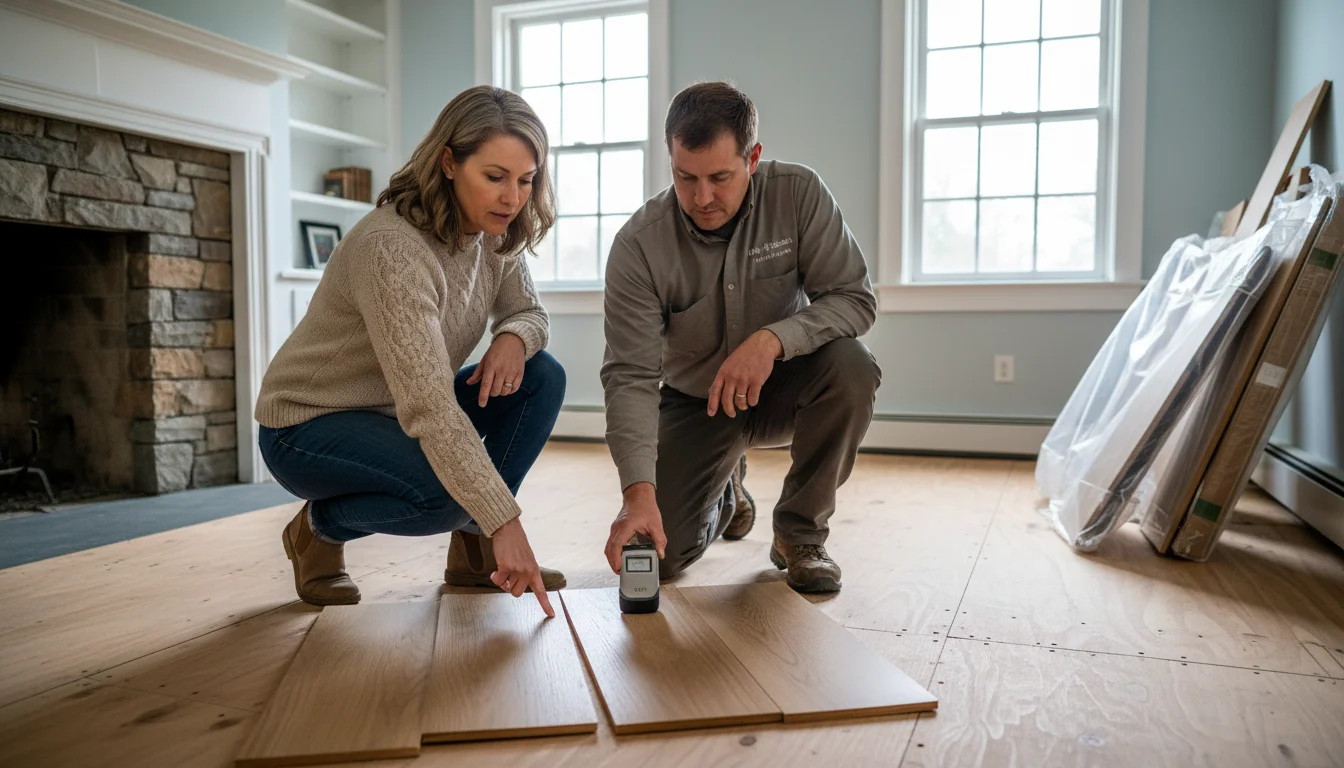
Yes. We keep samples of MDF, plywood, and various hardwood species at our Middleton shop so you can see, touch, and compare the materials before making a decision. Call 617-699-3945 to schedule a visit.
Conclusion
The MDF vs. plywood vs. hardwood question doesn't have a single right answer because each material is best suited for a different part of the cabinet. The best cabinets aren't all one material - they're a thoughtful combination of plywood strength in the box, MDF smoothness in painted doors, and hardwood beauty in stained components and face frames.
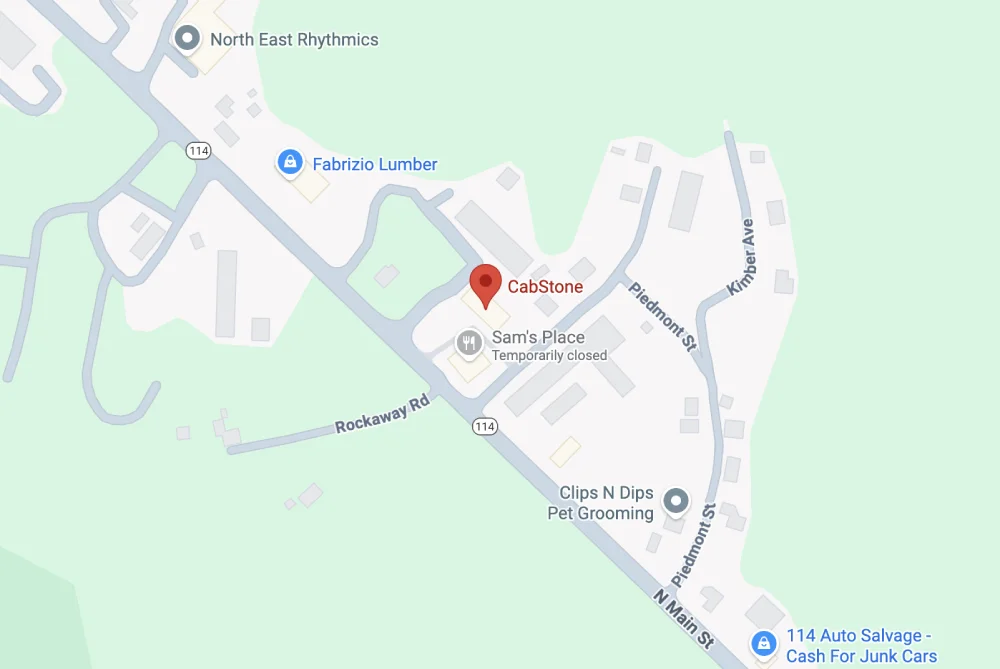
CabStone builds custom kitchen cabinets using all three materials, matched to your finish and your kitchen's demands. Call us at 617-699-3945 or visit 325A North Main Street, Middleton, MA 01949 to see samples and talk through your options.