How to Choose the Right Flooring for Your Entire Home

Choosing whole-home flooring means matching materials to each room's specific needs—prioritizing moisture resistance in wet areas, durability in high-traffic spaces, and comfort in bedrooms—while working with your trusted home renovation partner to balance upfront costs with long-term maintenance and resale value.
Key Takeaways
- Match flooring to room function: Use moisture-resistant tile or luxury vinyl in kitchens and bathrooms, durable hardwood or LVP in living areas, and comfort-focused carpet or hardwood in bedrooms.
- Calculate long-term costs, not just upfront prices: Hardwood offers the highest resale value, with a 118–147% ROI, while vinyl and engineered wood offer balanced durability with lower maintenance demands.
- Maintain consistent flooring throughout your home to signal quality maintenance, improve visual flow, and increase overall marketability to potential buyers.
- Evaluate maintenance frequency and annual upkeep costs, which range from $1–$5 per square foot depending on material—affecting your true cost of ownership over time.
- Consider sustainable, low-VOC options like bamboo or cork for eco-friendly aesthetics, faster material regeneration, and improved indoor air quality without compromising durability.
Assessing Your Lifestyle and Usage Needs
How does one select flooring that truly fits a home's daily demands? A thorough lifestyle assessment forms the foundation of any effective flooring decision.
High-traffic areas like living rooms and hallways demand durable materials, as 43% of consumers prioritize these spaces for upgrades. Kitchens, featured in 60% of multi-room projects, require flooring resistant to frequent wear and moisture exposure.
Households with new children or pets need resilient, easy-to-clean surfaces. Data shows that 18% of recent flooring projects were prompted by major life changes, such as the arrival of a young family or the adoption of a pet. Luxury vinyl and laminate offer practical solutions that combine durability with low-maintenance benefits for families managing active households.
Bedrooms and quiet living spaces benefit from softer, warmer materials like hardwood or carpet, which add comfort and reduce noise from footsteps and daily movement.
Understanding Different Flooring Types and Their Benefits
With lifestyle needs identified, homeowners can evaluate the available flooring materials to meet those needs. Each option offers distinct advantages in aesthetics, durability, and maintenance.
Hardwood provides timeless beauty and longevity spanning 20–100 years, though it requires periodic maintenance and sealing. Engineered wood combines genuine wood appearance with enhanced moisture resistance, making it suitable for kitchens and basements where standard hardwood might warp.
Vinyl and luxury vinyl offer waterproof protection, realistic wood or stone designs, and simple click-lock installation. Laminate delivers budget-friendly aesthetics with scratch resistance but cannot be refinished. Marmoleum and cork are eco-friendly, natural options made from renewable materials, including linseed oil, wood flour, and sustainable tree bark.
Tile flooring offers exceptional durability and moisture resistance, making it ideal for bathrooms and entryways, though it requires skilled installation and ongoing grout maintenance.
Understanding these material characteristics enables homeowners to match flooring types with specific room requirements and personal preferences.
Room-by-Room Flooring Recommendations
Different rooms in a home face distinct environmental challenges and functional demands, requiring customized floor installation service from experienced professionals.
Bathrooms & Moisture Control
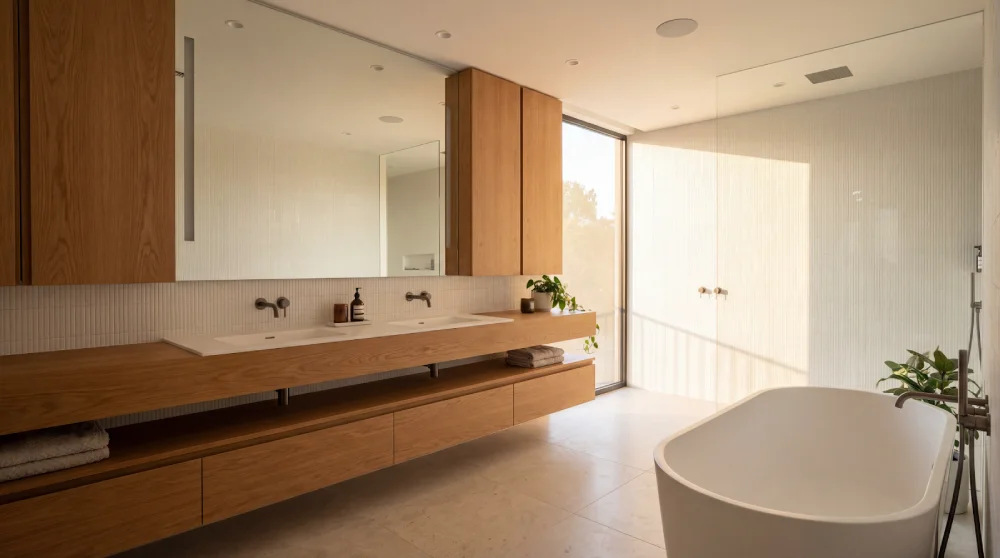
Bathrooms are constantly exposed to water, steam, and humidity, making moisture-resistant flooring one of the most critical renovation decisions homeowners make.
Moisture resistance depends on selecting flooring materials that meet ASTM standards for water protection. Porcelain tile offers superior performance due to its higher density and lower porosity compared to ceramic alternatives. Luxury vinyl planks provide 100% waterproof protection with 20-30 year warranties, combining durability with softer underfoot comfort.
Natural stone, cork, and rubber materials present viable options when properly sealed and maintained. Installation quality directly impacts long-term performance—proper moisture barriers prevent water from becoming trapped underneath surfaces. Always verify that chosen products carry bathroom-specific ratings and meet moisture vapor emission standards.
Living Spaces & Traffic Flow
Traffic patterns, furniture placement, and daily household activities shape flooring performance in living areas. Material selection becomes a strategic decision that balances aesthetic preferences with functional durability.
Hardwood provides classic aesthetics and versatility for high-traffic zones. Luxury Vinyl Plank (LVP) offers water- and scratch-resistance for busy households. Carpet enhances comfort and sound insulation but requires careful consideration in heavily trafficked spaces. Area rugs on hard surfaces reduce foot fatigue while protecting underlying floors.
Engineered hardwood offers greater moisture resistance than traditional hardwood, providing enhanced durability across traffic patterns while maintaining a cohesive design throughout open-plan spaces.
| Room Type | Recommended Flooring | Why This Works |
| Living Room | Hardwood or LVP | Durability + timeless appeal |
| Family Room | LVP or Porcelain Tile | Water resistance + easy cleaning |
| Hallways | Vinyl or Engineered Wood | Handles high foot traffic |
| Kitchen | Tile or Luxury Vinyl | Moisture-resistant + stain-proof |
| Multipurpose Room | LVP or Laminate | Flexibility + affordability |
Bedrooms & Comfort Priorities
While living spaces demand flooring that withstands constant foot traffic, bedrooms prioritize personal comfort, relaxation, and quality rest.
- Carpet offers unmatched softness and warmth underfoot while reducing noise through sound absorption. Regular vacuuming and professional cleaning (every 12-18 months) prevent allergen buildup.
- Hardwood with area rugs provides natural beauty that lasts decades with proper maintenance, adding warmth and comfort while protecting the underlying material from excessive wear.
- Engineered wood and luxury vinyl plank offer practical alternatives, combining aesthetic appeal with enhanced durability and easier maintenance than traditional hardwood, making them suitable for various bedroom environments and sleep needs.
Durability and Maintenance Requirements by Material
Different flooring materials offer distinct levels of durability and require varying levels of maintenance. Understanding how each performs over time helps accurately anticipate maintenance costs.
Durability Rankings by Material
Natural stone offers exceptional longevity, lasting several decades with proper maintenance. Hardwood provides 20-100 years in residential settings, depending on traffic and care. Ceramic and porcelain tile deliver 10-15 years of reliable service before grout issues emerge. Luxury vinyl plank manages 20-25 years with minimal wear. Laminate ranges from 15-25 years, depending on usage patterns.
Environmental resistance varies significantly across materials. Natural stone and ceramic tile excel in humid conditions, while hardwood remains susceptible to warping. Laminate withstands moderate moisture exposure but deteriorates when exposed to standing water. Luxury vinyl resists moisture effectively, making it ideal for bathrooms and kitchens.
Maintenance Schedules and Costs
Beyond initial selection, the long-term financial picture of any flooring material depends significantly on maintenance requirements. Understanding these factors helps homeowners make informed decisions aligned with their budgets:
- Carpet requires weekly vacuuming and professional cleaning every 12–18 months ($120–$220 per visit), with replacement needed every 7–10 years.
- Hardwood demands weekly sweeping and monthly damp mopping, with refinishing every 10–20 years.
- Tile floors need weekly sweeping and monthly mopping, plus grout cleaning every 12–24 months ($0.50–$2 per square foot).
- Vinyl and engineered wood offer lower maintenance costs ($1–$3 annually per square foot) with minimal cleaning requirements beyond regular sweeping and occasional mopping.
Annual maintenance costs range from $1–$5 per square foot across all materials, making preventative maintenance essential for accurate budget planning.
Impact of Flooring Choices on Home Resale Value
Flooring decisions extend far beyond aesthetics and daily comfort—material selection directly influences how potential buyers perceive a home's value and overall market competitiveness.
Current buyer preferences reveal that hardwood remains the most sought-after option, with 87% of buyers agreeing it enhances appeal. Consistent flooring throughout a home creates luxury and visual cohesion, signaling maintenance quality that attracts higher offers.
| Flooring Type | ROI Range | Buyer Appeal |
| Hardwood | 118–147% | Highest appeal |
| Laminate | 78–91% | Moderate appeal |
| Luxury Vinyl | Varies by quality | Growing appeal |
| Tile | 70–80% of costs | Bathroom/kitchen specific |
| Carpet | Lowest | Bedroom-specific value |
Buyer preferences increasingly favor materials that reduce perceived renovation needs, making flooring one of the highest-impact improvements for recouping investment at sale. Strategic choices in high-visibility areas like living rooms and entryways yield the greatest resale returns.
Sustainability and Modern Flooring Trends
As homeowners increasingly prioritize environmental responsibility and health considerations, sustainable flooring materials have emerged as practical alternatives to conventional options.
Bamboo, cork, and reclaimed wood represent leading sustainable innovations. Bamboo matures in 3-5 years compared to 20+ for hardwood, while cork harvesting occurs every 7-9 years without tree damage. These materials support eco-friendly aesthetics through natural tones and textured finishes reflecting nature-inspired design preferences.
Modern trends emphasize large-format planks and mixed-material combinations, enabling custom performance zones that blend aesthetics with function. Low-VOC emissions and natural antimicrobial properties of cork and linoleum improve indoor air quality and reduce allergy risks.
FSC and GreenGuard certifications verify environmental standards, ensuring homeowners select flooring backed by third-party verification and responsible sourcing practices. Choosing certified sustainable options supports both personal health and planetary stewardship.
Making Your Final Flooring Decision
After evaluating sustainable options and understanding modern flooring trends, homeowners face the practical challenge of selecting materials that align with their budget, lifestyle, and home's specific needs.
A strategic decision-making process involves four critical considerations:
- Room-specific requirements – Assess moisture resistance in kitchens and bathrooms, durability in high-traffic areas, and comfort priorities in bedrooms to ensure functionality aligns with material selection.
- Long-term maintenance costs – Compare replacement frequency, refinishing capabilities, and repair difficulty across options. Higher upfront investments often significantly reduce lifetime expenses.
- Flooring installation techniques – Evaluate complexity and labor costs. Using similar flooring types across multiple rooms reduces installation expenses and creates visual cohesion.
- Flooring aesthetics and cohesion – Coordinate color, tone, and material consistency to create visual flow while establishing distinct spaces through intentional transitions and design choices.
Take time to gather samples, consult with flooring professionals, and envision each material in your specific rooms before making a final decision.
Conclusion
Selecting appropriate flooring requires careful evaluation of lifestyle demands, budget constraints, and long-term maintenance expectations. By assessing room-specific needs and comparing material durability ratings, homeowners can identify options that balance functionality with cost-effectiveness.
Strategic flooring choices enhance daily comfort, protect property value, and align with contemporary sustainability standards. The key is matching materials to their intended use—moisture-resistant options for wet areas, durable materials for high-traffic zones, and comfort-focused selections for private spaces.
Start your flooring journey today: Gather material samples, visit showrooms to see products in natural and artificial light, and consult with a flooring contractor about your specific needs.
Taking time to research now ensures you'll enjoy beautiful, durable floors that serve your home reliably for decades while protecting your investment.
Frequently Asked Questions
What flooring material is best for homes with pets and young children?
Luxury vinyl plank (LVP) and laminate are ideal for active families with pets and children. Both materials offer scratch resistance, waterproof protection, and easy cleaning—crucial for managing accidents and daily messes. Sealed tile is also excellent for bathrooms and kitchens, though harder surfaces can be uncomfortable for pets' joints. Avoid high-maintenance materials, such as carpet or unsealed wood, in these situations. Search for flooring contractors near you to get personalized recommendations for your household.
How long does flooring typically last, and when should I consider replacement?
Flooring lifespan varies significantly: hardwood lasts 20-100 years, luxury vinyl 20-30 years, laminate 15-25 years, and carpet 7-10 years. Consider replacement when you notice persistent stains, significant damage, warping, or squeaking sounds. Even durable materials may need refinishing or sealing every 10-20 years to maintain appearance and performance.
Can I install new flooring over existing flooring?
Installation depends on your current flooring and your preferred material. Vinyl, laminate, and engineered wood can often be installed over existing floors if they're stable and level. However, tile and hardwood typically require removal of existing material for proper installation and longevity. Consult a flooring company to assess your specific situation and ensure proper substrate preparation.
What's the real cost of ownership for different flooring types?
Real cost of ownership includes upfront installation, maintenance, repair, and replacement expenses. While hardwood costs more initially, its longevity and resale value often make it cost-effective in the long term. Carpet costs less upfront but requires frequent replacement. Luxury vinyl and engineered wood offer excellent balance, requiring minimal maintenance while lasting 20-30 years—ideal for budget-conscious homeowners seeking durability.
How do I maintain different flooring types to extend their lifespan?
Each material has specific care requirements: hardwood benefits from weekly sweeping and occasional damp mopping; vinyl needs regular sweeping and mopping; tile requires grout maintenance; carpet needs regular vacuuming and professional cleaning. Using appropriate cleaning products, avoiding excess moisture, and addressing spills promptly significantly extend the life of any flooring material.