Designing Your Ideal Outdoor Living Space: Layouts, Features & Materials for 2025
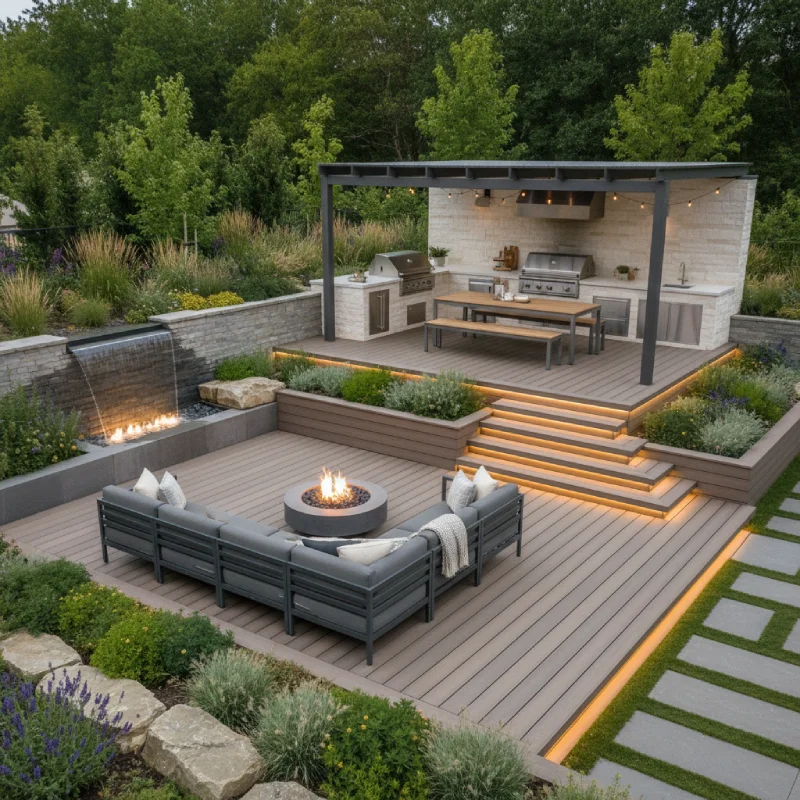
An outdoor living space is a functional extension of your home that combines strategic zoning, sustainable materials, and climate control to create year-round comfort and entertainment.
Creating an ideal outdoor living space requires strategic zoning that separates dining, lounging, and entertaining areas while maintaining visual flow. Energy-efficient amenities provide year-round comfort, while sustainable materials minimize environmental impact. Biophilic design elements like living walls and water features enhance connection to nature.
Key Takeaways
- Thoughtful zoning with level changes, planters, and rugs creates a custom outdoor living space with distinct functional areas while maintaining visual flow and openness
- Smart technology integration improves comfort and energy efficiency through automated lighting, heating controls, and motorized shading
- Eco-friendly materials like recycled wood, bamboo, and permeable hardscaping support sustainability while reducing environmental impact
- Biophilic design elements including living walls and water features create restorative spaces that enhance well-being
- Layered lighting with warm color temperatures combined with earth-tone palettes establishes visual harmony and extends usability
Creating Seamless Flow: Layout Strategies for Outdoor Rooms
The foundation of successful outdoor functionality lies in thoughtful zoning that unifies separate areas into a cohesive whole. Zone definition creates distinct regions without physical barriers that disrupt the terrain.
Key Layout Elements
- Use rugs, lighting, and material transitions to visually delineate areas
- Align circulation patterns with house access points
- Incorporate shade solutions like pergolas for comfort
- Create pathways for natural movement between zones
This arrangement enables seamless transitions between activities, making the outdoor environment an integrated living space.
Essential Amenities: Must-Have Features for Modern Patios
Today's outdoor living areas demand purposeful amenities that extend usability across seasons. Modern patios incorporate several essential features that convert yards into functional retreats.
| Feature Type | Examples | Primary Benefits |
| Heating Solutions | Infrared heaters, fire pits | Year-round warmth, social gathering points |
| Shade Systems | Motorized awnings, retractable pergolas | Sun protection, temperature control |
| Smart Technology | Automated lighting, heating controls | Convenience, energy efficiency |
| Outdoor Kitchens | Built-in grills, prep stations | Functional cooking, entertainment |
| Water Features | Fountains, pools | Ambiance, relaxation |
Additionally, ambient LED lighting and sustainable teak furniture complement these modern features. According to landscape architecture research, these integrated elements create distinct zones while enhancing safety and promoting relaxation.
Building Sustainably: Eco-Friendly Design Choices
Sustainable sourcing allows homeowners to create beautiful patios without compromising environmental values. Quality outdoor living services prioritize these eco-friendly options. Recycled wood, bamboo, and composite decking minimize resource depletion while reclaimed hardwoods reduce carbon footprints.
Sustainable Material Options
- Reclaimed hardwoods for reduced carbon footprint
- Recycled plastics in composite decking
- Local natural stone for minimal transportation impact
- Permeable hardscaping to enhance water absorption
- Smart irrigation systems with rain sensors
- Energy-efficient LED outdoor lighting
These choices create outdoor spaces that balance comfort with ecological responsibility and long-term sustainability.
Selecting the Right Materials: Surfaces and Furnishings for 2025
Material selection determines both aesthetic appeal and long-term performance in outdoor living construction. Material innovations emphasize durability, sustainability, and visual appeal through eco-friendly composites and natural alternatives.
- Composite decking and permeable hardscaping resist rot, stains, and fading while allowing water filtration. These eco-friendly composites reduce environmental impact significantly.
- Large-format slabs and reclaimed hardwoods create spacious aesthetics with fewer joints. Salvaged materials provide sustainable style with authentic aging characteristics.
- Natural stone and weather-resistant furnishings include locally sourced limestone and sandstone for durability. Teak and bamboo furniture withstand varied climates while maintaining appeal.
Earth-tone color palettes dominate selections, featuring taupe, beige, and warm grays that complement natural surroundings. Prioritizing locally sourced materials reduces transportation emissions and supports regional ecosystems.
Bringing Nature Closer: Biophilic Design Principles
Biophilic design intentionally incorporates natural elements to strengthen the human connection with nature. Living walls, water features, and abundant plantings create restorative settings that reduce stress and enhance mental clarity.
The best outdoor living spaces employ earth-inspired color palettes, organic curves, and natural materials. Winding pathways, varied textures, and interplay between light and shade promote grounding experiences that lower blood pressure and improve overall happiness.
Setting the Mood: Color, Texture, and Lighting Techniques
Creating an inviting outdoor living space requires strategic use of warm palettes and earthy tones. Terracotta, sage green, and warm clay establish a grounding foundation that encourages relaxation.
Color Strategy for Outdoor Spaces
- Primary tones: Terracotta, clay, burnt sienna provide essential warmth
- Neutral base: Softer browns and greys establish tranquil moods
- Accent colors: Mustard yellow and coral deliver energy when applied sparingly
- Green layers: Olive, eucalyptus, emerald create visual depth
Layered Lighting for Ambiance
Thoughtfully designed lighting systems transform yards into inviting environments after sunset. Effective layered design combines three essential components:
- Ambient lighting provides soft foundational illumination
- Task lighting illuminates functional areas like pathways and dining spaces
- Accent lighting highlights focal points such as trees and structural details
Strategic fixture placement using uplighting, downlighting, and path lights creates visual depth. Maintaining consistent warm white color temperatures establishes visual harmony throughout outdoor spaces.
Year-Round Comfort: Climate Control Solutions
Advanced climate control solutions make year-round outdoor comfort achievable and sustainable. Modern systems offer several practical advantages for maintaining consistent comfort.
Smart thermostats with AI technology automatically adjust temperature and humidity based on occupancy and weather conditions. These systems provide significant energy savings while maintaining consistent comfort.
Ductless mini-split HVAC systems provide room-by-room temperature control without ductwork losses. Inverter technology flexibly adjusts compressor speed to meet demand efficiently.
Renewable energy integration through solar panels powers climate control equipment directly, lowering utility expenses while supporting sustainability goals and compliance with environmental regulations.
Maximizing Your Space: Multi-Functional Outdoor Living Ideas
Strategic design solutions transform limited square footage into versatile environments. Flexible furniture like modular sofas and storage benches adapts to different needs without consuming excess space.
Integrated zones organize patios into distinct areas for dining, lounging, and entertaining. Multi-level decks improve spatial efficiency, while vertical gardens and retractable awnings maximize usability. Built-in fire pits and seat walls eliminate clutter while serving practical purposes.
Conclusion
Designing an ideal outdoor living space combines thoughtful layout strategies, sustainable materials, and smart technology to create year-round comfort. By incorporating biophilic design principles, energy-efficient climate control, and multi-functional zones, you transform your outdoor area into a true extension of your home.
Ready to create your dream outdoor living space? Start by assessing your available area, identifying your primary activities, and consulting with an outdoor living design build company who understands your climate and regional materials. Your perfect outdoor retreat is within reach.
Frequently Asked Questions
What is the ideal size for an outdoor living space?
The ideal size depends on your intended use and available space, but most functional outdoor living spaces range from 200 to 400 square feet. This provides enough space for dining, lounging, and cooking. Smaller spaces work well with multi-functional furniture and vertical design ideas that maximize every inch without feeling cramped.
How can I make my outdoor space usable year-round?
Install climate control solutions like infrared heaters, fire pits, and motorized shade systems. Add weatherproof furniture with removable cushions, incorporate covered areas like pergolas or pavilions, and use outdoor curtains or screens for wind protection. Smart thermostats automatically maintain comfortable temperatures, making your outdoor design functional year-round.
What are the most durable materials for outdoor furniture?
Teak, bamboo, and powder-coated aluminum are among the most durable options. Teak naturally resists moisture and insects; bamboo offers excellent weather resistance and sustainability benefits; and aluminum frames with weather-resistant cushions provide long-lasting performance with minimal maintenance. These stylish materials combine aesthetic appeal with low-maintenance care requirements.
How do I incorporate sustainable practices into my outdoor space?
Choose locally sourced materials like paver stones to reduce transportation emissions; install permeable hardscaping to manage water runoff; use LED lighting for energy efficiency; implement smart irrigation systems with rain sensors; and select recycled or reclaimed materials, such as composite decking made from recycled plastics and wood fibers. These landscape design choices benefit both the environment and your long-term maintenance costs.
What lighting techniques work best for outdoor entertaining?
Use layered lighting with three components: ambient lighting for overall illumination, task lighting for functional areas like cooking and dining, and accent lighting to highlight architectural features or landscaping. Maintain warm color temperatures and install dimmer switches for adjustable ambiance throughout different activities. This approach creates a sleek, minimalist atmosphere while ensuring proper visibility for all your outdoor entertaining needs.