Designing an Outdoor Living Space in Boston: A Realistic Guide for Our Climate
Outdoor living spaces in Greater Boston need to work for a climate that delivers everything from 95-degree August humidity to nor'easters that drop two feet of snow. A realistic design accounts for all four seasons, uses materials that handle freeze-thaw cycles, and includes structures that extend your usable months well beyond the typical May-through-September window.
CabStone designs and builds outdoor living spaces across Middleton and the North Shore — pergolas, outdoor kitchens, fire features, and custom structures. This guide covers the planning decisions that separate an outdoor space you'll actually use from one that looks great in June and sits empty by October.
If you've been thinking about transforming your backyard, this is the conversation that should happen before any concrete gets poured.
Why Boston's Climate Demands a Different Approach to Outdoor Design
Most outdoor living content online is written for California, Texas, or Florida — climates where you can use your backyard 10-11 months a year without modification. Boston's North Shore sits in USDA hardiness zone 6b, with average winter lows between -5°F and 0°F, and that changes everything about how you should plan.
Here's what national design guides won't tell you about building outdoor spaces in Massachusetts:
Our freeze-thaw cycle is relentless. Between late November and early April, temperatures regularly exceed 32°F — sometimes multiple times per week. That cycle cracks improperly laid pavers, splits unsealed wood, and destroys natural stone that isn't rated for our climate. Any hardscape material you select needs a proven track record in New England conditions, not just a warm-weather showroom.
Humidity swings are dramatic. Boston winters drop indoor and outdoor humidity into the teens. Summer pushes it above 70%. Wood structures that aren't properly finished expand and contract through this cycle. Metal structures that aren't powder-coated or marine-grade corrode faster than manufacturers claim.
The building season is compressed. Realistic outdoor construction in Massachusetts runs from late April through mid-November — roughly seven months. Projects that start in May and need to be completed before your Fourth of July party must be designed and permitted by February.
Wind is a real structural concern. Coastal North Shore towns — Marblehead, Manchester-by-the-Sea, Rockport — get sustained winds that open-lattice pergolas and lightweight shade sails simply can't handle. Structure selection needs to account for wind loads, not just aesthetics.
| Climate Factor | Impact on Outdoor Design | Design Response |
| Freeze-thaw cycles | Cracks in improperly installed hardscape, splits in unsealed wood | Use frost-rated pavers, a compacted gravel base, and proper drainage |
| Snow loads | Can collapse lightweight structures | Engineer for 50+ psf snow load per MA building code |
| Summer humidity (70%+) | Accelerates wood rot, promotes mold on untreated surfaces | Specify rot-resistant wood species or aluminum structures |
| Winter lows (-5°F to 0°F) | Damages water lines, cracks stone, strains adhesives | Winterize plumbing, use flexible mortar joints, and plan for covers |
| Compressed building season | 7 months of reliable construction weather | Design and permit in winter for a spring start |
| Coastal wind exposure | Threatens lightweight structures, accelerates material wear | Specify wind-rated structures, avoid fabric shade systems |
The Core Elements of a North Shore Outdoor Living Space
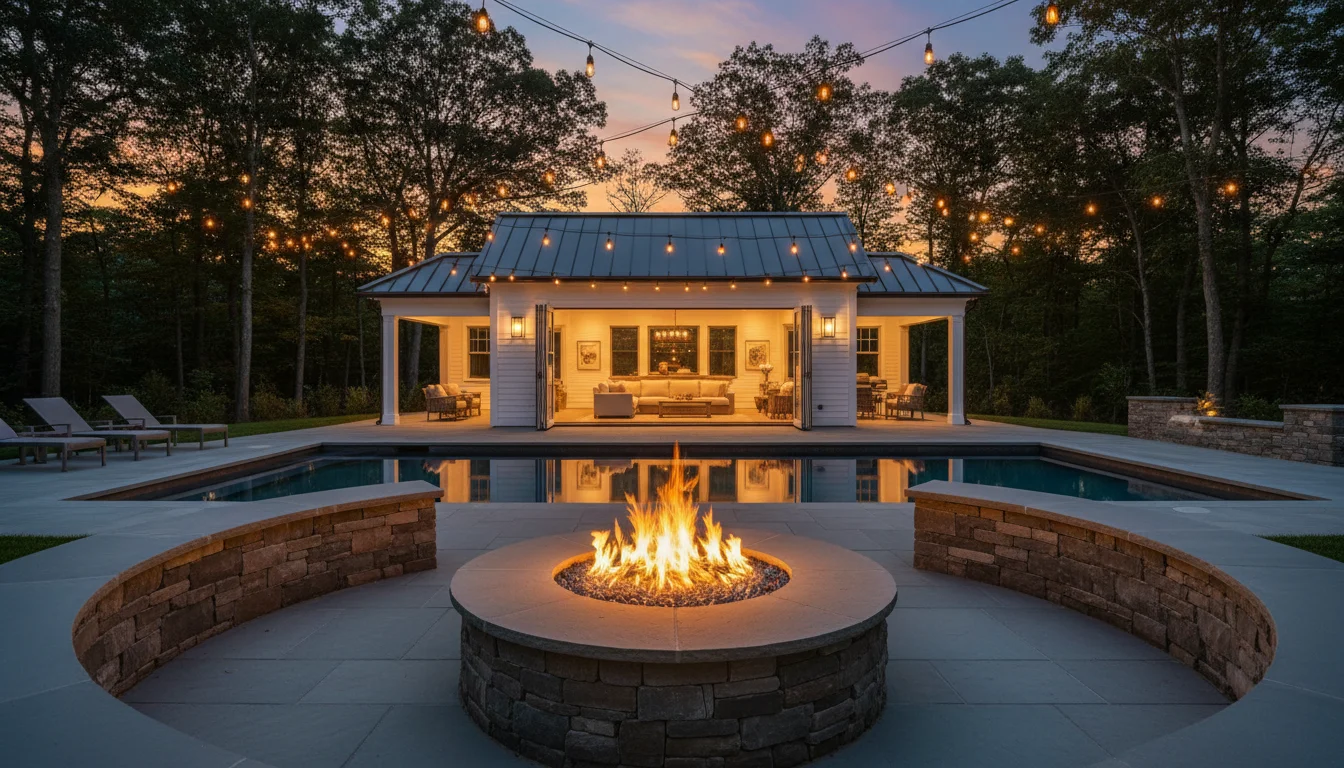
A well-designed outdoor living space on the North Shore typically combines four elements: a defined structure for shade and weather protection, a cooking or prep area, a seating zone, and a fire feature. You don't need all four — but understanding each helps you prioritize based on how you'll actually use the space.
Pergolas and Shade Structures
A pergola is the architectural anchor of most outdoor living spaces — a structure of vertical posts supporting an overhead framework that provides shade, defines the space, and creates the feeling of an outdoor room. For Massachusetts, the choice comes down to three main categories:
Open-lattice wood pergolas are the most traditional option. Cedar and pressure-treated lumber are the common materials. They provide filtered shade and look beautiful, but they offer zero rain protection and require annual maintenance — staining, sealing, and checking for rot. In our climate, expect to replace or repair components every 8-12 years.
Solid-roof pavilions provide complete protection from rain and snow. They're essentially a roof on posts. The trade-off is reduced natural light and a heavier structural footprint, which typically requires engineered footings and may trigger permit requirements.
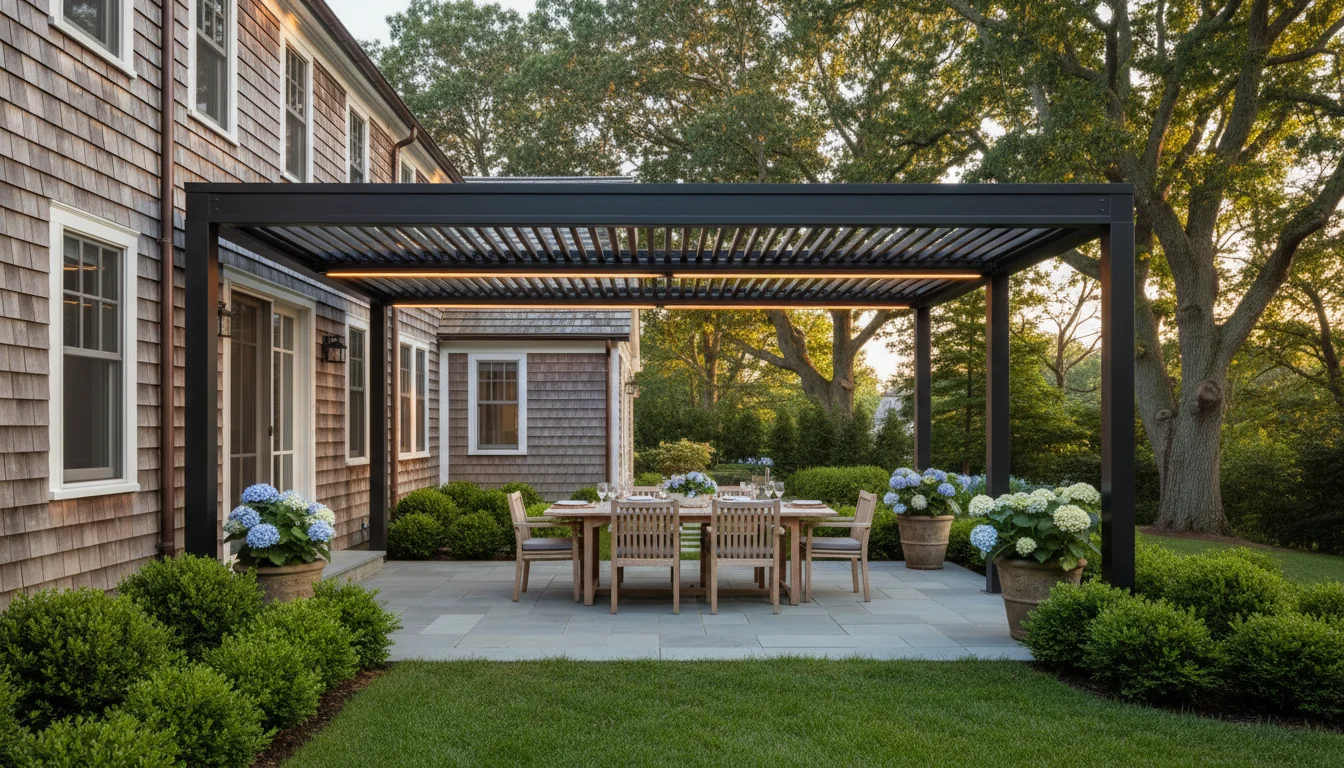
Motorized louvered pergolas are what CabStone installs most often. Aluminum louvered roofs open for full sun, close for rain protection, and adjust to any angle in between. They're powder-coated for corrosion resistance, rated for Massachusetts snow loads, and don't require the annual maintenance cycle that wood demands. They cost more upfront, but the usable-months-per-year math usually makes the case.
Outdoor Kitchens
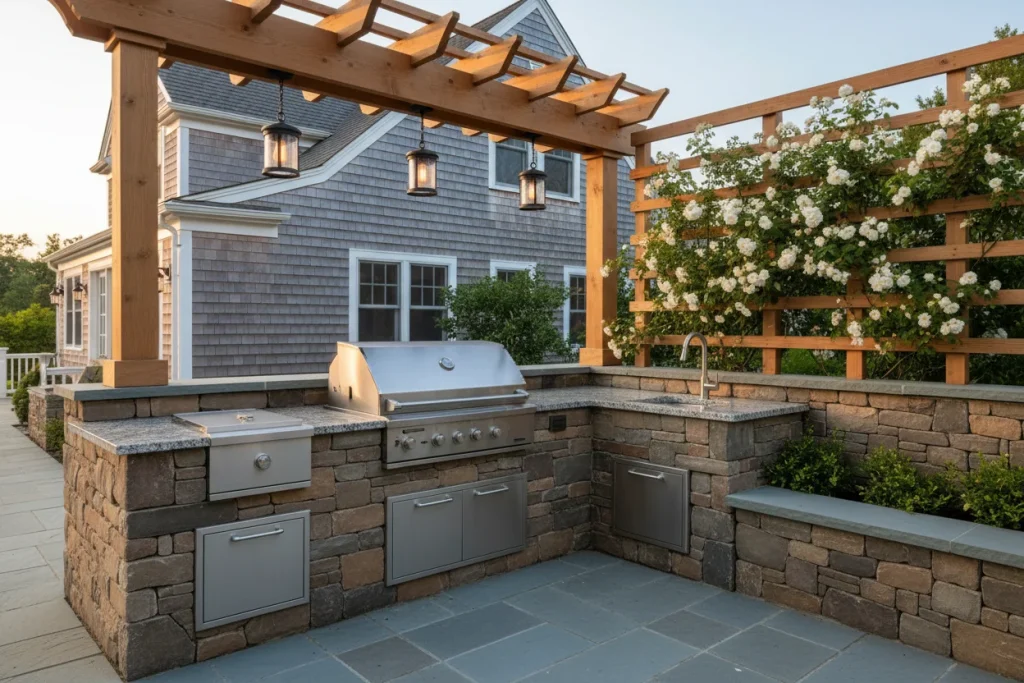
An outdoor kitchen can be as simple as a built-in grill with counter space or as complex as a full cooking station with a refrigerator, sink, gas burners, pizza oven, and storage. In Massachusetts, the critical design consideration is winterization — all plumbing and gas lines must be designed for easy seasonal shutoff and drainage.
Countertop materials matter here more than in warm climates. Granite handles freeze-thaw well. Tile grout can crack. Concrete requires proper sealing. The base structure should be block or stone veneer rated for exterior use — not the same materials you'd use for an indoor kitchen island.
Fire Features
Fire pits and fireplaces extend your outdoor season by weeks on each end — from early April through late November in most years. Gas fire pits offer push-button convenience. Wood-burning pits deliver better ambiance but require more clearance, produce smoke (check your town's burn regulations), and demand proper ash management.
Seating and Dining Zones
The layout of your seating area should create a natural flow of traffic among the kitchen, the fire feature, and the dining space. In New England, weather-resistant materials are non-negotiable — marine-grade fabrics, teak or aluminum frames, and cushions with Sunbrella or equivalent UV-resistant covers.
| Element | Budget Tier | Mid-Range | Premium |
| Shade Structure | Wood lattice pergola | Solid-roof pavilion | Motorized louvered aluminum pergola |
| Cooking Area | Built-in grill island | Grill + countertop + storage | Full outdoor kitchen with plumbing |
| Fire Feature | Portable fire pit | Built-in gas fire pit | Stone fireplace with seating wall |
| Seating/Dining | Weatherproof furniture set | Custom built-in bench seating | Full lounge zone with covered bar |
Materials That Survive New England (And Materials That Don't)
Material selection is where outdoor living projects succeed or fail in Massachusetts. What performs beautifully in Atlanta or Phoenix may crack, corrode, warp, or rot within three winters on the North Shore.
Hardscaping
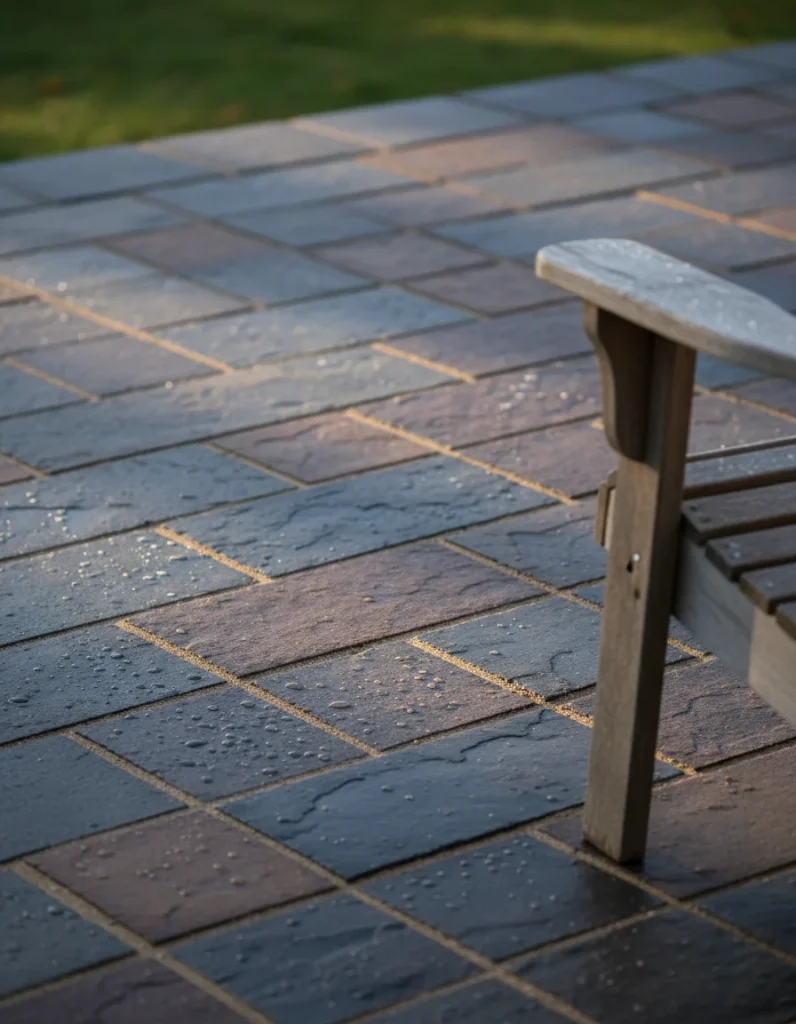
Bluestone is the classic New England patio material — naturally slip-resistant, freeze-thaw rated, and available in both irregular (flagstone) and dimensional (cut) formats. It's not the cheapest option, but it performs and looks better with age. Granite pavers and cobblestones are equally durable and common throughout the North Shore.
Concrete pavers work well when installed on a properly compacted gravel base with adequate drainage. Avoid poured concrete for large patio surfaces — expansion joints are ugly, and cracking is inevitable in our climate without careful engineering.
Porcelain pavers are gaining popularity because they're frost-rated, stain-resistant, and available in wood-look formats. They cost more per square foot than concrete but require almost zero maintenance.
Structural Materials
Aluminum is our preferred material for pergola and shade structure framing. It doesn't rot, warp, or require annual sealing. Powder-coated aluminum handles salt air and freeze-thaw without deterioration. Cedar is the traditional alternative — it's naturally rot-resistant and beautiful, but it demands consistent maintenance and has a shorter lifespan in our climate than many homeowners expect.
Pressure-treated lumber is the budget option for structural elements, but it warps, checks, and requires re-staining every 2-3 years. We don't recommend it for visible architectural features.
What to Avoid
Wrought iron rusts aggressively in coastal air. Softwoods like pine rot within a few seasons without aggressive chemical treatment. Standard ceramic tile cracks during the first hard freeze. Fabric shade sails tear in nor'easter winds. If a material isn't specifically rated for freeze-thaw and coastal exposure, it doesn't belong in a North Shore outdoor space.
| Material | Application | MA Performance | Maintenance |
| Bluestone | Patios, walkways | Excellent — freeze-thaw rated | Periodic sealing optional |
| Granite pavers | Patios, driveways | Excellent | Nearly zero |
| Porcelain pavers | Patios, pool surrounds | Excellent — frost-rated | Nearly zero |
| Aluminum (powder-coated) | Pergola frames, railings | Excellent — corrosion-resistant | Wash annually |
| Cedar | Pergolas, accent structures | Good — naturally rot-resistant | Stain/seal every 2-3 years |
| Pressure-treated lumber | Budget framing | Fair — warps and checks | Re-stain every 2-3 years |
| Teak | Furniture, countertop accents | Excellent | Oil annually or let the weather go grey |
Planning Your Outdoor Space: The Process That Prevents Regret
The single biggest mistake homeowners make with outdoor living is designing for how they want the space to look instead of how they'll actually use it. A beautiful outdoor kitchen that faces the wrong direction catches wind at dinner. A fire pit placed too close to the house fails code inspection.
Here's how the planning process should work:
Step 1: Use Pattern Analysis
Before drawing anything, spend a few weekends observing how your family uses the yard. Where does everyone naturally gather? Where does the afternoon shade fall in July? Where does water pool after rain? Where do your neighbors' sight lines hit? These observations drive the layout better than any Pinterest board.
Step 2: Site Assessment
A qualified outdoor living contractor evaluates grading, drainage, underground utilities, setback requirements, and soil conditions. In many North Shore towns, outdoor structures over a certain square footage require a building permit and may trigger zoning review. Middleton, for example, has specific setback requirements for accessory structures that affect where you can place a pergola or pool house.
Step 3: Phased Design
Not every outdoor living project needs to happen at once. We often recommend a phased approach: start with the hardscape and shade structure in year one, add the outdoor kitchen in year two, and finish with fire features and landscaping in year three. This spreads the investment and lets you live with each phase before committing to the next.
Step 4: Permitting and HOA Review
Massachusetts building codes apply to outdoor structures. Any structure attached to your home typically requires a building permit. Freestanding structures over a certain height or footprint may also require permits. Gas lines and electrical connections always require licensed tradespeople and inspections. Your outdoor living design build contractor should handle the permit process — if they ask you to pull permits yourself, that's a red flag.
Step 5: Seasonal Scheduling
Design in January. Permit in February-March. Break ground in April. Enjoy by June. That's the realistic timeline for a mid-scale outdoor living project in Massachusetts. Starting the design conversation in May means you're likely looking at a late-summer completion at best.
Key Takeaways
- Boston's freeze-thaw cycle, snow loads, and compressed building season demand a fundamentally different design approach than warm-climate outdoor living guides suggest.
- Motorized louvered pergolas provide the best year-round usability in Massachusetts — rain protection, sun control, and snow-load rating in one structure.
- Bluestone, granite, and porcelain pavers are the proven hardscape materials for North Shore patios — concrete and tile carry significant freeze-thaw risk.
- Outdoor kitchens in Massachusetts need winterization planning from day one — plumbing, gas lines, and countertop materials all require cold-climate specifications.
- Fire features extend your usable season by weeks on each end, making an April-through-November outdoor living calendar realistic.
- Coordinate your outdoor living project with your home remodeling timeline and ensure your flooring contractor has completed interior work before exterior construction disrupts access.
Frequently Asked Questions
How many months can you use an outdoor living space in Massachusetts?
With proper design — including a covered structure, fire features, and wind protection — most North Shore homeowners comfortably use their outdoor living spaces from mid-April through late November, roughly eight months.
What is the best patio material for Boston's climate?
Bluestone is the proven choice for New England patios. It's naturally frost-rated, slip-resistant, and improves in appearance over time. Granite pavers and porcelain pavers are equally durable alternatives.
Do I need a permit for an outdoor pergola in Massachusetts?
It depends on your town's zoning and building code. Attached structures typically require permits. Freestanding structures may require permits based on height and footprint. Your contractor should handle the permitting process.
What type of pergola is best for Massachusetts weather?
Motorized louvered aluminum pergolas provide the best year-round performance — adjustable shade, rain protection, and snow-load ratings that traditional wood lattice pergolas can't match.
Can you build an outdoor kitchen in Boston?
Yes. Outdoor kitchens work well on the North Shore when designed with Massachusetts winters in mind — winterizable plumbing, freeze-thaw-rated countertops, and covered or partially enclosed cooking areas.
How long does an outdoor living project take to complete?
A mid-scale project — pergola, patio, and built-in grill island — typically takes 6-10 weeks from groundbreaking to completion. Design and permitting add 2-3 months before construction starts.
What outdoor materials should I avoid in New England?
Avoid softwoods like pine for structural elements, wrought iron in coastal areas, standard ceramic tile for patios, fabric shade sails, and any paver or stone not rated for freeze-thaw cycles.
How much yard space do I need for an outdoor living area?
A functional outdoor dining and lounge space with a small grill island needs roughly 200-300 square feet minimum. A full outdoor room with kitchen, dining, and seating typically requires 400-600 square feet.
Should I design my outdoor space all at once or in phases?
Phasing is smart for most homeowners. Start with the hardscape and shade structure, then add cooking and fire features in subsequent years. This spreads cost and lets you refine the design based on how you actually use the space.
When should I start planning my outdoor living project?
Start the design conversation in January or February. This gives time for permitting by March and a construction start in April, putting you on track for a summer completion.
Conclusion
Designing an outdoor living space in Boston isn't about recreating what you saw on a California home tour. It's about building something that handles our climate honestly — freeze-thaw cycles, snow loads, coastal wind, and summer humidity — while extending your usable outdoor season as far as possible. The right combination of materials, structures, and layout can give you a functional outdoor room from April through November, and with fire features and proper cover, even a few weekends beyond that.
CabStone designs and builds outdoor living spaces across Middleton and the North Shore. If you're ready to start the conversation, we'll meet you in your backyard — not a showroom.