Solid Wood vs. MDF Cabinets: Pros, Cons, and Best Uses

Solid wood cabinets bring rich grain and long-term value, while MDF offers smooth finishes and cost savings — the best choice depends on your style, budget, and environment.
Choosing between solid wood and MDF (Medium-Density Fiberboard) cabinets can feel like a toss-up between beauty and practicality. Whether you're remodeling a kitchen or upgrading your bath, knowing the real-world pros and cons of each material helps avoid costly mistakes.
This guide breaks down their differences in durability, finish options, price, and more — so you can make a confident, informed decision.
Key Takeaways
- Solid wood offers natural beauty and durability but can warp or expand in humidity.
- MDF provides smooth, paint-ready surfaces ideal for modern styles, though it's less durable with heavy hardware.
- Solid wood holds fasteners better and is more repairable over time.
- MDF is budget-friendly but vulnerable to water damage unless well-sealed.
- For best results, choose based on room humidity, finish type, and long-term maintenance expectations.
Solid Wood Cabinets: Strength and Natural Appeal
What Is Solid Wood?
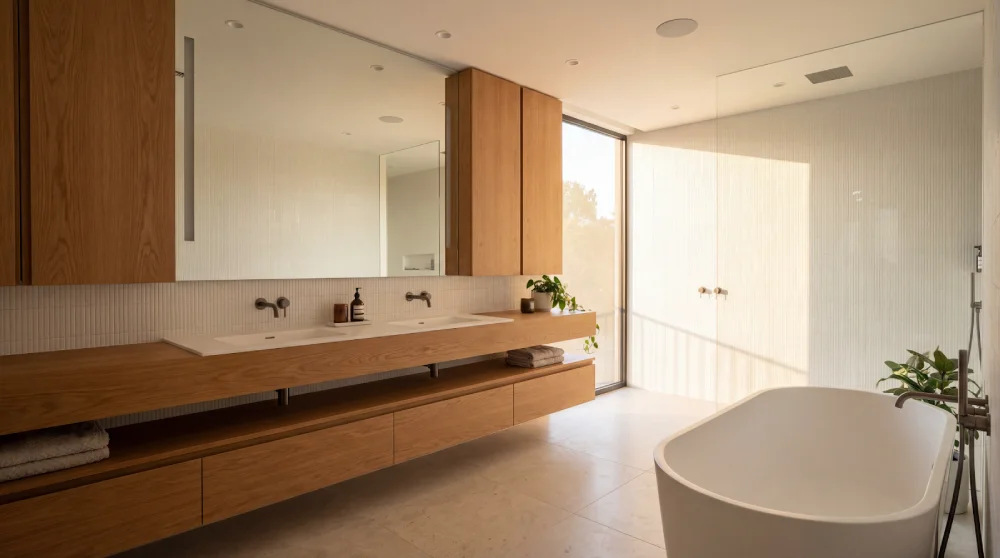
Solid wood cabinets are built by a skilled cabinet maker from natural hardwoods like maple, oak, cherry, or pine.
Each board features visible grain, knots, and color variation — giving your space a one-of-a-kind character.
Pros of Solid Wood
- Long-lasting with proper care
- Can be sanded and refinished
- Holds screws and hardware better
- High resale value
Cons of Solid Wood
- Higher upfront cost
- Expands/contracts with humidity
- Requires sealing for moisture control
Pro Tip: Use solid wood in drier or climate-controlled spaces, or choose quarter-sawn options for more stability.
MDF Cabinets: Affordable and Smooth by Design
What Is MDF?
MDF is an engineered wood made from compressed wood fibers bonded with resin. It offers a smooth, uniform surface perfect for painted finishes and contemporary cabinet profiles.
Pros of MDF
- Cheaper than solid wood
- No grain = ultra-smooth paint finish
- Easier to machine into decorative shapes
- More dimensionally stable than wood
Cons of MDF
- Doesn’t hold screws as well
- Can swell if exposed to water
- Not refinishable like wood
- Some MDF may off-gas formaldehyde
Look for CARB-compliant or low-formaldehyde MDF for better indoor air quality.
Performance Face-Off: MDF vs. Solid Wood
| Feature | Solid Wood | MDF |
| Appearance | Unique grain, stainable | Smooth, ideal for paint |
| Durability | Very durable | Less durable around moisture |
| Cost | Higher upfront | Lower upfront |
| Moisture Resistance | Can warp if unsealed | Swells if unsealed |
| Finish Options | Best for stain/clearcoat | Best for painted finishes |
| Eco Impact | Renewable but resource-heavy | Often made with recycled fibers |
When to Use Each Material
Choose Solid Wood When:
- You want natural grain and warmth
- You plan to stain rather than paint
- You want long-term durability
- Your space has good humidity control
Choose MDF When:
- You’re going for a painted or modern finish
- You’re on a tight budget
- You’re working in low-moisture areas
- You need intricate cabinet profiles
Environmental & Health Considerations
- Solid wood is biodegradable and recyclable.
- MDF often contains formaldehyde resins — unless labeled no-added-formaldehyde (NAF).
- Choose water-based, low-VOC finishes for both options to reduce indoor air emissions.
Frequently Asked Questions
Which lasts longer, MDF or solid wood?
Solid wood lasts longer if maintained well; MDF may fail under prolonged moisture or heavy loads.
Can MDF cabinets be painted?
Yes — in fact, MDF is ideal for painted finishes thanks to its smooth surface and lack of grain.
Is MDF a good choice for bathroom cabinets?
Only if sealed and well-ventilated — otherwise, consider plywood or sealed hardwood for high-moisture zones.
Are MDF cabinets toxic?
Not necessarily. Look for CARB II or NAF-certified MDF and use low-VOC paints to minimize emissions.
Why are solid wood cabinets more expensive?
Because of the cost of hardwoods, joinery labor from a custom cabinet maker, and the ability to be refinished or customized.
Do solid wood cabinets add more resale value than MDF?
Yes, solid wood cabinets are typically seen as a premium feature and can boost your home’s resale value more than MDF options.
Can I mix MDF and solid wood in the same kitchen?
Absolutely. Many designers and cabinet makers use MDF for painted doors and solid wood for structural parts or stained accents. It's a smart way to balance cost and performance.
How do I maintain solid wood cabinets?
Keep them clean and dry, reseal or refinish when needed, and avoid direct water contact. Use gentle cleaners and avoid harsh chemicals.
What’s better for painted shaker cabinets — MDF or wood?
MDF is better for a smooth, consistent finish with no visible grain, which makes it ideal for painted shaker-style doors.
Can solid wood cabinets warp over time?
Yes, if not properly sealed or installed in high-humidity areas, solid wood can expand, contract, or warp. Professional cabinet installation, acclimating wood, and sealing all sides helps prevent this.
Conclusion
Solid wood and MDF each have a place in cabinetry. Wood gives you lasting beauty and strength, while MDF offers budget-friendly precision for painted styles.
If you want timeless, repairable cabinets with natural charm, go with solid wood.
If you want sleek, smooth finishes and savings, MDF is your friend.
Need help choosing for your project in Boston North? Reach out to a home improvement contractor north Boston for cabinet installation and material guidance. We'll help match your cabinet material to your space, style, and budget.