Best Practices for Efficient Flooring Installation: Your Complete Professional Guide
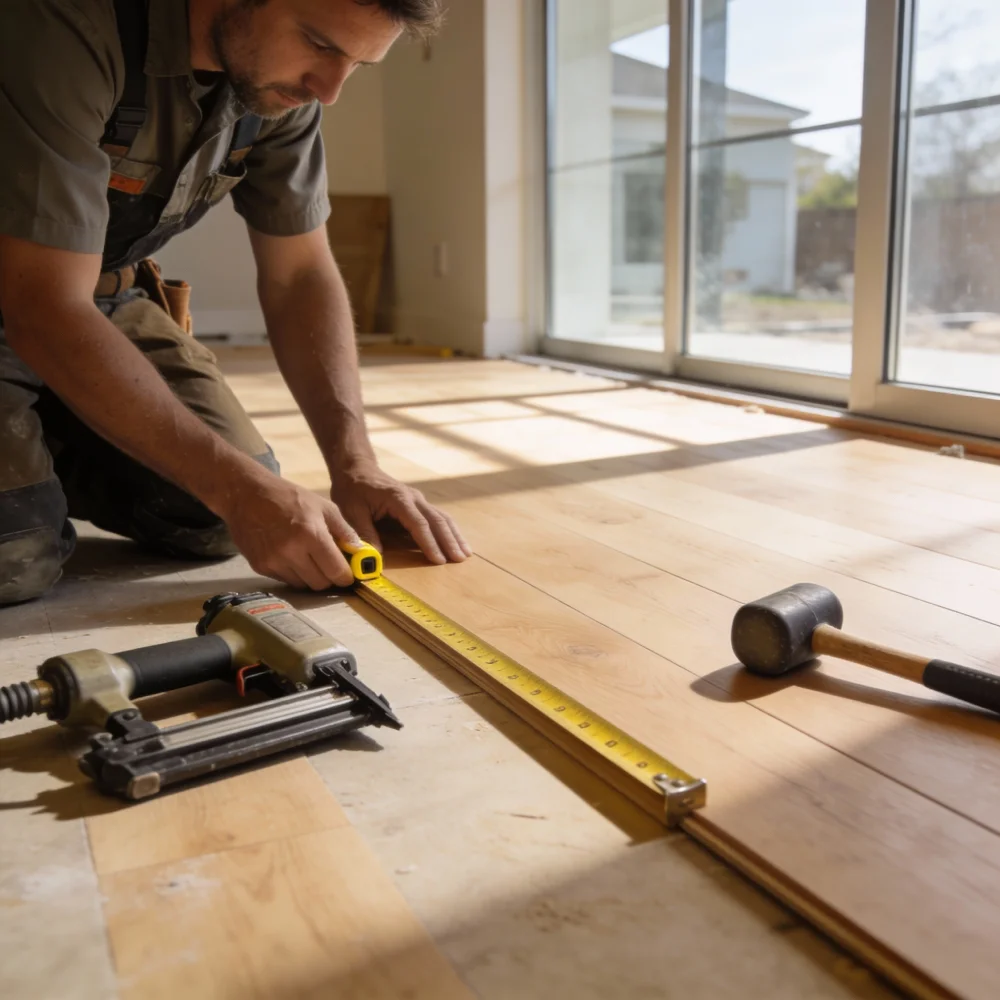
Efficient flooring installation reduces project time by up to 30% while ensuring lasting durability and aesthetic appeal. In this flooring installation techniques guide, you will learn how to prepare subfloors, apply advanced installation methods for hardwood, laminate, vinyl, and tile, and select the ideal adhesives and underlayments for maximum performance. This professional guide also uncovers common installation mistakes along with expert prevention strategies, highlights the value of hiring certified installers, covers essential safety protocols, and previews the top flooring trends and innovations for 2025. By following these best practices, homeowners and design build home contractor in the Boston North region can achieve quality results, minimize disruptions, and protect every flooring investment.
Essential Steps for Proper Subfloor Preparation
Proper subfloor preparation establishes a clean, level, and moisture-controlled foundation that directly enhances adhesion and prevents warping or squeaks. A stable base ensures each flooring material bonds correctly and supports long-term performance. For example, applying a self-leveling compound creates uniform thickness across joists, eliminating hollow spots and enhancing structural integrity.
Before installing any flooring, follow these leveling steps:
- Inspect and repair damage such as cracks or rot to ensure structural soundness.
- Clean debris and adhesive residues to improve compound adhesion.
- Apply a self-leveling compound to fill low spots and create a uniformly flat surface.
- Use a long-handled screed to distribute leveling material evenly across the subfloor.
Thorough leveling prevents gaps and vibrations, paving the way for smooth installation techniques.
Moisture control is critical because excess dampness leads to buckling, mold growth, and adhesive failure. Installing a moisture barrier or vapor retarder blocks ground vapor from reaching flooring layers and maintains recommended humidity levels. Monitoring relative humidity with a moisture meter ensures the subfloor remains within safe thresholds for each material.
How long flooring materials acclimate varies by product and climate. The following table outlines typical acclimation periods under controlled indoor conditions:
| Material | Acclimation Time | Optimal Conditions |
| Solid Hardwood | 5–7 days | 60–80% relative humidity |
| Engineered Wood | 48–72 hours | 45–60°F room temperature |
| Laminate Flooring | 48 hours | 50–80% relative humidity |
| Vinyl Plank Flooring | 24–48 hours | 65–75°F room temperature |
| Ceramic & Porcelain | 24 hours | Stable indoor environment |
Allowing materials to adjust prevents gaps and cupping under seasonal temperature and humidity shifts.
Wood Flooring Installation Guidelines and Methods
The National Wood Flooring Association (NWFA) provides comprehensive guidelines emphasizing that proper subfloor preparation, including moisture content assessment and acclimation, is crucial for the longevity and performance of wood flooring. Wood is a hygroscopic material, meaning it absorbs and releases moisture, and must reach equilibrium with its environment to prevent dimensional changes like warping or gapping.
This citation supports the article's detailed sections on essential subfloor preparation steps, the critical role of moisture control, and the importance of material acclimation to prevent common flooring failures.
Efficient Installation Techniques for Different Flooring Types
Efficient installation techniques align each flooring material’s characteristics with the correct method, improving speed, adhesion, and finish quality. Selecting the right approach, whether floating, glue-down, nail-down, or mortar application, directly boosts dimensional stability and surface durability.
Installing Hardwood and Engineered Wood Floors Correctly
Hardwood and engineered wood floors offer three primary installation methods, each optimized for specific subfloors and building profiles. Floating installations use integrated locking systems to promote acclimation and noise reduction, while glue-down methods bond boards directly to concrete slabs for exceptional rigidity. Nail-down installations secure solid hardwood to wooden joists, ensuring long-term stability on traditional framing.
Best Practices for Laminate and Vinyl Plank Flooring Installation
Laminate and vinyl plank installations rely on precision cuts and proper underlayment to minimize movement and noise.
- Roll out a quality underlayment that dampens sound and balances minor subfloor imperfections.
- Engage the click-lock system by angling each plank into place and applying gentle pressure.
- Use a pull bar to close end joints without damaging edges.
Consistent expansion gaps around perimeters prevent bulging and allow for seasonal dimensional shifts.
Installing Tile Flooring with Precision and Durability
Tile installation demands careful layout planning and precise mortar application for a flat, uniform finish. Begin by dry-laying tiles to determine the best starting point and avoid small edge cuts. Spread thin-set mortar with a notched trowel, maintaining consistent ridge height. Insert tile spacers at each corner to achieve equal grout joints, then allow curing before grouting.
This methodical process eliminates lippage and ensures a robust bond that withstands heavy traffic.
Choosing the Right Adhesives and Underlayments for Flooring
Selecting the correct adhesive and underlayment combination enhances bond strength, moisture resistance, and sound control. Matching adhesive chemistry to the flooring material and subfloor conditions safeguards against failures, while underlayment functions as a vapor barrier, cushion, and thermal insulator.
Best Flooring Adhesives for Different Materials
Different adhesives deliver ideal bonds based on material composition and substrate:
| Adhesive Type | Compatibility | Key Benefit | Mechanism | Why Essential |
| Polyurethane | Hardwood & Engineered | High strength | Cross-link polymer chains | Locks boards securely, resisting moisture. |
| Acrylic | Vinyl Plank & Laminate | Fast setting | Emulsion polymer dispersion | Enables quick traffic return in commercial spaces. |
| Water-Based | Cork & Softwood Tiles | Low VOC emissions | Water dispersion of polymers | Eco-friendly option for indoor air quality. |
Unmodified Plant and Waste Oils as Functional Additives in PU Flooring Adhesives: A Comparative Study
Research into polyurethane (PU) adhesives for flooring applications demonstrates their strong bonding performance and moisture resistance, which are critical for long-term durability. Studies evaluate mechanical properties like shear strength and tensile strength, showing that certain formulations, including those incorporating bio-based additives, can meet industry standards and offer robust, lasting bonds.
This research directly verifies the article's claims regarding the importance of selecting the correct adhesive types for different flooring materials to ensure bond strength, moisture resistance, and overall performance.
How Underlayment Improves Flooring Performance and Longevity
Underlayment enhances comfort and protects both the flooring and subfloor from moisture and sound transmission. Key benefits include:
- Moisture barrier performance that safeguards against rising damp and spills.
- Sound-dampening properties that reduce footfall noise in multi-story buildings.
- Thermal insulation that contributes to energy efficiency and underfloor heating compatibility.
By absorbing minor subfloor irregularities, underlayment promotes even weight distribution and prolongs finish lifespan.
Common Flooring Installation Mistakes and How to Avoid Them
Avoiding floor installation pitfalls preserves time, materials, and your flooring warranty. Mistakes such as improper measurements or rushed subfloor prep lead to visible gaps, adhesive failures, and unstable surfaces.
DIY Errors Causing Flooring Installation Failures
Common DIY mistakes include:
- Skipping moisture tests, resulting in warped boards and mold.
- Neglecting expansion gaps, leading to buckled seams under temperature changes.
- Cutting without a proper guide, causing irregular edges and waste.
- Using incorrect adhesive, weakening the bond and increasing separation risk.
These errors often require extensive repairs or full replacements when left unaddressed.
How Professionals Prevent Installation Mistakes
Certified flooring installation contractors implement precise measures that ensure flawless outcomes:
- Conduct comprehensive moisture mapping across subfloors with calibrated meters.
- Maintain consistent expansion gaps per manufacturer guidelines, using spacers.
- Employ high-precision saws and straight-edge guides to achieve uniform cuts.
- Select and apply industry-approved adhesives matched to substrate and material characteristics.
These expert practices safeguard against failures and uphold performance standards.
Why Professional Flooring Installation Is Worth the Investment
A professional flooring contractor combines specialized training, advanced equipment, and warranty coverage to deliver superior results the first time. Technicians customize each step—from acclimation to finishing—to the project’s specific conditions, ensuring consistent quality and reduced downtime.
How Expertise Ensures Quality and Efficiency in Flooring Installation
Experienced installers assess unique site variables such as humidity fluctuations, subfloor integrity, and traffic patterns to optimize every procedure. They adjust techniques on the fly, maintain strict tolerances for spacing and alignment, and streamline workflows to complete projects faster with minimal disruptions.
Warranty and Cost Benefits of Professional Installation
Certified installations often include manufacturer-backed warranties that protect against material defects and workmanship errors. This coverage translates to long-term savings by avoiding costly callbacks and repair expenses, and it provides homeowners with peace of mind backed by clear service guarantees.
Safety Guidelines for Flooring Installation
Adhering to safety protocols prevents injuries and protects both workers and property. Establishing a controlled environment reduces the risk of accidents and ensures compliance with industry regulations.
Necessary Personal Protective Equipment (PPE) for Flooring Installers
Installers should equip themselves with the following:
- Hard hats and safety glasses to guard against falling debris.
- Knee pads and gloves to protect joints and skin during repetitive tasks.
- Respirators or dust masks when cutting or sanding materials that generate particulates.
- Steel-toe boots to prevent foot injuries from heavy tools and materials.
Proper PPE fosters a secure workspace and maintains jobsite efficiency.
Safely Handling Tools and Materials on the Jobsite
Safe tool and material handling includes:
- Storing heavy equipment on stable surfaces to prevent tipping.
- Lifting boards with proper back-safe techniques and team assists for large panels.
- Ensuring adequate ventilation when using adhesives or solvents indoors.
- Keeping work areas free of debris to avoid slips and trips.
Rigorous safety practices protect both installers and the integrity of the flooring system.
Key Flooring Trends and Innovations for 2025
Emerging flooring trends combine sustainability, design versatility, and technological advancements to meet evolving homeowner demands. These innovations enhance environmental responsibility while offering fresh aesthetics and performance benefits.
How Eco-Conscious Materials Are Changing Flooring Choices
Sustainable options are gaining traction, including:
- Bamboo and cork harvested from rapidly renewable resources.
- Reclaimed and engineered hardwood sourced from certified forests.
- Low-VOC adhesives and finishes that promote healthier indoor air quality.
- Recycled-content vinyl and composite materials that reduce landfill waste.
These eco-friendly choices align design goals with environmental stewardship for the modern home.
New Designs and Materials Popular in Flooring Installation
Design-forward innovations for 2025 include:
- Wide-plank and extra-long planks that create seamless, expansive floor fields.
- Textured and wire-brushed finishes that enhance natural character and slip resistance.
- SPC and WPC hybrid floors offering waterproof performance with the feel of real wood.
- AI-powered layout tools that generate optimized cutting diagrams and visual previews.
Conclusion
Incorporating these trends elevates both the visual impact and functional resilience of any space. Experience flawless, efficient flooring installation with CabStone, your trusted flooring company. Our comprehensive process—from meticulous subfloor preparation to precision finishing—ensures superior results backed by industry-leading warranties. Schedule your consultation or visit our Boston North showroom to explore premium materials and discuss your next renovation project. Transform your home with confidence, quality, and lasting beauty with CabStone.
Frequently Asked Questions (FAQs)
What is the most important step in flooring installation?
The most crucial step is proper subfloor preparation. This includes ensuring the subfloor is clean, level, dry, and structurally sound. A well-prepared subfloor is essential for the longevity and appearance of any flooring material.
How long should I let flooring materials acclimate before installation?
Acclimation times vary by material. Solid hardwood typically needs 5-7 days, engineered wood 48-72 hours, laminate and vinyl plank 24-48 hours, and tile 24 hours. Always follow the manufacturer's specific recommendations.
Can I install flooring directly over an old floor?
In some cases, yes, but it depends on the type of old flooring and the new material. For example, some vinyl planks can be installed over existing vinyl or tile, but hardwood or laminate usually require removal of the old flooring to ensure a stable and level base.
What is the difference between floating, glue-down, and nail-down installation?
Floating floors are not attached to the subfloor and connect to each other. Glue-down involves adhering the flooring directly to the subfloor. Nail-down is typically used for solid hardwood and involves fastening the planks to wooden joists.
Do I need an underlayment for all types of flooring?
An underlayment is recommended or required for most floating floors (laminate, vinyl plank, engineered wood) to provide cushioning, sound dampening, and moisture protection. Some tile installations may also benefit from an underlayment for crack isolation.
How do I handle expansion gaps for wood and laminate flooring?
Expansion gaps are necessary to allow the flooring to expand and contract with changes in temperature and humidity. Leave a gap of about 1/4 to 1/2 inch around the perimeter of the room, including against walls, cabinets, and thresholds. This gap is usually covered by baseboards or trim.
What are the common mistakes to avoid during tile installation?
Common mistakes include improper subfloor preparation, not using the correct trowel size for mortar, not using spacers for consistent grout lines, not allowing adequate curing time, and improper grouting techniques. These can lead to lippage, weak bonds, and an uneven finish.
Is it worth hiring a professional for flooring installation?
Yes, searching for flooring contractors near me and hiring professional installation is often worth the investment. Professionals have the expertise, tools, and experience to ensure a high-quality, durable installation, often backed by warranties. They can also prevent costly mistakes that DIYers might make.
What safety precautions should I take during flooring installation?
Always wear appropriate Personal Protective Equipment (PPE) such as safety glasses, gloves, knee pads, and sturdy footwear. Ensure good ventilation when using adhesives or cutting materials, and keep the work area clean and free of tripping hazards.
What are the latest trends in eco-friendly flooring?
Eco-friendly trends include flooring made from rapidly renewable resources like bamboo and cork, reclaimed wood, low-VOC adhesives and finishes, and recycled materials such as vinyl and composite. These options offer sustainability without compromising on style or performance.