Impact of Installation Techniques on Flooring Durability: How to Ensure Long-Lasting Floors
The longevity of your floors hinges on the techniques used during installation rather than on the flooring material alone. Proper installation methods minimize moisture intrusion, structural stress, and wear, ensuring durable surfaces that maintain appearance and performance over decades. In this guide on flooring installation techniques, we explain why precise methods matter, outline the roles of subfloor preparation, moisture barriers, installation methods, acclimation, and expansion gaps, and highlight how avoiding common mistakes and selecting the right adhesives promotes lasting results. Learn how Cabstone US’s home improvement contractor North Boston safeguards your investment and delivers design-forward, resilient floors.
Why Installation Techniques Affect Flooring Durability
Proper installation techniques determine how well flooring systems perform under foot traffic, humidity changes, and structural loads. By aligning planks, applying adhesives uniformly, and accommodating natural movement, installers prevent gaps, buckling, and premature wear that degrade durability.
How Proper Installation Prevents Premature Flooring Wear
Effective installation prevents premature wear by creating a stable base that resists shifting and moisture damage. Interlocking planks installed with consistent alignment distribute loads evenly, reducing friction and stress on individual boards while preserving finish layers and locking mechanisms.
Key Factors in Installation That Influence Flooring Lifespan
Subfloor stability, moisture control measures, correct adhesive selection, and precise acclimation all influence flooring lifespan. Establishing these factors involves:
- Ensuring a level and sound subfloor to eliminate voids that concentrate pressure.
- Installing appropriate moisture barriers to block water vapor and prevent warping.
- Choosing adhesives that match material properties and environmental conditions.
- Allowing boards to acclimate, absorbing ambient humidity to limit expansion after installation.
Together, these steps create a resilient foundation that enhances long-term performance and protects your investment.
Subfloor Preparation Enhances Flooring Durability
Subfloor preparation establishes the foundational stability required for durable flooring. Cleaning debris, leveling irregularities, and repairing structural defects ensure that the finished surface remains flat, secure, and resistant to movement that leads to cracks, gaps, or loose planks.
Essential Steps for Assessing and Repairing Subfloors
To properly assess and repair subfloors, professionals follow a structured evaluation that includes:
- Moisture measurement to confirm permitted vapor levels.
- Flatness scanning with straightedges to identify high and low spots.
- Structural inspection for signs of rot, soft spots, or damage.
Repair procedures then involve filling depressions with leveling compounds, replacing damaged sections of plywood or joists, and ensuring a uniform 1/8-inch tolerance over 6 feet to support secure flooring installation.
Moisture Testing Is Critical Before Installation
Moisture testing is critical because excessive moisture in concrete or wood subfloors leads to mold growth, adhesive breakdown, and board deformation. Measuring moisture content with a calcium chloride test or a pin-type meter prevents water vapor migration from undermining the bonding and structural integrity of finishes.
Importance of Subfloor Preparation and Moisture Control for Flooring Durability
Technical guidelines emphasize that proper subfloor preparation, including ensuring dryness and flatness, is crucial for preventing flooring failures. Uncontrolled moisture, particularly exceeding 75% relative humidity in solid substrates, is a common cause of debonding and damage, highlighting the necessity of thorough moisture testing and effective moisture barriers.
This technical guidance from an established manufacturer reinforces the article's points on subfloor stability, moisture control, and the role of moisture barriers in ensuring long-term flooring performance.
Subfloor Leveling and Cleaning Impact Floor Stability
Leveling removes surface irregularities that concentrate stress under high-traffic areas, while thorough cleaning eliminates dust and debris that compromise adhesive bonds and underlayment contact. These steps secure a uniform support layer, reducing the risk of uneven wear patterns and squeaking planks.
When and Why Moisture Barriers Should Be Used for Flooring Longevity
Moisture barriers are essential when installing flooring over porous subfloors or in areas prone to dampness, as they prevent water vapor from migrating upwards and causing finish failure or microbial growth.
Types of Moisture Barriers Best for Different Subfloors
Below is a comparison of common moisture barriers suited to various subfloor types:
| Barrier Material | Ideal Subfloor | Vapor Rating | Application Method |
| Reinforced Polyethylene | Concrete slabs | Class I | Roll out under flooring |
| Asphalt-Coated Paper | Plywood or OSB | Class II | Lay sheets beneath underlayment |
| Liquid-Applied Membrane | Irregular surfaces | Class I-II | Brush or spray multiple coats |
How Moisture Barriers Prevent Flooring Damage
A moisture barrier blocks water vapor transmission, which otherwise leads to adhesive deterioration, cupping of planks, and fungal growth. By maintaining a dry interface between subfloor and finish, these products preserve bonding strength and structural stability.
Regional Considerations for Moisture Barriers in Boston North
In the Boston North region, seasonal humidity swings and winter thaw cycles heighten vapor drive from concrete slabs. Installing Class I barriers under hardwood or luxury vinyl plank installations protects against freeze-thaw efflorescence and basement moisture infiltration common in older Northern homes.
Best Flooring Installation Methods for Maximum Lifespan
Selecting the optimal floor installation method for each flooring material ensures secure adhesion, accommodates movement, and enhances resilience under traffic and environmental stress.
How Floating Floors Affect Durability and Flexibility
Floating installations use interlocking planks that sit unattached to the subfloor, allowing boards to expand and contract without buckling. This method suits laminate, engineered wood, and luxury vinyl, offering easy replacement and decent impact resistance but requiring precise edge alignment to avoid gaps.
Advantages and Drawbacks of Glue-Down Installation
Glue-down installation secures boards directly to the subfloor, delivering strong adhesion and minimal movement under loads. This method excels with engineered hardwood and vinyl sheet goods, providing superior sound control and stability. However, improper adhesive choice or application can lead to bond failure or flooring discoloration.
How Nail-Down Installation Secures Hardwood Flooring
Nail-down installation anchors hardwood planks into wood subfloors with nails or staples, creating a mechanical bond that sustains heavy traffic and prevents plank shifting. Although time-intensive and limited to wood subfloors, this traditional method grants excellent long-term stability and repairability.
When Click-Lock Installation Is Suitable for Long-Lasting Floors
Click-lock systems use precision-milled edges that snap together, requiring no adhesives or nails. Ideal for engineered wood, laminate, and luxury vinyl plank installations, this method speeds up installation and allows plank removal. Durability depends on proper acclimation and underlayment choice, since insufficient clearance can stress locking mechanisms.
Acclimation Influences Flooring Stability and Durability
Acclimation balances a flooring material’s moisture content with ambient site conditions so that boards neither shrink nor swell excessively after installation, reducing gaps and warping.
Acclimation Is Crucial for Wood and Laminate Flooring
Wood and laminate flooring materials adjust to local humidity and temperature over time; installing boards before acclimation can cause cupping, gapping, or buckling as materials expand or contract. Proper acclimation prevents stress on locking joints and maintains consistent plank dimensions.
The Critical Role of Acclimation in Ensuring Wood Flooring Stability
Acclimation is a vital process allowing wood flooring to adjust its moisture content to the installation environment, thereby mitigating expansion, contraction, warping, and other moisture-related issues. Industry experts, including the National Wood Flooring Association (NWFA), emphasize calculating moisture content using Equilibrium Moisture Content (EMC) tables and ensuring jobsite conditions meet manufacturer recommendations for stable, long-lasting performance.
This citation supports the article's explanation of why acclimation is crucial for wood and laminate flooring, detailing how it prevents post-installation movement and maintains consistent plank dimensions.
Recommended Acclimation Times and Conditions
Most manufacturers recommend:
- 48–72 hours for laminate planks in controlled indoor conditions.
- 72–120 hours for solid and engineered hardwood at 40–60% relative humidity and 60–80°F.
These conditions ensure the moisture content of the boards matches the installation environment, preventing post-installation movement.
Expansion Gaps Are Essential for Durable Flooring Installation
Expansion gaps provide breathing room around room perimeters and fixed objects, allowing flooring materials to expand with humidity and temperature changes without buckling against walls or trim.
How Expansion Gaps Prevent Buckling and Warping
By accommodating linear expansion, perimeter gaps eliminate upwards pressure on planks. Without these clearance zones, boards push against each other and rigid boundaries, leading to warping or floorboard upheavals.
Best Practices for Placement and Sizing of Expansion Gaps
Best practices include:
- Placing a 1/4–3/8-inch gap along walls and around fixed structures.
- Scaling gaps up to 1/2-inch for rooms wider than 30 feet.
- Using spacers during installation to maintain uniform width.
Uniform expansion clearance ensures consistent material movement and prevents localized stress that causes cupping or buckling.
Common Flooring Installation Mistakes That Reduce Durability and How Professionals Avoid Them
Installation errors often compromise performance and appearance, but professional practices mitigate these risks to maximize lifespan.
Most Frequent Installation Errors That Cause Premature Wear
The most frequent mistakes include:
- Skipping moisture testing, allowing subfloor dampness to cause adhesive failure.
- Ignoring subfloor flatness, resulting in plank deflection and finish cracks.
- Omitting acclimation, leading to gapping and warping under seasonal changes.
These errors accelerate wear and undermine warranty coverage.
How Professional Installation Mitigates These Risks
Certified flooring installation contractors follow manufacturer specifications, use calibrated leveling tools, and apply moisture barriers as needed to ensure each surface meets stringent tolerances. This results in uniform support, optimal bonding, and compliance with industry standards set by associations like NWFA.
Following Manufacturer Guidelines Is Critical for Longevity
Manufacturer guidelines specify adhesive types, acclimation parameters, and installation methods tailored to material properties. Adhering to these instructions preserves warranty coverage, ensures mechanical interlocks function properly, and prevents failure modes that drastically shorten flooring life.
Choosing the Right Flooring Adhesive Impacts Durability
Selecting adhesives that match flooring chemistry and environmental demands creates a robust bond that maintains plank stability and prevents movement-related damage.
Types of Adhesives That Provide the Strongest Bond for Different Flooring Materials
The following adhesive types deliver high durability across various surfaces:
| Flooring Material | Adhesive Type | Bond Strength | VOC Content |
| Engineered Hardwood | Polyurethane | High | Low |
| Luxury Vinyl Plank | Acrylic | Medium-High | Medium |
| Concrete Overlays | MS Polymer (MS+) | Very High | Very Low |
How Proper Adhesive Application Enhances Flooring Stability
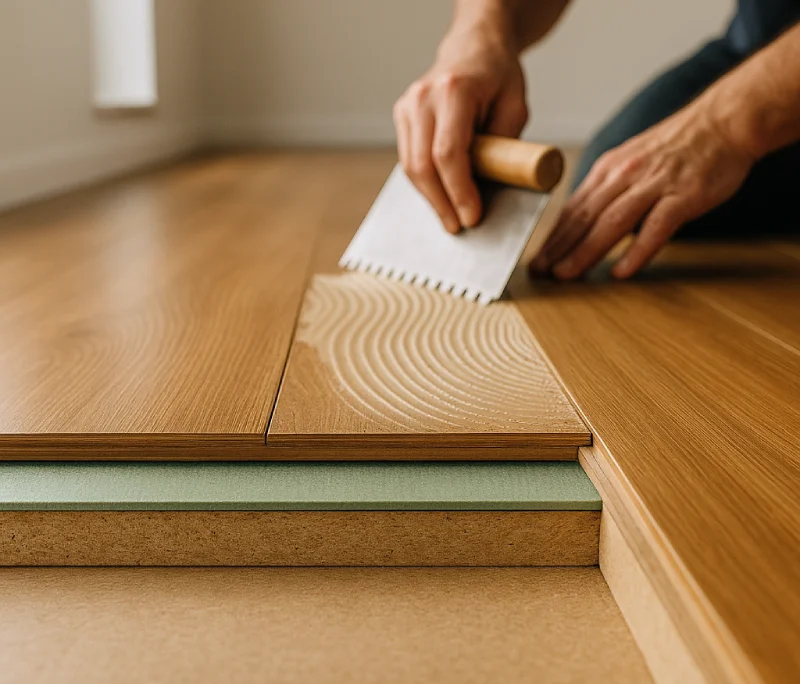
Uniform trowel notches, correct open time, and ambient temperature control ensure adhesives cure consistently, creating a continuous bond that resists shear forces and moisture intrusion. Proper application prevents pockets where moisture can accumulate and leads to superior dimensional stability.
Impact of Adhesive Selection and Durability on Flooring Performance
The long-term performance of flooring hinges on selecting adhesives with appropriate durability, which is their ability to maintain strength under environmental stresses like temperature and humidity. Research shows that polyurethane-based adhesives offer strong, flexible, and moisture-resistant bonds for various flooring types. However, some modern low-VOC adhesive formulations may be more susceptible to moisture-related deterioration, potentially leading to failures if subfloor moisture is not properly managed.
This research supports the article's discussion on choosing the right flooring adhesive, highlighting how adhesive type and its resistance to environmental factors directly impact bond strength and overall flooring durability.
Professional Flooring Installation Is the Best Investment for Long-Term Durability in Boston North
A professional flooring contractor secures the benefits of meticulous techniques and local expertise to deliver floors that withstand seasonal humidity swings, heavy use, and design aspirations.
Expert Craftsmanship Extends Flooring Lifespan
Skilled installers use precision tools, industry-approved adhesives, and calibrated leveling systems to ensure each plank is perfectly aligned. This craftsmanship minimizes stress points, optimizes load distribution, and preserves surface finishes under heavy foot traffic.
Warranty and Support Provided by Professional Installers
Reputable installers offer workmanship warranties that complement manufacturer material warranties, covering defects in installation for defined periods. Support services often include maintenance guidance, damage assessments, and priority scheduling for repairs or expansions.
Local Climate and Building Codes Influence Installation Techniques
Boston North’s cold winters and humid summers demand moisture barriers rated for freeze-thaw cycles and adhesives that cure within lower temperature thresholds. Additionally, local building codes require specific underlayment types and fastening methods to meet regional performance standards and safety regulations.
Conclusion
Floors installed with industry-leading techniques maintain structural integrity, resist environmental stresses, and preserve aesthetic appeal far longer than those placed without professional precision. By prioritizing subfloor preparation, moisture management, optimal installation methods, and correct acclimation and adhesive selection, you secure decades of performance from your investment. CabStone, your trusted flooring company, combines these best practices with local expertise in Boston North to offer superior craftsmanship, comprehensive warranties, and tailored material recommendations.
At CabStone, we stand behind every installation—protecting your flooring investment and delivering results that last.
Frequently Asked Questions
What is the most important step in ensuring flooring durability?
Subfloor preparation is paramount. A level, clean, and dry subfloor is the foundation for any durable flooring installation, preventing issues like warping, gapping, and adhesive failure.
How does moisture affect flooring installation?
Excessive moisture in the subfloor can lead to mold growth, adhesive breakdown, and the warping or cupping of flooring materials, significantly reducing their lifespan and structural integrity.
When should I use a moisture barrier?
Moisture barriers are recommended when installing flooring over concrete slabs or in areas prone to dampness, such as basements, to prevent water vapor from migrating into the flooring material.
What is acclimation, and why is it important?
Acclimation is the process of allowing flooring materials to adjust to the ambient temperature and humidity of the installation environment. It's crucial for wood and laminate flooring to prevent expansion or contraction after installation, which can cause damage.
What are expansion gaps, and how do they work?
Expansion gaps are small clearances left around the perimeter of a room and near fixed objects. They allow flooring materials to expand and contract naturally with changes in temperature and humidity without buckling or warping.
What is the difference between floating, glue-down, and nail-down installation?
Floating floors interlock and lie loosely on the subfloor. Glue-down floors are adhered directly to the subfloor. Nail-down floors are mechanically fastened to a wood subfloor. Each method has different durability implications.
Can I install flooring myself, or should I hire a professional?
While DIY installation is possible for some flooring types, searching for flooring contractors near me ensures proper techniques are used, minimizing risks of premature wear and voiding warranties. Professionals have the expertise and tools for optimal results.
How do I choose the right adhesive for my flooring?
The correct adhesive depends on the flooring material, subfloor type, and environmental conditions. Polyurethane, acrylic, and MS Polymer adhesives are common choices, each offering different bond strengths and properties.
What are common installation mistakes to avoid?
Common mistakes include skipping moisture testing, failing to prepare the subfloor adequately, not acclimating materials, and omitting expansion gaps. These errors can lead to premature flooring failure.
How does the local climate affect flooring installation choices?
Regional climate factors, like humidity and temperature fluctuations, influence the need for specific moisture barriers, adhesives, and installation methods to ensure long-term durability and performance.