Eco-Friendly Countertop Options for Durable, Sustainable Kitchens

Eco-friendly countertops deliver exceptional durability, stunning aesthetics, and minimal maintenance while significantly reducing environmental impact through recycled content, renewable resources, and low-emission manufacturing processes that prove sustainable choices no longer compromise performance or beauty.
Sustainable design has evolved from a niche preference to a mainstream priority in modern home renovations. Nowhere is this shift more visible than in kitchen countertops, where eco-conscious homeowners are discovering that environmental responsibility and high performance work together beautifully.
Today's sustainable countertop options transform waste materials into premium surfaces, utilize rapidly renewable building materials, and minimize toxic emissions while delivering the durability and aesthetics that kitchen and bathroom spaces demand. Understanding your eco-friendly choices empowers you to create spaces that nourish both your family and the planet.
CabStone offers expert guidance on sustainable countertops that align with your environmental values without sacrificing quality or style.
Key Takeaways
- Recycled glass countertops contain up to 100% recycled content: Post-consumer bottles and industrial glass transform into colorful, durable surfaces with mosaic-like patterns, diverting waste from landfills while creating unique designs impossible to replicate with traditional materials.
- Sustainable materials deliver comparable or superior durability: Eco-friendly quartz lasts 25-plus years, porcelain withstands heat to 1,800°F, and bamboo achieves hardness ratings exceeding oak—proving environmental responsibility enhances rather than compromises performance.
- Low-VOC emissions improve indoor air quality significantly: Non-porous surfaces like quartz, porcelain, and recycled glass release no harmful chemicals, reducing headaches and respiratory irritation while eliminating the need for harsh chemical cleaners in daily maintenance.
- Green certifications validate environmental claims: GREENGUARD certification confirms low emissions, LEED credits acknowledge sustainable building contributions, FSC certification guarantees responsible forest management, and NSF standards address food safety for healthier homes.
- Renewable bamboo matures in just 3-5 years: Compared to 30-plus years for traditional hardwoods, bamboo's rapid growth creates carbon-neutral lifecycles while delivering superior hardness and dimensional stability for long-lasting, beautiful surfaces.
- Total cost of ownership favors sustainable options: While eco-friendly materials may cost more initially ($30-$200 per square foot), their extended lifespans (20-30+ years), zero sealing requirements, and minimal maintenance often deliver better long-term value than budget alternatives.
Understanding the Environmental Case for Green Countertops
The environmental impact of traditional countertops extends far beyond material sourcing. Energy-intensive quarrying, chemical-heavy manufacturing processes, and long-distance transportation collectively generate substantial carbon footprints that contribute to climate change and environmental degradation.
| Eco-Friendly Countertop Material | Recycled Content | Lifespan | Maintenance Level | Price Range | Best For |
| Recycled Glass Countertops | 75-100% | 20+ years | Low (no sealing) | $50-$200/sq ft | Artistic designs, coastal kitchens |
| Paper Composite (Richlite, PaperStone) | 100% post-consumer recycled paper | 20-30 years | Moderate (periodic sealing) | $30-$125/sq ft | Budget-conscious, matte finishes |
| Bamboo Countertops | 0% (renewable resource) | 20-30 years | Moderate (periodic oiling) | $40-$100/sq ft | Natural warmth, sustainable kitchen |
| Reclaimed Wood Countertops | 100% reclaimed materials | 10-20 years | High (regular sealing) | $35-$200/sq ft | Character-rich, farmhouse style |
| Eco-Friendly Quartz | Up to 40% recycled content | 25+ years | Low (no sealing) | $50-$150/sq ft | Low-maintenance, modern aesthetics |
| Porcelain Slabs | 0% (recyclable natural materials) | 30+ years | Minimal (soap/water) | $50-$150/sq ft | Heat resistance, contemporary |
| Terrazzo | Up to 80% recycled content | 30+ years | Low (minimal sealing) | $60-$120/sq ft | Timeless elegance, LEED projects |
The Hidden Costs of Conventional Materials
Traditional granite and marble extraction involves removing massive quantities of natural stone from quarries, disrupting ecosystems and landscapes. The cutting, polishing, and manufacturing process consumes significant energy while generating waste. Synthetic materials often rely on petroleum-based resins that release volatile organic compounds during manufacturing and throughout their lifespans, compromising indoor air quality.
Environmental impacts of conventional production:
- High energy consumption: Quarrying and processing require substantial electricity and fuel
- Transportation emissions: Long-distance shipping from quarries adds carbon footprint
- VOC release: Chemical manufacturing emits harmful compounds affecting health
- Waste generation: Cutting and fabrication create disposal challenges
In contrast, sustainable alternatives address these concerns through innovative approaches. They divert waste from landfills by repurposing discarded materials, conserve natural resources through recycled content and renewable sourcing, improve indoor air quality with reduced VOC emissions, and support circular economy principles by enabling end-of-life recycling.
Green Building Contributions
Eco-friendly countertops contribute meaningfully to LEED certification and GREENGUARD standards, making them valuable for homeowners pursuing green building credentials. LEED (Leadership in Energy and Environmental Design) awards points for countertop materials with recycled content, rapidly renewable resources, and regional sourcing that reduces transportation impacts.
| Certification | What It Validates | Relevant Countertop Materials | Why It Matters |
| GREENGUARD | Low VOC emissions, indoor air quality | Quartz countertops, paper composite, porcelain | Ensures materials won't pollute indoor air with harmful chemicals |
| GREENGUARD Gold | Stricter emissions limits for sensitive environments | Select quartz, recycled glass | Suitable for schools, healthcare, homes with allergies |
| LEED Credits | Recycled content, regional materials, renewable resources | Recycled glass, bamboo, reclaimed wood, terrazzo | Contributes to green building certification points |
| FSC Certified | Responsible forest management | Wood countertops, butcher block countertops | Guarantees sustainable forestry practices |
| NSF Certification | Food safety, material purity | Quartz, composite materials | Validates safety for food contact surfaces |
GREENGUARD certification validates that products meet strict chemical emissions limits, ensuring they won't pollute indoor air with formaldehyde, VOCs, or other harmful substances. These credentials provide third-party verification of environmental claims, helping you make informed decisions based on independently tested performance rather than marketing assertions.
Recycled Glass Countertops: Colorful Sustainability
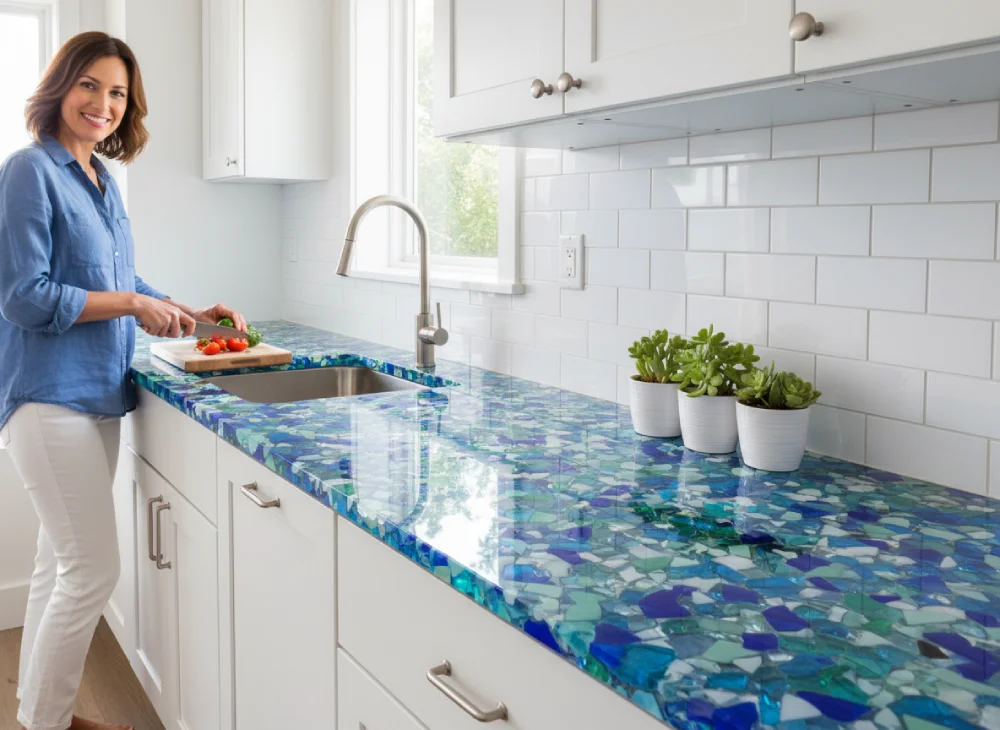
Recycled glass countertops transform post-consumer and post-industrial waste—including bottles, windows, and industrial glass—into striking surfaces with mosaic-like patterns and vibrant color depth. The manufacturing process embeds crushed glass chips of varying sizes into either cement or resin binders, creating beautiful and sustainable surfaces for your kitchen or bathroom.
Material Composition and Performance
These eco-friendly countertops deliver exceptional durability with resistance to chipping, cracking, scratches, and heat while maintaining non-porous surfaces that repel stains, bacteria, and spills. The light-reflecting properties of embedded glass create unique depth and sparkle unmatched by traditional countertops, with each slab offering one-of-a-kind color combinations.
Recycled content ranges from 75% to 100% depending on whether binders themselves incorporate recycled materials. This high percentage of repurposed content diverts significant waste from landfills—every square foot prevents several pounds of glass from occupying disposal sites for centuries.
Performance characteristics include:
- Heat resistance: Suitable for direct pot placement with trivets recommended for extreme temperatures
- Scratch resistance: Harder than granite, resisting daily kitchen wear
- Non-porous surface: Never requires sealing, simplifies maintenance significantly
- Unique aesthetics: Each slab features distinct patterns and color distributions
Maintenance requires only routine cleaning with mild soap and water. The non-porous surface eliminates the periodic sealing that granite and marble demand, saving time and expense over decades of ownership. Recycled glass countertops offer an eco-friendly option that doesn't compromise on durability.
Leading Brands and Design Options
Major manufacturers offer distinct approaches to recycled glass production. Vetrazzo creates handcrafted slabs with 100% recycled glass content, sourcing materials locally to reduce transportation emissions while offering artistic, museum-quality surfaces at $85–$200 per square foot.
IceStone combines recycled glass with cement and pigments in a $50–$100 per square foot range, while Curava blends glass with quartz and resin at similar pricing, providing up to 60% recycled content with excellent heat and scratch resistance. Bio-Glass melts recycled glass into solid sheets for $100–$150 per square foot, offering seamless surfaces with optional backlighting capabilities.
Color options range from subtle neutral palettes mimicking natural stone to bold rainbow confetti effects incorporating 9–12 distinct hues. Popular applications include beach-inspired kitchens pairing blue and white glass with coastal aesthetics, contemporary spaces featuring gray and white combinations with metallic accents, and eclectic designs mixing vibrant greens, reds, and blues for artistic statement pieces.
Paper Composite Countertops: Richlite and Innovative Eco-Friendly Materials
Paper composite countertops represent an unexpected yet highly effective sustainable choice, transforming post-consumer recycled paper or wood-based fibers into dense, stone-like surfaces through compression with petroleum-free phenolic resins made from materials like cashew nut shell liquid.
Manufacturing and Durability
The two dominant manufacturers—Richlite and PaperStone—produce countertops made from extremely high recycled paper content while delivering durability comparable to solid-surface materials. The compression process creates nonporous monolithic slabs that resist water infiltration and bacterial growth.
The countertop material exhibits hardness greater than wood yet remains more forgiving than stone countertops, absorbing impacts without chipping. Unlike many engineered surfaces, paper composite develops a natural patina over time that many homeowners find appealing, and light scratches can be buffed out with Scotchbrite pads.
Material advantages:
- Heat tolerance: Resists temperatures up to approximately 350°F
- Impact resistance: Absorbs force without chipping like stone would
- Clean seams: Superior tight joints compared to natural stone
- Lighter weight: Easier installation than granite or marble
Warranties range from 7 years to lifetime depending on manufacturer and application, with material costs falling between $30–$70 per square foot for standard-grade options and $70–$125 for premium lines.
Practical Considerations
Routine care involves simple wiping with soap and warm water, though manufacturers recommend applying food-safe sealers periodically to enhance depth and protect against staining, particularly on lighter colors. The material weighs less than granite, simplifying installation logistics.
Available colors lean toward medium to dark hues in matte finishes due to the dark phenolic resin used in production, with some UV-induced darkening over time. While exceptionally sustainable and aesthetically unique, paper composite does show scratches more readily than quartz and may exhibit discoloration as resin yellows with age.
Despite minor drawbacks, paper composite offers an outstanding balance of environmental credentials, durability, and affordability for eco-conscious renovations. The material proves particularly popular with environmentally aware homeowners who appreciate its story—transforming recycled paper into functional surfaces demonstrates innovation in sustainable design.
Bamboo Countertops: Renewable and Sustainable Materials
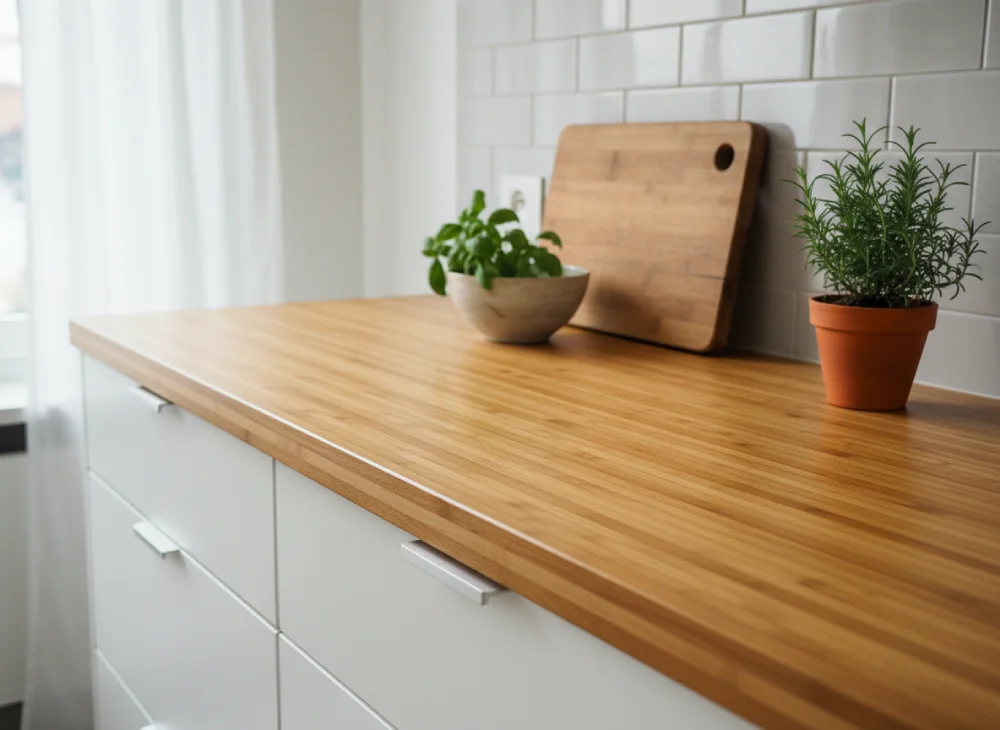
Bamboo countertops leverage one of nature's most rapidly renewable resources, with bamboo grass reaching harvest maturity in just 3–5 years compared to 30-plus years for traditional wood countertops. This exceptional growth rate, combined with bamboo's natural water resistance, antimicrobial properties, and impressive hardness, makes it an increasingly popular sustainable countertop material for kitchen and bathroom applications.
Strength and Environmental Benefits
Strand-woven bamboo panels achieve Janka hardness ratings of 1,300–1,800, surpassing many traditional hardwoods including oak at 1,155, while providing dimensional stability superior to solid wood due to engineered construction that resists warping from humidity fluctuations. Teragren bamboo countertops and similar brands demonstrate this superior performance.
The countertop material withstands daily kitchen wear including cutting, chopping, and moderate heat exposure when properly finished. With appropriate care—regular cleaning and periodic oiling or lacquer application—bamboo countertops can last 20–30 years, with some properly maintained installations performing well indefinitely.
Sustainability credentials include:
- Rapid regeneration: Creates carbon-neutral lifecycle through fast growth
- Reduced land use: Requires less cultivation area than traditional lumber
- Minimal water needs: Grows with limited irrigation compared to hardwoods
- Deforestation prevention: Avoids cutting old-growth forests
Bamboo naturally resists bacterial growth and is inherently anti-allergenic and antistatic, contributing to healthier indoor environments. Modern bamboo countertops use low-emission finishes and avoid formaldehyde, ensuring minimal VOC release.
Design and Maintenance
Available in natural warm tones ranging from light honey to dark coffee, bamboo offers linear grain patterns distinct from wood that complement both contemporary and organic design schemes. The material can be customized with perforations for taps or sinks and finished with wear- and water-resistant matt lacquers suitable for kitchens, bathrooms, and workspaces.
Unlike wood countertops requiring monthly maintenance, bamboo benefits from weekly or daily wiping to prevent stains and scratches, with periodic resealing and sanding to maintain non-porous properties. Pricing ranges from $40–$100 per square foot, positioning bamboo as a mid-range sustainable option that balances environmental benefits with practical performance.
Reclaimed Wood Countertops: History Repurposed with Sustainable Materials
Reclaimed wood countertops salvage lumber from deconstructed barns, warehouses, factories, and ships, giving aged materials a second life while delivering character-rich surfaces with unique weathered patinas, nail holes, and grain patterns that tell stories of their origins. These countertops are made from reclaimed or recycled materials that would otherwise occupy landfills.
Environmental Impact
Using reclaimed wood avoids contributing to deforestation and eliminates the need for new lumber harvesting, reducing carbon footprints by up to 50% compared to virgin wood production. The countertop material diverts substantial waste from landfills while conserving natural stone resources and forest ecosystems.
This approach represents arguably the most sustainable choice for obtaining new kitchen counters, significantly contributing to the green building industry and qualifying projects for LEED and Forest Stewardship Council certification. Extensive processing ensures safety and usability—including kiln drying, de-nailing, and milling—transforming aged timber into premium surfaces ready for modern applications.
Reclaimed wood benefits:
- Waste diversion: Prevents demolition materials from landfills
- Carbon reduction: Eliminates emissions from harvesting new lumber
- Unique character: Aged patinas and grain patterns impossible to replicate
- Sentimental value: Can source from personally meaningful structures
Dense reclaimed hardwoods require minimal upkeep due to their inherent robustness, though all wood surfaces need proper sealing with food-safe oils or wax to protect against water damage and staining.
Performance and Sourcing
When treated and sealed correctly, reclaimed wood performs comparably to new alternatives, offering warm, rustic aesthetics that work beautifully in farmhouse, traditional, and eclectic kitchen designs. Expected lifespan ranges from 10–20 years with conscientious maintenance, including periodic re-sealing and addressing scratches through light sanding.
Costs vary widely—$35–$200 per square foot—based on wood species, rarity, condition, and processing complexity, with reclaimed wood generally commanding premium pricing over new lumber due to sourcing and preparation labor. Partnering with specialized suppliers who warehouse and prep reclaimed materials ensures access to properly processed lumber suitable for countertop fabrication.
Homeowners seeking sentimental connections can sometimes source reclaimed wood from personally meaningful structures like family barns or historic local buildings, adding emotional value beyond environmental benefits.
Eco-Friendly Quartz: Engineered Sustainability
Engineered quartz countertops combine 90–95% natural quartz crystals—one of the earth's most abundant minerals—with 5–10% resin binders and pigments, creating surfaces that increasingly incorporate recycled content including post-consumer glass, ceramic, porcelain, and industrial waste.
Sustainable Manufacturing Practices
Progressive quartz manufacturers implement energy-efficient production using renewable power sources, water recycling systems that conserve this critical resource during cooling and cutting processes, and optimized cutting techniques that maximize material use while minimizing waste.
The use of low-VOC resins creates healthier products that don't emit harmful chemicals during their lifespan, contributing to superior indoor air quality. Leading brands achieve GREENGUARD, LEED, NSF, and KOSHER certifications, validating their commitment to environmental standards and human health protection.
Manufacturing innovations include:
- Renewable energy: Solar and wind power reduce production emissions
- Water conservation: Closed-loop systems recycle cutting and cooling water
- Waste minimization: Precision cutting reduces offcut generation
- Recycled content: Post-consumer materials reduce virgin resource demand
This manufacturing approach reduces virgin resource demand while producing exceptionally durable, low-maintenance countertops that have become leading choices for environmentally conscious renovations.
Performance and Recyclability
Quartz's non-porous surface requires zero sealing throughout its 25-plus year lifespan, resisting scratches, stains, and heat damage while eliminating bacterial growth and simplifying maintenance to routine cleaning with mild soap and water. This longevity itself contributes to sustainability by reducing replacement frequency and associated manufacturing impacts.
The material offers virtually unlimited color and pattern options through advanced digital printing technology, including sophisticated marble-look designs that rival natural stone aesthetics without the environmental impact of quarrying.
At the end of their extended lifecycle, quartz countertops can be crushed and repurposed for other applications, supporting circular economy principles and reducing landfill waste. Material pricing ranges from $50–$150 per square foot depending on design complexity and brand, positioning eco-friendly quartz competitively while offering superior functionality.
Porcelain Countertops: Cutting-Edge Sustainability
Porcelain countertops represent one of the most technologically advanced sustainable options, manufactured from natural clay, feldspar, and minerals fired at extremely high temperatures to create dense, non-porous slabs with exceptional strength.
Environmental and Performance Profile
The production process uses minimal water, emits very low pollutant levels, and avoids petroleum-based resins entirely, resulting in surfaces with smaller ecological footprints than many alternatives. Manufactured from abundant natural materials, porcelain is fully recyclable at end-of-life, with crushed slabs repurposed as raw material for new products.
Despite thinner profiles than stone, porcelain achieves Mohs hardness ratings around 7 and withstands heat up to 1,800°F without damage, making it ideal for direct pot placement and high-traffic cooking areas. The material resists scratches, impacts, UV radiation (preventing fading in bright kitchens or outdoor applications), and moisture absorption.
Porcelain advantages:
- Extreme heat resistance: Handles temperatures up to 1,800°F safely
- UV stability: Won't fade in bright sunlight or outdoor installations
- Lightweight profile: Reduces structural demands on cabinet installation.
- Zero emissions: No VOCs during manufacturing or use
This combination of properties enables porcelain to outlast marble, laminate, and many other countertop materials, with properly installed surfaces lasting 30-plus years or more.
Maintenance and Design Versatility
Porcelain's non-porous nature eliminates sealing requirements entirely, with cleaning accomplished through simple soap and water wiping—no harsh chemicals or specialty products needed. The material's lightweight profile compared to stone eases installation logistics while reducing transportation emissions.
Available in extensive design portfolios mimicking marble, wood, concrete, and other materials, porcelain adapts to virtually any aesthetic from minimalist contemporary to luxury traditional. Pricing aligns with premium quartz options at $50–$150 per square foot, delivering excellent long-term value through decades-long performance and zero ongoing maintenance costs.
Concrete and Terrazzo Countertops: Recycled Aggregates
Concrete and terrazzo countertops offer eco-friendly potential when produced with sustainable practices, utilizing recycled aggregates that transform waste into beautiful, durable surfaces.
Concrete countertops utilize locally sourced ingredients that minimize transportation emissions while enabling custom flexibility. Homeowners searching for custom countertops near me often find local fabricators who specialize in these sustainable options.
Modern terrazzo reimagines a classic material by embedding recycled stone chips, glass fragments, or marble waste—sometimes reaching 80% recycled content—into cement or resin bases. By repurposing materials that would otherwise occupy landfills, terrazzo actively reduces waste while decreasing mining pressure. Surfaces can be repolished after 10–20 years to restore original luster, extending functional lifespan to 30-plus years. Pricing typically ranges from $60–$120 per square foot.
FSC-Certified Wood Countertops: Responsible Forest Stewardship
Wood countertops bearing Forest Stewardship Council certification provide assurance that lumber originates from responsibly managed forests meeting stringent environmental, social, and economic standards. This certification—considered the gold standard—ensures forests are harvested in ways that conserve biodiversity, protect indigenous rights, and maintain ecosystem health.
FSC-certified wood contributes to LEED green building credits. Species commonly available include acacia, rubberwood, and birch suitable for butcher block countertops. Choosing FSC products actively combats deforestation while supporting sustainable forestry practices that store carbon.
All wood countertops require periodic maintenance including oiling every 1–2 months and occasional sanding to address scratches, with food-safe mineral oil providing non-toxic protection. Expected lifespan reaches 10–20 years with diligent care, comparable to reclaimed wood but with guaranteed sustainable sourcing.
Making the Right Choice for Your Sustainable Kitchen
Selecting an eco-friendly countertop involves balancing environmental priorities with practical considerations including budget, durability requirements, maintenance preferences, and design aesthetics.
High-traffic households with heavy cooking benefit from low-maintenance options like quartz, porcelain, or recycled glass that withstand daily wear. Families prioritizing natural warmth may prefer bamboo, FSC-certified wood, or reclaimed lumber despite higher maintenance. Homeowners seeking artistic statement pieces find recycled glass and terrazzo offer unmatched visual interest.
While sustainable countertops span wide price ranges—from $30 per square foot for paper composite to $200-plus for premium recycled glass—materials requiring no sealing deliver long-term savings. Eco-friendly countertops can enhance home resale value by appealing to environmentally conscious buyers. A sustainable countertop replacement often recovers up to 67% of investment.
Prioritize products with third-party certifications validating environmental claims: GREENGUARD certification confirms low VOC emissions, LEED credits acknowledge green building contributions, FSC certification guarantees responsible forest management, and NSF certification addresses food safety.
Health and Air Quality Benefits
Sustainable countertops often deliver superior indoor air quality through minimal or zero VOC emissions. Natural stone, porcelain, and properly manufactured quartz release no harmful chemicals, reducing headaches and respiratory irritation. Paper composite and FSC-certified wood products avoid formaldehyde and use low-emission finishes.
Non-porous surfaces including quartz, porcelain, and recycled glass resist mold and bacteria growth, contributing to cleaner air. These materials don't require harsh chemical cleaners—mild soap and water suffice. For homeowners with respiratory sensitivities, allergies, or young children, low-emission sustainable countertops represent meaningful health investments alongside environmental stewardship.
Installation Best Practices for Maximum Sustainability
Maximize sustainability benefits through thoughtful countertop installation approaches. Choose local suppliers to reduce transportation emissions and support community economies. Work with fabricators who optimize cutting patterns to minimize waste and utilize water-efficient equipment.
Request low-VOC adhesives and sealants for healthier indoor environments. Accurate templating prevents costly re-cuts and material waste, while modest overhangs and simple edge profiles reduce fabrication complexity. Choose a countertop installer experienced with sustainable materials who understands their unique properties and installation requirements.
Conclusion
Eco-friendly countertop options have matured into compelling alternatives that match or exceed traditional materials in durability, aesthetics, and functionality while delivering profound environmental and health benefits. Whether choosing recycled glass for artistic flair, paper composite for innovation, bamboo for renewable warmth, reclaimed wood for character, eco-friendly quartz for performance, porcelain for durability, or terrazzo for timeless elegance, modern sustainable countertops prove environmental consciousness and kitchen excellence coexist beautifully.
By selecting materials that divert waste from landfills, conserve natural resources, minimize toxic emissions, and support sustainable manufacturing, you create kitchens that nourish both families and the planet for generations to come.
Contact CabStone to explore our selection of sustainable countertops and discover how our countertop specialists can guide you toward eco-friendly options that align with your environmental values, design preferences, and performance requirements.
Frequently Asked Questions
What makes a countertop truly eco-friendly?
Eco-friendly countertops contain high recycled content (50-100%), utilize rapidly renewable resources like bamboo, emit low or zero VOCs for healthy indoor air quality, and are manufactured using energy-efficient processes with minimal water use. Look for third-party certifications like GREENGUARD, LEED credits, FSC for wood, and NSF standards validating environmental claims.
How durable are recycled glass countertops compared to granite?
Recycled glass countertops are harder than granite with superior scratch resistance, heat tolerance suitable for hot pots with trivets, and completely non-porous surfaces that never require sealing. They last 20-plus years with minimal maintenance, matching or exceeding granite's lifespan while diverting waste from landfills through 75-100% recycled content.
Do sustainable countertops cost more than traditional options?
Initial costs range from $30-$200 per square foot depending on material, with some sustainable options (paper composite, bamboo) priced competitively with granite while others (premium recycled glass) command premiums. However, total cost of ownership often favors sustainable materials due to zero sealing requirements, minimal maintenance, and extended 20-30+ year lifespans.
Which eco-friendly countertop requires the least maintenance?
Quartz, porcelain, and recycled glass countertops require the least maintenance with non-porous surfaces needing only soap and water cleaning, zero sealing throughout their 25-30+ year lifespans, and resistance to stains, scratches, and bacteria growth. These materials deliver ultimate convenience for busy households while maintaining environmental credentials.
Is bamboo really more sustainable than traditional wood?
Yes, bamboo matures in just 3-5 years versus 30-plus years for hardwoods, creating carbon-neutral lifecycles through rapid regeneration. It requires less land and water than traditional lumber, achieves superior hardness ratings (1,300-1,800 Janka versus oak's 1,155), and resists warping better than solid wood while avoiding deforestation.
What certifications should I look for in sustainable countertops?
Prioritize GREENGUARD certification confirming low VOC emissions for healthy air quality, LEED credits acknowledging green building contributions, FSC certification guaranteeing responsible forest management for wood products, and NSF certification addressing food safety and material purity. These third-party validations verify environmental claims independently.
Can eco-friendly countertops increase my home's resale value?
Yes, sustainable countertops appeal to environmentally conscious buyers representing growing market segments, signal quality and well-maintained properties, and contribute to LEED certification increasing marketability. Kitchen upgrades typically recover up to 67% of investment at resale, with eco-friendly materials commanding premiums from green-minded purchasers.
How do I choose between recycled glass and quartz countertops?
Choose recycled glass for unique artistic appearance with visible glass chips and higher recycled content (75-100%), suitable for homeowners prioritizing character and environmental impact. Choose quartz for wider color options including natural stone looks, superior stain resistance, and lower maintenance, ideal for those balancing sustainability with conventional aesthetics.
Are there eco-friendly options for tight budgets?
Paper composite countertops start at $30-$70 per square foot, offering excellent sustainability from recycled paper with petroleum-free resins. Bamboo at $40-$100 per square foot and concrete with recycled aggregates at $65-$135 per square foot provide mid-range sustainable alternatives. These materials deliver environmental benefits without premium pricing.
Do sustainable countertops emit harmful chemicals?
No, properly manufactured sustainable countertops use low-VOC or petroleum-free resins, emit zero harmful chemicals during their lifespans, and avoid formaldehyde found in some conventional products. Materials like porcelain, recycled glass, and GREENGUARD-certified quartz actively improve indoor air quality by eliminating off-gassing that causes headaches and respiratory issues.