The Only Flooring Buying Guide You'll Actually Need (From a Contractor Who's Seen It All)
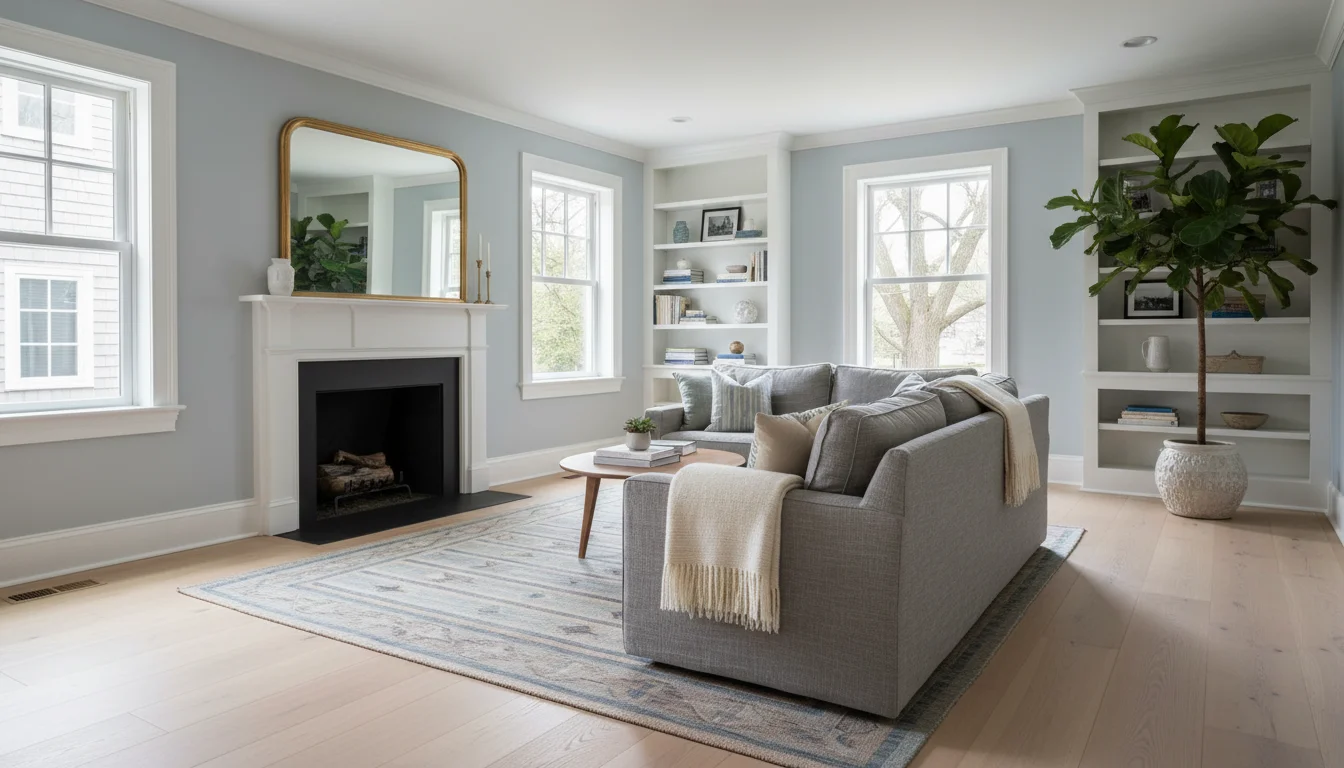
Choosing flooring comes down to three honest questions: where is it going, what does your household actually do to floors, and how does your home handle moisture? Everything else — color trends, brand names, what your neighbor picked — is secondary. This guide cuts through the noise and gives you the decision framework we use with every client.
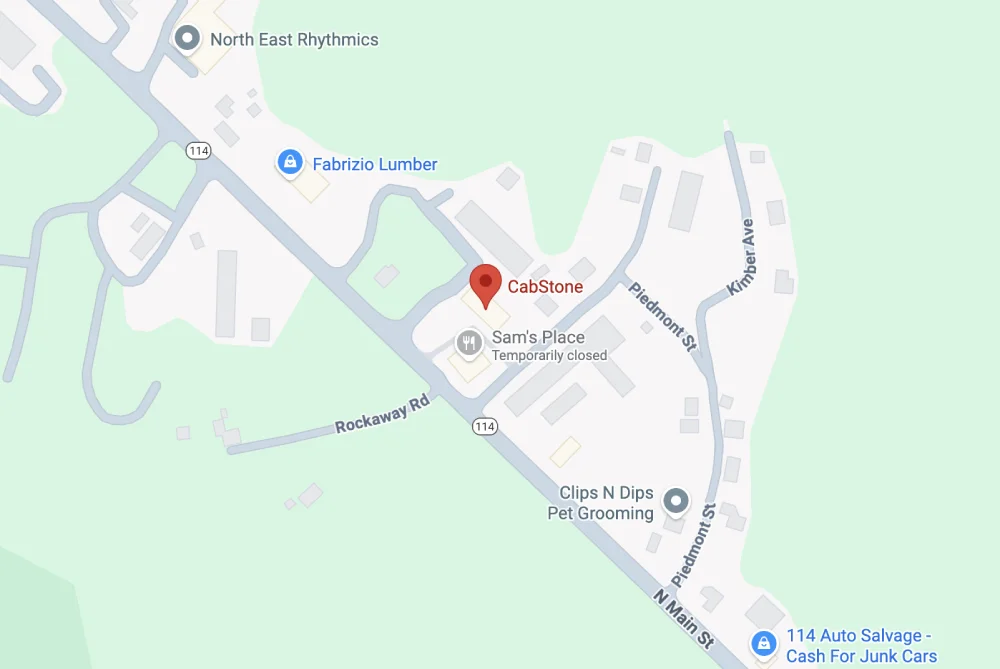
After years of installing floors across Middleton and the North Shore, CabStone has seen every flooring decision go right and every flooring decision go wrong. The difference almost always comes down to whether the homeowner understood the material before they committed.
This isn't a catalog. It's the conversation we have at your kitchen table before a single plank gets ordered.
The Three Flooring Types We Install (And Why We Stopped Carrying Everything Else)
CabStone installs three categories of flooring — solid hardwood, engineered hardwood, and SPC luxury vinyl. Each serves a specific purpose, and understanding the differences is the single most important step in your flooring decision.
We used to install carpet, laminate, and tile as well. We narrowed our focus because these three categories cover every residential scenario we encounter in Massachusetts — from high-end living rooms to basement playrooms to kitchens with three kids and a dog. Here's what you need to know about each.
Solid Hardwood
Solid hardwood is exactly what it sounds like — a single piece of timber, typically 3/4-inch thick, milled with a tongue-and-groove profile for installation. Oak, maple, and hickory are the most common species we install on the North Shore. It's the gold standard for main living areas and the flooring type with the highest resale value.
The big advantage? Solid hardwood can be sanded and refinished multiple times over its lifespan — potentially lasting a century in the right conditions. The limitation? It doesn't love moisture. Solid hardwood expands and contracts with changes in humidity, which means it's not suitable for basements, below-grade installations, or rooms with concrete subfloors. In Massachusetts, where winter heating drops indoor humidity and summer pushes it back up, proper acclimation and humidity control are non-negotiable.
Engineered Hardwood
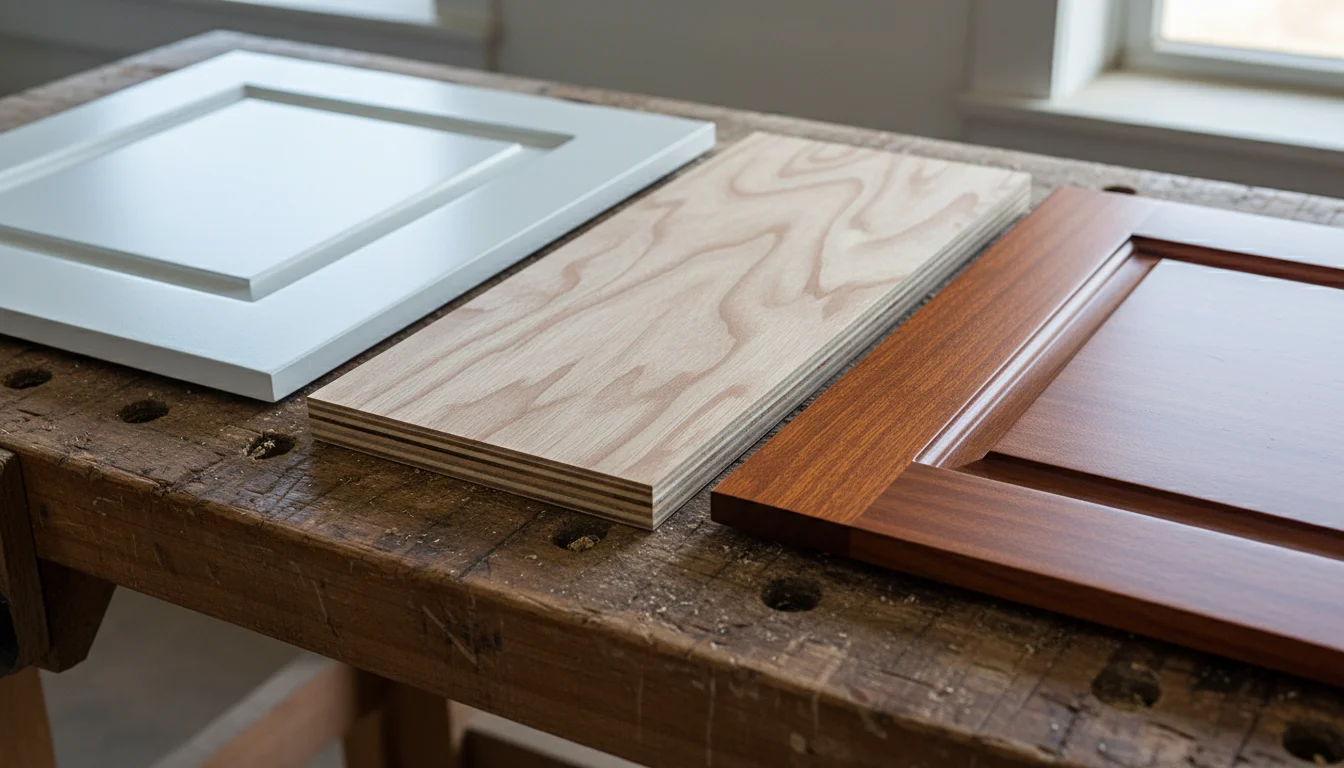
Engineered hardwood uses a real wood wear layer — the species you actually see and walk on — bonded to a cross-layered plywood or composite core. That layered construction gives it dimensional stability that solid hardwood can't match. It resists seasonal expansion and contraction better, which is why we recommend it for open-concept spaces, radiant heat systems, and rooms with concrete subfloors.
The wear layer thickness matters. A quality engineered plank with a 3mm+ wear layer can be sanded and refinished once or twice. Thinner wear layers are essentially one-life products — once the finish wears through, you're replacing the floor, not refinishing it. We always recommend checking the wear layer specification before committing.
SPC Luxury Vinyl
SPC — stone plastic composite — is the rigid-core luxury vinyl product we install. It's 100% waterproof, dimensionally stable, and installs with a click-lock system that doesn't require glue or nails. For kitchens, bathrooms, basements, mudrooms, and any room where water is a realistic concern, SPC luxury vinyl is what we recommend to the majority of our North Shore clients.
Here's the honest take: SPC luxury vinyl is not hardwood. It doesn't feel exactly like wood underfoot, and it can't be refinished. But the current generation of SPC products features realistic embossed textures, wide-plank formats, and wear layers that handle heavy residential traffic for 15–20 years without issue. For families with young kids, dogs, or a finished basement, it's often the smartest choice.
| Feature | Solid Hardwood | Engineered Hardwood | SPC Luxury Vinyl |
| Construction | Single piece of timber | Real wood over plywood core | Rigid stone polymer core with vinyl wear layer |
| Waterproof | No | No (water-resistant) | Yes — 100% |
| Refinishable | Multiple times (3/4" thick) | 1–2 times (depends on wear layer) | No |
| Best Rooms | Living rooms, bedrooms, dining | Open-concept, radiant heat, concrete slab | Kitchens, bathrooms, basements, mudrooms |
| Installation | Nail-down to wood subfloor | Float, glue, or nail | Click-lock floating (any subfloor) |
| Climate Stability | Seasonal movement expected | Minimal movement | None |
| Lifespan | 50–100+ years with refinishing | 25–50 years | 15–25 years |
How to Match Flooring to Your Room (A Room-by-Room Decision Guide)
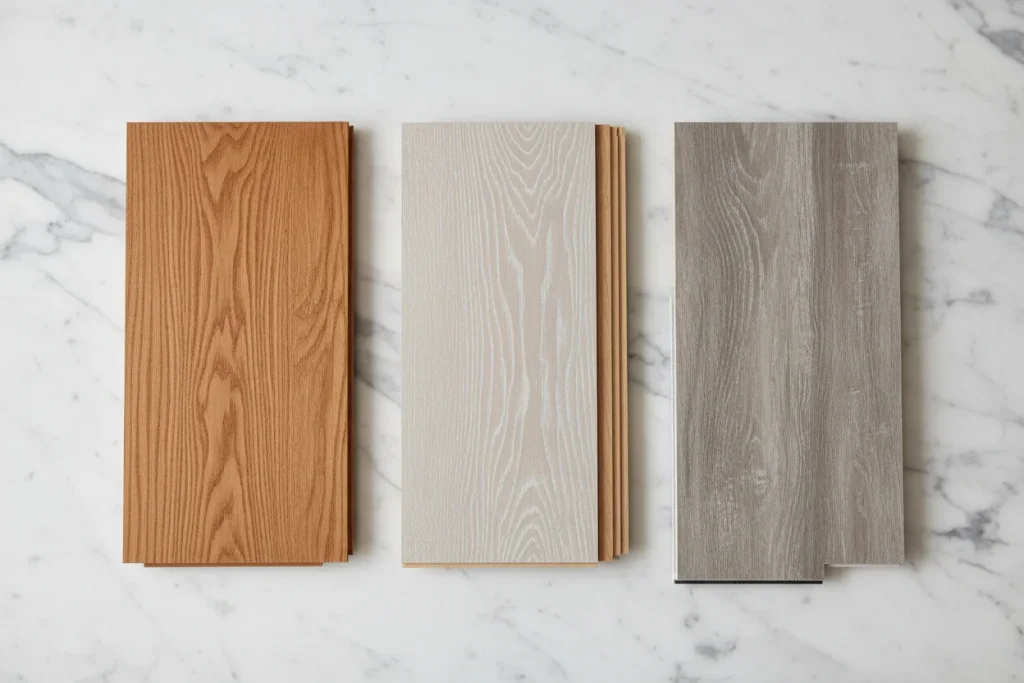
The right flooring depends on the room. What works beautifully in your living room can fail catastrophically in your basement — and the reason comes down to moisture exposure, subfloor type, and daily wear patterns.
This is where most homeowners get tripped up. They fall in love with a sample and want it everywhere. But floors don't work that way. Here's how we think about it, room by room.
Living Rooms and Bedrooms
These are your showcase rooms — low-moisture, moderate-traffic, and the spaces where aesthetics matter most. Both solid and engineered hardwood excel here. If you have a wood subfloor and want the longest-lasting option, solid hardwood is the classic choice. If you're on a concrete slab or running radiant heat, engineered hardwood gives you the same look with better dimensional stability.
Kitchens
Kitchens are tricky. They see water from cooking, dishwashers, ice makers, and the occasional dropped glass. Solid hardwood can work in kitchens, but it demands immediate cleanup and consistent humidity control. Engineered hardwood handles kitchen conditions better than solid. SPC luxury vinyl is the most forgiving option and the one we recommend for families who actually cook every day.
Bathrooms
SPC luxury vinyl. Full stop. We don't install hardwood in bathrooms — not solid, not engineered. The moisture exposure is too consistent and too unpredictable. Splashes, steam, and the occasional overflowing tub make this a waterproof-only zone.
Basements
Below-grade spaces have moisture challenges that eliminate solid hardwood entirely. Engineered hardwood can work in a finished basement with a proper moisture barrier, but SPC luxury vinyl is the safer call. It sits directly on concrete, handles humidity fluctuations, and won't warp if your sump pump has a bad day.
Mudrooms and Entryways
These are the hardest-working floors in a New England home. Salt, sand, snow, and wet boots hit these surfaces daily from November through March. SPC luxury vinyl handles all of it without complaint. Some homeowners use tile here, but we find SPC provides better underfoot comfort and easier installation.
| Room | Recommended Flooring | Why |
| Living Room | Solid or Engineered Hardwood | Low moisture, high visibility, long lifespan |
| Bedroom | Solid or Engineered Hardwood | Comfort, aesthetics, minimal wear |
| Kitchen | SPC Luxury Vinyl or Engineered Hardwood | Water exposure from cooking and appliances |
| Bathroom | SPC Luxury Vinyl only | Consistent moisture, steam, splash zones |
| Basement | SPC Luxury Vinyl (preferred) or Engineered | Below-grade moisture, concrete subfloor |
| Mudroom/Entry | SPC Luxury Vinyl | Salt, sand, snow, wet boots — daily abuse |
The Durability Question: Hardness, Wear Layers, and Real-Life Performance
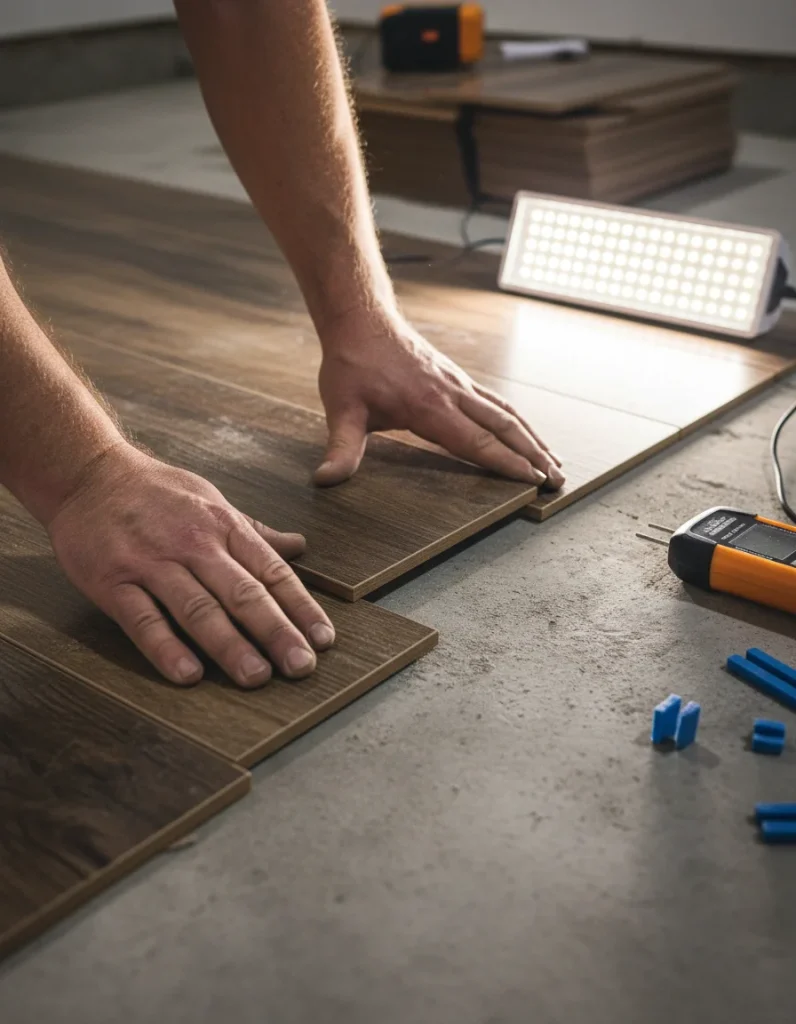
Durability isn't just about hardness ratings — it's about how a floor performs against the specific abuse your household dishes out. A floor that resists scratches from high heels might still dent from a dropped cast-iron pan.
The Janka Scale (And Why It Only Tells Half the Story)
The Janka hardness test measures a wood species' resistance to denting by embedding a steel ball into the surface. Red oak — the industry benchmark — rates 1,290 on the Janka scale. White oak comes in at 1,360. Hickory hits 1,820, making it one of the hardest domestic species available.
These numbers help you compare wood species, but they don't account for finish quality, installation method, or how your family actually lives. A 1,820-Janka hickory floor with a poor factory finish will scratch easier than a 1,360-Janka white oak with a commercial-grade aluminum oxide topcoat. The finish protects the wood — not just the species itself.
Wear Layers on SPC Luxury Vinyl
For SPC products, the wear layer thickness measured in mils (thousandths of an inch) is your durability indicator. Here's the general breakdown:
- 12 mil wear layer — light residential use, guest rooms, closets
- 20 mil wear layer — standard residential, living rooms, bedrooms
- 28+ mil wear layer — heavy residential, kitchens, mudrooms, pet households
We install 20 mil minimum on most projects and recommend 28 mil for households with dogs, kids under 10, or high-traffic entryways. The wear layer is the difference between a floor that looks good for five years and one that holds up for fifteen.
The Massachusetts Factor
Here's something national flooring guides never mention: New England's climate is brutal on floors. We swing from 15% relative humidity in January (when your forced hot air heating is running full blast) to 70%+ in August. That seasonal cycle causes solid hardwood to gap in winter and potentially cup in summer. Engineered hardwood handles the swing better. SPC doesn't care at all.
If you're choosing between solid and engineered for a main living area, ask yourself: will you run a humidifier in winter and manage your HVAC to keep indoor humidity between 35% and 55%? If yes, solid hardwood will perform beautifully. If that sounds like more maintenance than you're up for, engineered is the smarter pick.
| Durability Factor | Solid Hardwood | Engineered Hardwood | SPC Luxury Vinyl |
| Scratch Resistance | Species-dependent (Janka rating) | Same as solid (real wood surface) | Wear layer mil rating |
| Dent Resistance | Species-dependent | Species-dependent | Rigid SPC core — very high |
| Water Resistance | Poor — swells and warps | Moderate — resists better than solid | Excellent — 100% waterproof |
| Humidity Tolerance | Seasonal gapping/cupping expected | Minimal seasonal movement | Zero movement |
| Refinishing Ability | Multiple times | 1–2 times (3mm+ wear layer) | Cannot be refinished |
| Recommended Wear Layer | N/A | 3mm+ for refinishing option | 20 mil minimum residential |
How the Buying Process Actually Works (From Our Side)
A good flooring purchase starts with an in-home consultation — not a trip to a showroom. Your subfloor condition, room layout, moisture levels, and lifestyle determine which products are even on the table before you start picking colors.
Here's what our process looks like at CabStone:
Step 1: In-Home Assessment
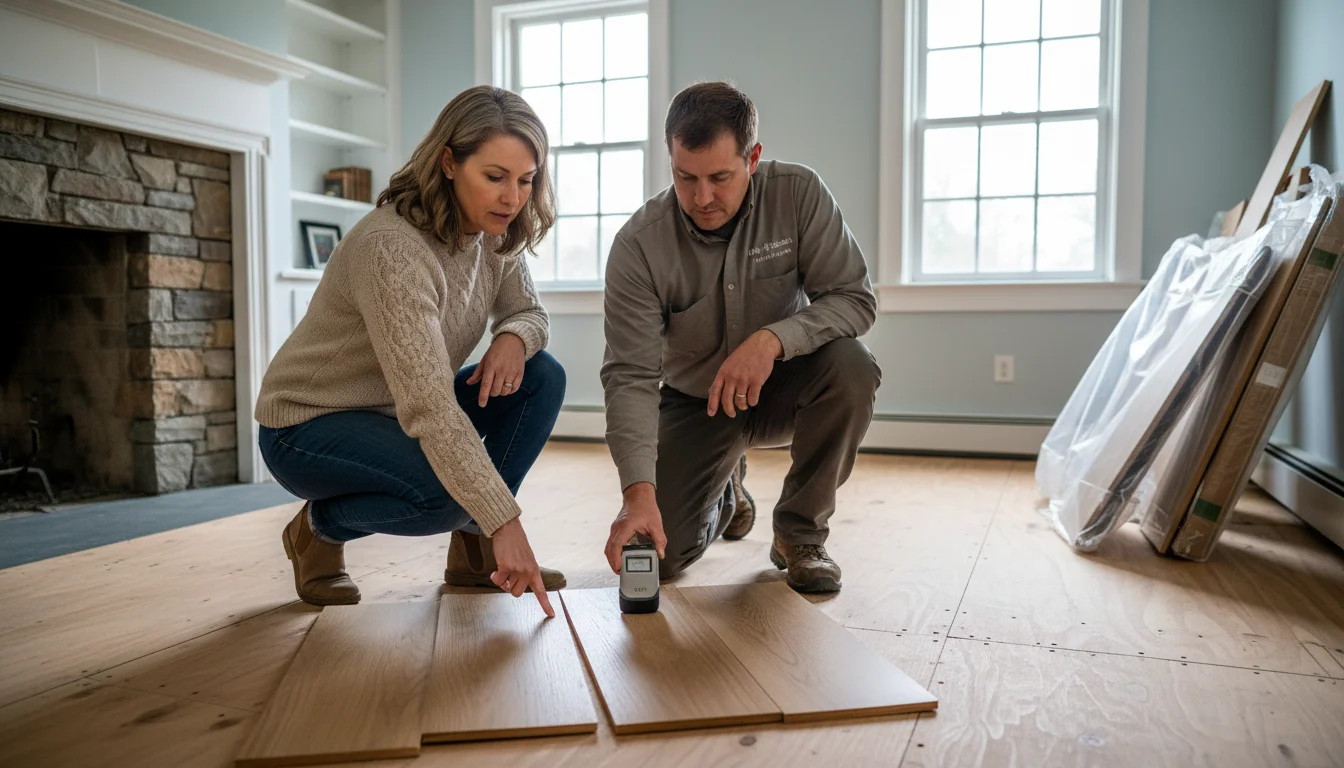
We measure every room, check subfloor conditions (moisture readings, flatness, material type), and discuss how your family uses each space. A basement with a history of moisture issues gets a different recommendation than a second-floor bedroom. This visit takes about an hour and saves weeks of back-and-forth.
Step 2: Material Recommendation
Based on the assessment, we narrow your options to the products that actually make sense for your home. We bring samples so you can see them in your lighting, against your walls, next to your existing cabinetry. Showroom lighting is flattering — your kitchen at 7 AM in February is reality.
Step 3: Acclimation and Scheduling
Flooring materials need to acclimate to your home's temperature and humidity before installation. For solid hardwood, that's a minimum of 72 hours — sometimes longer in Massachusetts. We schedule the installation around this acclimation window, not the other way around.
Step 4: Installation
Our crew handles the full installation — subfloor prep, moisture barriers where needed, the flooring itself, transitions, and trim. We don't subcontract the install to a separate crew.
Step 5: Final Walkthrough
We walk every room with you, check transitions, verify that everything meets our standards and yours, and address any touch-ups on the spot.
Key Takeaways
- CabStone installs three flooring types — solid hardwood, engineered hardwood, and SPC luxury vinyl — because they cover every residential scenario on the North Shore.
- Solid hardwood is the longest-lasting option but requires humidity management and isn't suitable for basements, bathrooms, or concrete subfloors.
- Engineered hardwood delivers real-wood performance with improved dimensional stability for open-concept spaces, radiant heat, and slabs.
- SPC luxury vinyl is 100% waterproof and the go-to for kitchens, bathrooms, basements, and any room where water or heavy wear are factors.
- The Janka hardness scale helps compare wood species, but finish quality and wear layer thickness matter just as much for real-world durability.
- Coordinate your flooring timeline with your cabinet installation schedule — getting the sequence wrong between custom cabinetry and flooring installation can lead to costly rework.
Frequently Asked Questions
What is the most durable flooring for Massachusetts homes?
For overall durability in Massachusetts' climate, engineered hardwood balances real-wood beauty with dimensional stability across seasonal humidity swings. SPC luxury vinyl is the most durable option for high-moisture and high-traffic areas.
Can you install hardwood floors in a basement?
Solid hardwood should not be installed below grade. Engineered hardwood can work in finished basements with proper moisture management, but SPC luxury vinyl is the safest and most reliable choice for below-grade spaces.
What is SPC luxury vinyl flooring?
SPC stands for stone plastic composite. It's a rigid-core luxury vinyl product that's 100% waterproof, installs with a click-lock system, and provides realistic wood-look visuals. CabStone installs it in kitchens, bathrooms, basements, and mudrooms.
How long does each type of flooring last?
Solid hardwood can last 50–100+ years with periodic refinishing. Engineered hardwood typically lasts 25–50 years. SPC luxury vinyl lasts 15–25 years depending on wear layer thickness and household traffic levels.
What is the Janka hardness scale?
The Janka test measures a wood species' resistance to denting by pressing a steel ball into the surface. Higher numbers mean harder wood. Red oak rates 1,290 and is the industry benchmark. Hickory rates 1,820 — one of the hardest domestic options.
Should I choose solid or engineered hardwood?
Choose solid if you have a wood subfloor, want maximum refinishing potential, and will manage indoor humidity year-round. Choose engineered if you have a concrete slab, use radiant heat, or prefer a more stable floor that handles Massachusetts climate swings with less maintenance.
Is SPC luxury vinyl good enough for a main living area?
Yes, if your priority is durability and water resistance over refinishing ability. Current-generation SPC products offer realistic wood visuals and hold up well in high-traffic living spaces. For families with pets or young children, it's often the most practical choice.
How do I know if my subfloor is ready for new flooring?
A qualified flooring contractor will test moisture levels, check flatness, and inspect the subfloor material before recommending products. Concrete subfloors need moisture testing. Wood subfloors need fastening and leveling checks.
Does flooring need to acclimate before installation?
Yes. Solid hardwood needs a minimum of 72 hours in your home's environment. Engineered hardwood typically needs 48–72 hours. SPC luxury vinyl is less sensitive but should still reach room temperature before installation.
When should flooring be installed during a kitchen renovation?
In most renovation sequences, flooring goes in after drywall and painting but before cabinet installation. Coordinate your flooring timeline with your cabinetry contractor to avoid workflow conflicts and rework.
Conclusion
Choosing flooring doesn't have to be overwhelming. The decision tree is simpler than the flooring industry wants you to believe: figure out where it's going, understand what your household does to floors, and pick the material that matches both. Solid hardwood for showcase rooms you'll maintain. Engineered hardwood for real-wood performance with better stability. SPC luxury vinyl for every room where water, kids, or dogs are part of daily life.
CabStone installs all three across Middleton and the North Shore — and we'll tell you honestly which one your house actually needs.