Bold Veining, Warm Neutrals & Matte Finishes: Countertop Design Trends for 2025
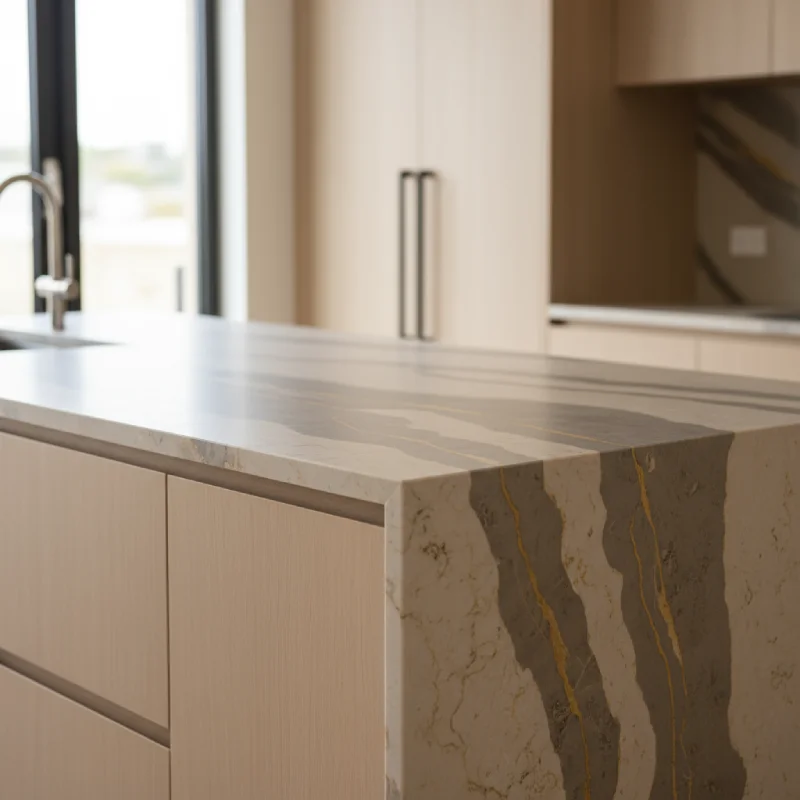
Kitchen countertops in 2025 emphasize high-contrast veining on warm neutral backgrounds, matte and textured finishes that conceal fingerprints, and full-height backsplashes that create seamless visual planes while protecting walls from splashes and stains.
If you're planning a kitchen remodel this year, countertop selection will define both the visual impact and daily functionality of your space. As countertop contractors who template and install across the Boston area, we're seeing clear patterns in what homeowners request and what actually holds up to daily use.
The stark white quartz with minimal veining that dominated the last five years is giving way to bolder patterns and warmer tones. Matte finishes are replacing polished surfaces because they hide fingerprints and water spots better. Full-height backsplashes eliminate grout lines and create dramatic focal points.
This guide breaks down the countertop trends gaining real traction in 2025, providing advice from a design build home contractor to help you balance current aesthetics with long-term durability and maintenance realities.
Key Takeaways
- High-contrast veining in charcoal and gray on white backgrounds creates dramatic focal points in Calacatta-look quartz and quartzite
- Warm neutrals like mushroom, taupe, and creamy beige replace cool grays, pairing beautifully with white oak and walnut cabinetry
- Matte finishes provide practical advantages, including superior fingerprint concealment, reduced glare, and easy soap-and-water cleaning
- Full-height backsplashes eliminate grout lines while protecting walls and showcasing natural stone veining dramatically
- Custom edge profiles like beveled, ogee, and waterfall edges add sophistication while improving safety in family kitchens
High-Contrast Veining Takes Center Stage
The uniform, barely-there veining popular in recent years is being replaced by bold, dramatic patterns that make countertops conversation pieces. High-contrast veining features oversized patterns in charcoal or deep gray against white backgrounds, transforming surfaces into focal points.
Materials like Calacatta-look quartz and natural quartzite showcase these striking vein flows. Natural stones such as Taj Mahal quartzite combine dramatic patterns with subtle earthy undertones, preventing the look from feeling too stark.
Maximizing Visual Impact
Design techniques amplify the dramatic effect. Waterfall edges on islands display vertical veining, creating uninterrupted flows from countertop to floor. Large-format islands provide expansive canvases where veining patterns can develop without seams breaking the visual story.
Matte finishes enhance pattern visibility while reducing glare, allowing bold veining to command attention without overwhelming the space. Porcelain slabs offer ultracompact durability in large formats that showcase striking vein patterns seamlessly while requiring minimal maintenance.
| Veining Style | Material Options | Best Application |
| Dramatic Calacatta | Quartz, marble, porcelain | Kitchen islands, focal walls |
| Subtle Movement | Quartzite, marble | Full kitchen, bathrooms |
| Linear Patterns | Quartz, porcelain | Contemporary spaces |
| Organic Flow | Natural stone, quartzite | Transitional kitchens |
Warm Neutral Palettes Create Inviting Spaces
Cool grays and stark whites are losing ground to warm neutrals that make kitchens feel lived-in rather than sterile. Mushroom, taupe, and creamy beige tones dominate countertop selections, creating peaceful environments that pair naturally with wood cabinetry.
These earthy palettes work seamlessly with white oak, walnut, and natural marble. The combination establishes a grounded aesthetic that enhances both visual warmth and practical functionality—warm tones disguise fingerprints and minor wear better than stark surfaces.
Layering Neutrals for Depth
Single-tone neutral countertops can feel flat without careful design consideration. Layering different neutral shades prevents this problem—pair creamy beige countertops with taupe cabinetry and mushroom-toned backsplashes to add dimension.
Warm neutral tones serve as long-term investments in kitchen design, ensuring selections remain timeless and continue feeling liveable for years. Natural stone, wood accents, and rattan elements complement these countertops while bringing sustainability into kitchen spaces.
Pairing With Natural Wood Elements
- White oak cabinetry with mushroom quartz counters - Creates Scandinavian-inspired warmth with clean lines
- Walnut accents with taupe stone surfaces - Delivers mid-century modern sophistication with rich contrast
- Greige countertops with mixed wood tones - Supports transitional design that bridges traditional and contemporary
- Beige marble with light wood flooring - Establishes coastal-modern aesthetic with organic texture
Matte and Textured Finishes Combine Style With Function
Polished countertops show every fingerprint, water spot, and smudge. Matte finishes solve this problem while delivering the understated elegance that defines contemporary design.
Beyond aesthetics, matte surfaces provide genuine practical advantages. They conceal fingerprints and minor scratches effectively, requiring less frequent cleaning than glossy alternatives. The non-reflective surface reduces glare in well-lit kitchens, making the space more comfortable during food prep.
Maintenance and Durability Benefits
Matte finishes require only mild soap and water for routine cleaning—no harsh chemicals or special products needed. Minor blemishes remain virtually invisible on these surfaces, making them particularly forgiving in high-traffic family kitchens.
Materials like matte quartz and porcelain offer these practical benefits, along with excellent stain resistance and heat tolerance. Textured finishes add tactile depth and grip, reducing slipperiness around sinks and prep areas where water tends to accumulate.
Full-Height Backsplashes Create Seamless Drama
Traditional tile backsplashes create maintenance challenges—grout lines collect grime and require regular cleaning. Full-height backsplashes eliminate this problem by extending countertop material from the surface to the underside of upper cabinets or the ceiling.
This approach creates uninterrupted visual planes that dramatically showcase natural stone veining. Large quartz, marble, or granite slabs lend luxurious appeal while modernizing spaces through visual continuity.
Functional and Aesthetic Advantages
Beyond looking impressive, these protective shields safeguard walls from splashes, heat, and stains more effectively than paint or tile. They require minimal maintenance—just wipe down with the same products you use on countertops.
Since countertops and backsplashes are fabricated together, countertop installation becomes streamlined and material matching stays consistent. The seamless integration visually unifies surfaces, making kitchens feel larger while complementing any cabinetry style from traditional to ultra-modern.
Custom Edge Profiles Add Sophisticated Detail
Edge profiles transform countertops from basic slabs into refined design elements. These details balance aesthetic appeal with practical functionality, particularly in terms of safety and maintenance.
Bullnose edges provide rounded smoothness that reduces injury risk—a significant consideration in family kitchens where children might bump corners. Beveled edges deliver subtle dimensionality suited to modern aesthetics without adding visual complexity.
Popular Edge Profile Options
| Edge Profile | Aesthetic Style | Practical Benefits |
| Bullnose | Transitional, family-friendly | Safety, easy cleaning |
| Beveled | Contemporary, minimal | Subtle dimension, modern appeal |
| Ogee | Traditional, luxury | Classical elegance, detail focus |
| Waterfall | Modern, dramatic | Visual continuity, statement piece |
Ogee and fluted profiles introduce classical elegance that enhances the luxury kitchen appeal. Waterfall edges—where countertop material extends vertically to the floor—reflect 2025's emphasis on dramatic sophistication. Homeowners searching for custom countertops near me often request this style to showcase veining patterns in a spectacular way.
Choosing the Right Material for Your Kitchen
With aesthetic direction established, material selection becomes the foundational decision that determines both visual centerpiece and functional performance. Each option balances different priorities around durability, maintenance, and design flexibility.
Quartz dominates countertop replacement choices, accounting for 70% of installations due to its durability and extensive design options. Natural stone like marble and granite, provides timeless elegance with unique character that engineered materials can't replicate.
Material Considerations Beyond Aesthetics
Sustainable options, including recycled glass terrazzo and concrete, reduce environmental impact while offering customizable warmth and texture. These materials support LEED certification goals for environmentally conscious homeowners.
Maintenance requirements vary significantly. Quartz needs only soap and water, so it never requires sealing. Natural stone demands periodic sealing to maintain stain resistance. Concrete requires more involved care but delivers completely custom aesthetics impossible with other materials.
Conclusion
The countertop trends defining 2025 reflect a shift toward bolder visual statements combined with practical functionality. High-contrast veining creates dramatic focal points, while warm neutral palettes make kitchens feel welcoming rather than clinical. Matte finishes offer both contemporary aesthetics and practical maintenance benefits.
Full-height backsplashes eliminate grout lines while protecting walls, and custom edge profiles add a level of sophistication suited to your specific design style. These aren't fleeting trends—they're design principles that balance current aesthetics with long-term durability and daily usability.
Ready to explore countertop options for your kitchen remodel? Contact CabStone to discuss materials, finishes, and edge profiles that match your style and functional needs. Our countertop installer team brings hands-on fabrication and installation experience to every project consultation.
Frequently Asked Questions
Will bold veining look dated in five years like busy granite patterns from the 2000s?
High-contrast veining differs from dated granite patterns because it's rooted in classic marble aesthetics that have remained desirable for centuries. Modern interpretations in quartz and quartzite offer timeless Calacatta and Statuario looks with better durability than natural marble. The key is choosing veining that complements your overall design rather than overwhelming it—when properly scaled to your space, these patterns age gracefully.
Are matte finishes harder to keep clean than polished surfaces?
Actually, the opposite is true for daily maintenance. Matte finishes hide fingerprints, water spots, and smudges that show prominently on polished surfaces, requiring less frequent cleaning. They wipe clean with mild soap and water without special products. While polished surfaces might feel smoother initially, matte finishes prove more forgiving in active kitchens where perfection isn't realistic between deep cleans.
Do full-height backsplashes make small kitchens feel cramped?
When executed properly, full-height backsplashes actually make small kitchens feel larger by eliminating visual breaks between countertop and upper cabinets. The key is material selection—choose lighter colors with vertical veining patterns that draw the eye upward, creating the illusion of height. Avoid busy patterns in compact spaces, opting instead for subtle movement that adds interest without overwhelming.
Is quartz more durable than natural stone for countertops?
Quartz offers superior stain and scratch resistance compared to most natural stones and never requires sealing, making it more practical for busy households. However, quartzite (often confused with quartz) rivals granite's durability while offering unique natural beauty. Marble remains softer and more prone to etching from acidic substances. Your choice depends on whether you prioritize maintenance convenience (quartz) or natural character with accepted patina development (natural stone).
Can I mix countertop materials in the same kitchen?
Yes, mixing materials is increasingly common and can be highly effective when done strategically. Use durable, stain-resistant quartz for prep areas near sinks, and reserve natural marble or butcher block for islands where visual impact matters more. The key is maintaining cohesive color palettes and edge profiles so different materials feel intentional rather than mismatched. This approach lets you optimize each surface for its specific function while creating visual interest.